
China Builds World’s First Mothership for Large Uncrewed Submarines: A Revolution in Undersea Warfare
Military Watch Magazine Editorial Staff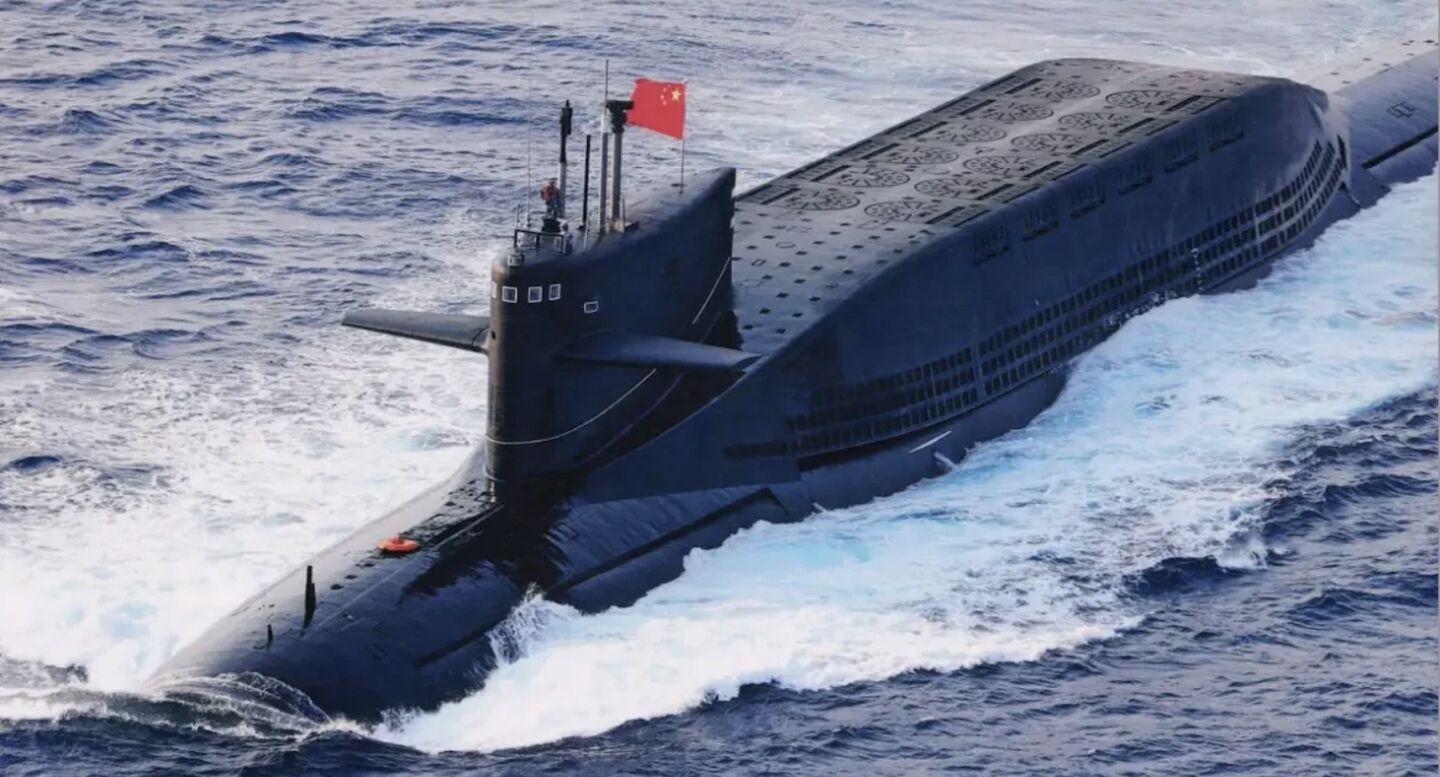
Chinese PLA Navy Type 094 Class Submarine
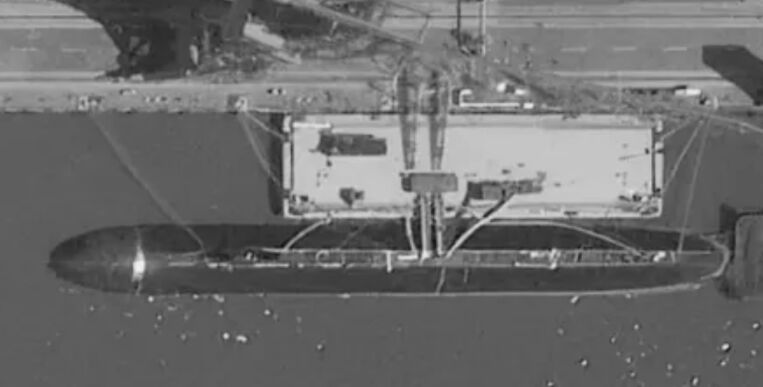
Satellite imagery reviewed has shown a large and highly unusual vessel under construction at the Hudong-Zhonghua shipyard in Shanghai, with its configuration strongly indicating that it is intended to operate and support large uncrewed submarines. The vessel appears to be the world’s first dedicated uncrewed submarine mothership, adding a potentially important new dimension to the People’s Liberation Army Navy’s rapidly expanding undersea warfare capabilities. The vessel represents the latest development in China’s apparently undeclared effort to develop operationally useful extra-extra large uncrewed underwater vehicles, or XXLUUVs.
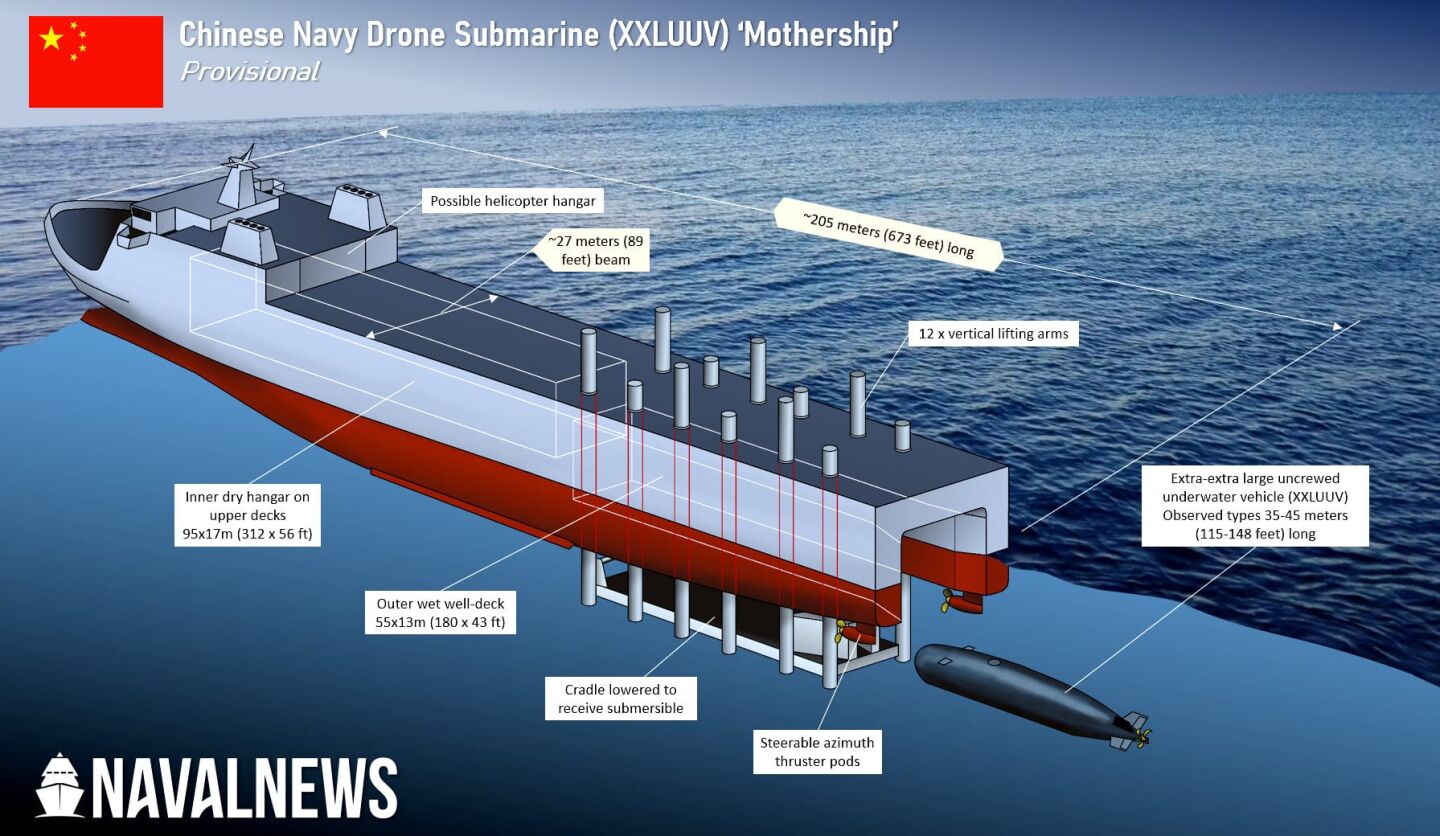
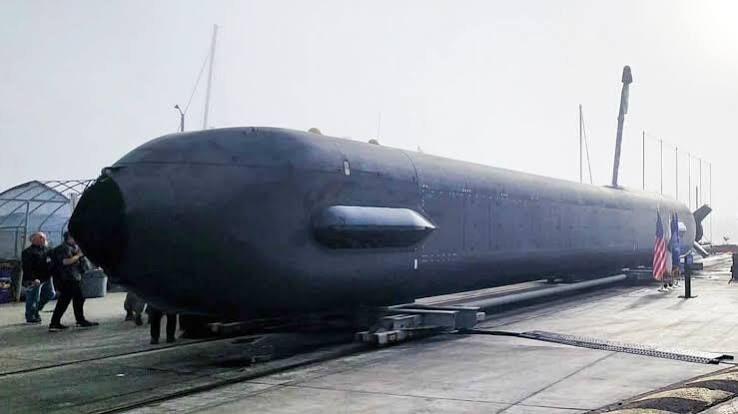
China has already tested two types of exceptionally large uncrewed submarines, with observed vessels measuring approximately 35 and 45 metres in length. Their size is particularly notable because they are estimated to be roughly six to eight times larger than the U.S. Navy’s Boeing Orca XLUUV. The emergence of a dedicated support vessel suggests that China’s programme is moving beyond experimental testing towards the development of an operational system. Rather than simply launching the giant underwater drones from shore-based facilities or floating docks, the new mothership could allow them to be transported, maintained, launched and recovered at sea, potentially greatly expanding the geographic areas in which they can operate.
The mothership will potentially serve two roles. First, it could operate as a mobile tender, transporting the large autonomous submarines and providing them with maintenance and logistical support. Second, it could function as a launch-and-recovery platform, allowing the XXLUUVs to be deployed from locations far removed from China’s coastline. Where a shore-based XXLUUV force would be constrained by the location of its launch facilities and the need to transit through potentially monitored waters before reaching distant operating areas, a mobile mothership can transport the vehicles much closer to their intended patrol areas before releasing them.
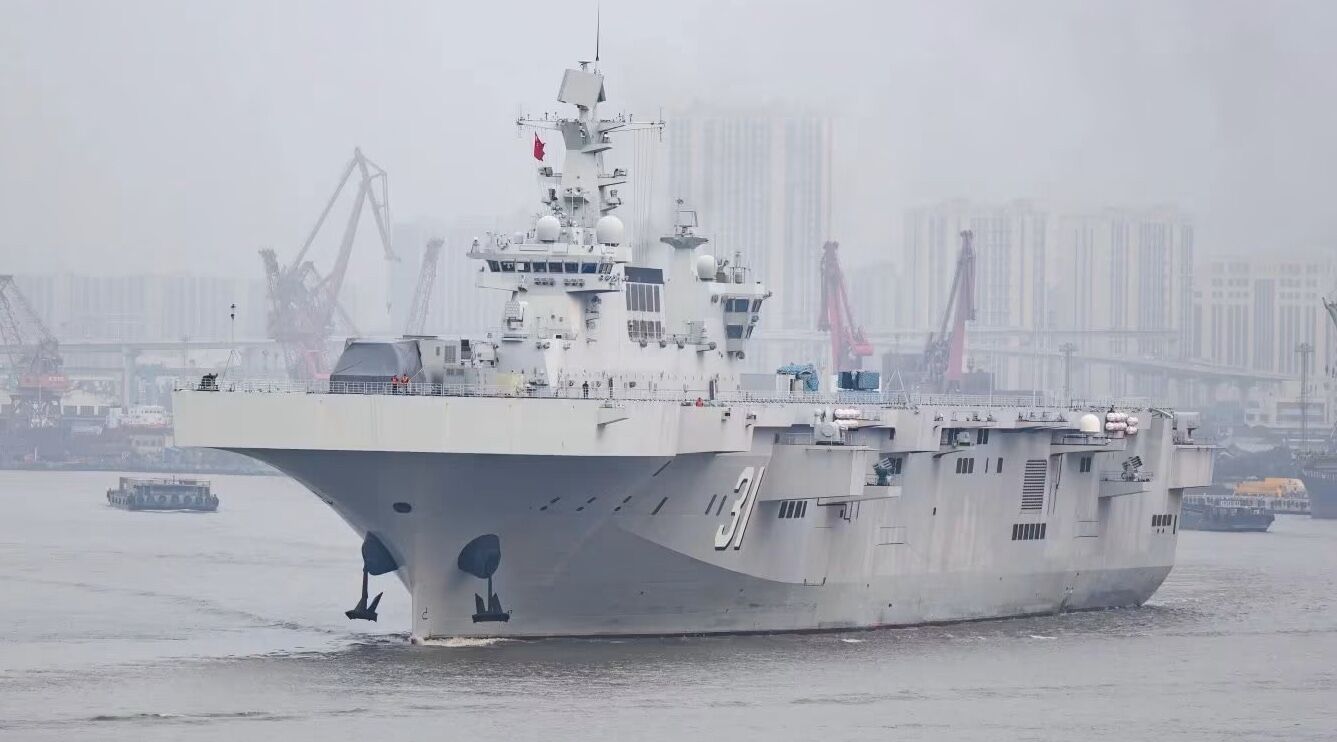
The new ship’s unusual configuration resembles that of an amphibious landing ship, particularly because of a large stern well-deck. However, the arrangement differs substantially from a conventional landing ship and appears to have been specifically designed around the handling of large underwater vehicles. At the stern is an open well-deck beneath which a large cradle can be positioned. The cradle appears to be lowered into the water using 12 vertical jack-up arms, providing a mechanism for supporting an XXLUUV during launch and recovery. This arrangement would allow the massive unmanned submarines to be moved into the water without requiring conventional cranes or the use of a conventional submarine dock.
A major potential application would be long-range intelligence, surveillance and reconnaissance. An autonomous submarine could potentially remain underwater for extended periods while monitoring maritime traffic, tracking naval forces or collecting acoustic information. Large UUVs could potentially also be configured to carry mines, torpedoes or other weapons, although there is currently no public evidence establishing the exact armament planned for China’s XXLUUVs. Their large size would provide considerably more payload capacity than conventional underwater drones, potentially allowing them to perform missions traditionally assigned to crewed submarines.
