
China Deploys World’s First Drone Carrier Warship For First South China Sea Training
Military Watch Magazine Editorial Staff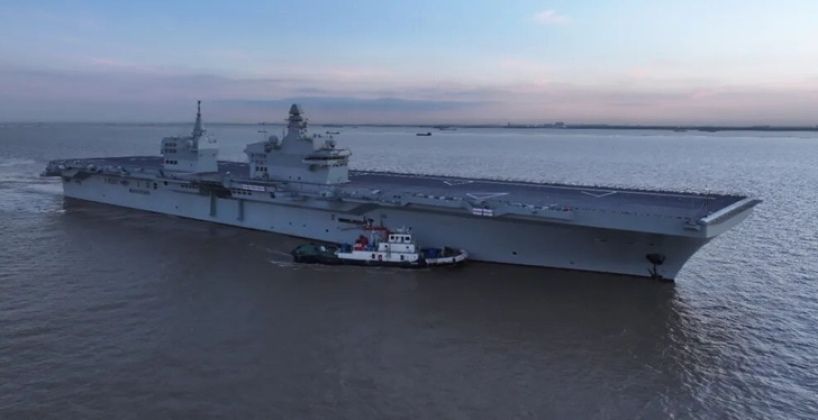
Chinese Type 076 Class Carrier Sichuan
The Chinese People’s Liberation Army (PLA) Navy has deployed its first warship built primarily to deploy unmanned aircraft, the Type 076 class aircraft carrier Sichuan, for its first ever cross-regional training mission in the South China Sea. This follows multiple earlier sea trials, the first of which began on November 14, 2025, and is in line with the ship’s planned development schedule. The landmark trials have been assessed by local analysts to mark rapid and efficient progress towards service entry. The trials will test the performances of multiple onboard systems and platforms, including in system-level exercises. Prior sea trials were each designed to identify and resolve technical issues, while refining overall performance prior to entering service, and allowing crew to become more familiar with the highly unique new ship class’ capabilities.
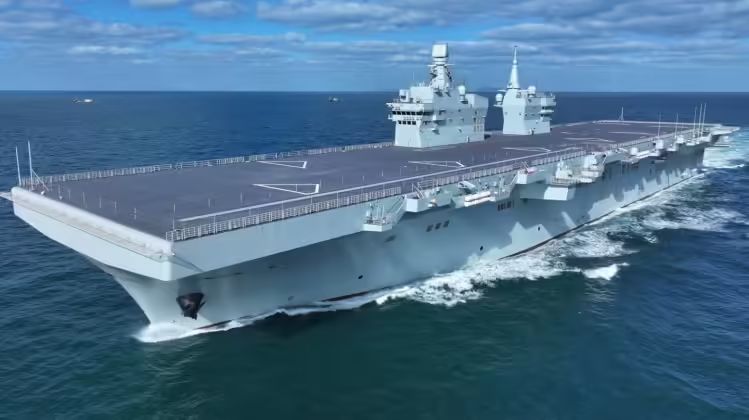
The South China Sea is distinct from previously tested waters, with its complex climate and sea conditions being an ideal setting to evaluate the Sichuan’s adaptability. Testing there will allow for a more comprehensive assessment of the Sichuan’s performance across different maritime environments. Chinese analysts have predicted that follow-on trials are likely to include integration exercises involving carrier-based aircraft, helicopters, and amphibious forces, as the warship is also capable of operating as an amphibious assault ship. There has been speculation that the ship could pass through the Taiwan Strait as part of testing, and while in the South China Sea it may be forced to operate in proximity to warships or aircraft from hostile states, including the United States, which maintain significant regional presences.
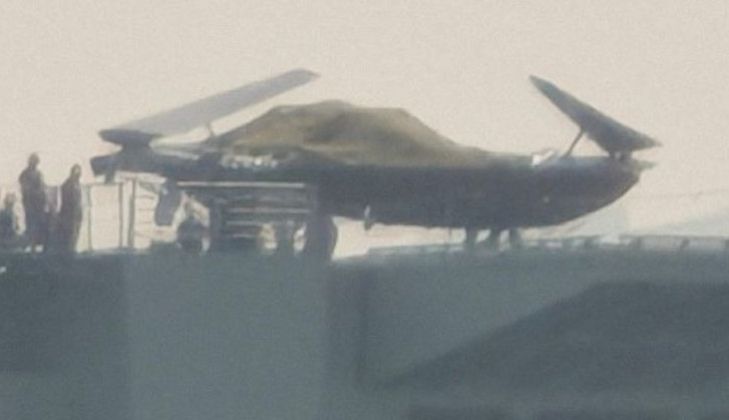
Displacing 50,000 tons, the Sichuan blurs the line between an amphibious assault ship, like the lighter Type 075 class on which its design is based, and a full aircraft carrier like the new 85,000 ton supercarrier Fujian. It was designed to accommodate a smaller air wing, which is expected to be comprised largely if not entirely of unmanned aircraft, including new types of unmanned stealth fighters such as the GJ-11. A defining feature of the Sichuan is that it is the world’s third aircraft carrier to integrate an electromagnetic catapult system, following the U.S. Navy supercarrier USS Gerald Ford, and the supercarrier Fujian. Although small compared to supercarriers, it is still large by international standards, with a higher displacement than the U.S. Navy’s Wasp class and America class carriers which accommodate the F-35B, and than Europe’s largest aircraft carrier the 41,000 ton nuclear powered ship Charles de Gaulle.
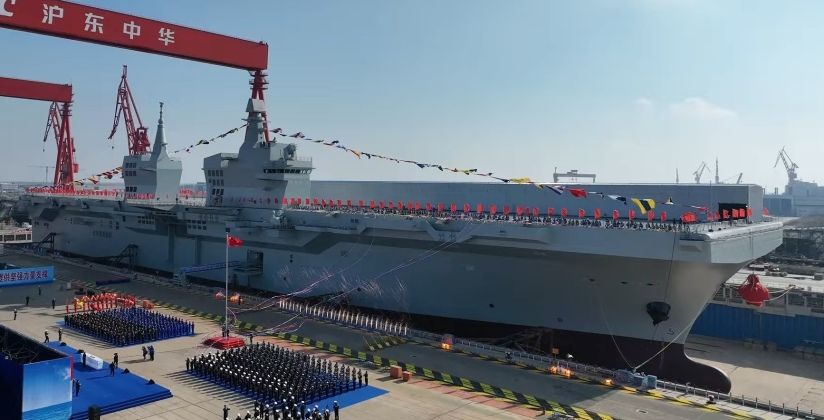
The Sichuan has no direct analogues with similar displacements or capabilities anywhere in the world, although the growing importance of unmanned aviation has fuelled speculation the other countries will seek to develop similar ships in future. While state media outlets have reported that it can accommodate fixed wing aircraft like the new J-35 fifth generation fighter, analysts have generally been skeptical that such an air wing is intended for the ship. The ship has an expected capacity to operate approximately 28-35 aircraft depending on their sizes. While its air wing is expected to initially focus on strike and reconnaissance operations, the expansion of the capabilities of unmanned aircraft to conduct air-to-air operations means this could change in future.
