
China Warns U.S. Against Deploying Weapons in Space as New Arms Race Intensifies
Military Watch Magazine Editorial Staff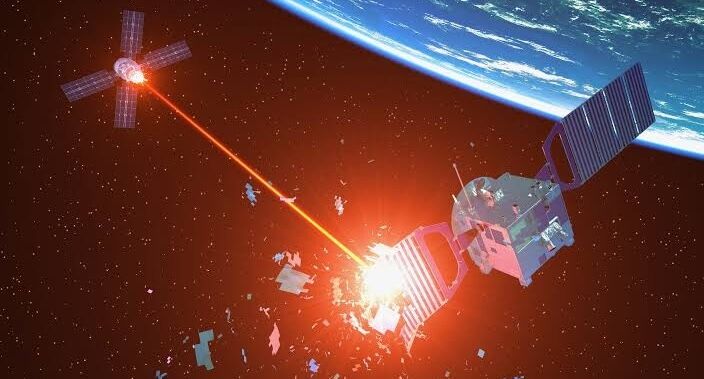
Satellite Engagement Using Laser Weapon - Artwork
China has warned that the United States’ newly acknowledged deployment of weapons in orbit could trigger a global arms race, following Washington’s first public confirmation that it possesses operational “on-orbit space control weapons.” The disclosure by U.S. Air Force Secretary Troy Meink on September 14 represented the most direct public acknowledgement by a senior American official that the United States has placed weapons in space. Chinese Foreign Ministry spokesman Guo Jiakun responded by calling on Washington to halt its military expansion in outer space. “We urge the U.S. to stop expanding military build-up in outer space, and uphold global strategic stability with concrete actions,” Guo said, adding that China opposes efforts to weaponise space or turn it into a battlefield.
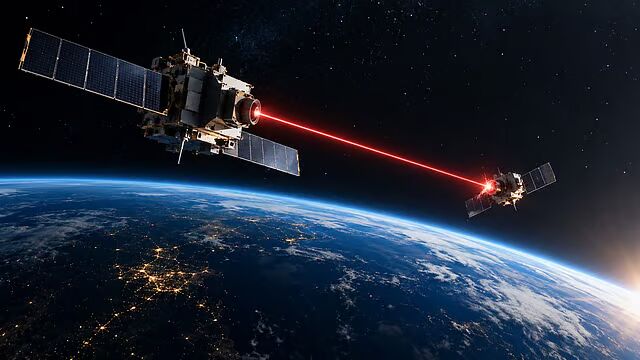
Meink subsequently stressed that the United States has been aware for more than a decade of efforts by China and Russia to develop capabilities to threaten American space assets. “It is critically important that we maintain our dominance not only in the air but in space, and so that we’ve had to take steps to make sure that when we’re threatened, we can take care of that,” he said. According to Meink, the disclosure was intended in part to strengthen deterrence, although he declined to say whether the weapons had already undergone operational testing. The meaning of “space control weapons” can encompass capabilities intended to disrupt, degrade or destroy an adversary’s space systems, potentially through either kinetic or non-kinetic means.
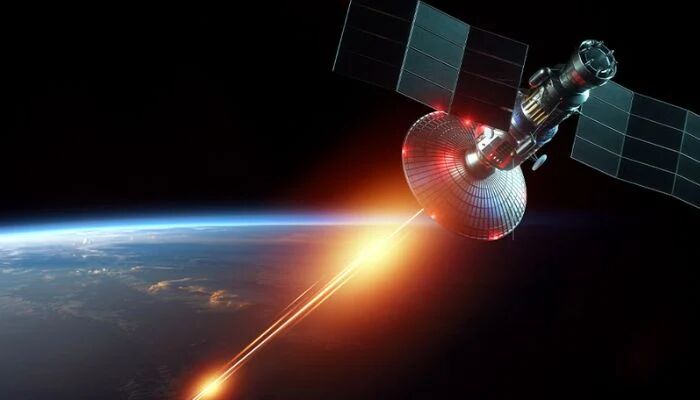
The issue is particularly sensitive because modern military operations have become heavily dependent on space-based infrastructure. Satellites provide communications, positioning and navigation, missile-launch warning, intelligence, surveillance and reconnaissance, weather information and other functions essential to operations on Earth. Disrupting those systems could therefore affect aircraft, ships, missiles, ground forces and command networks far beyond the immediate orbital environment. The strategic importance of these capabilities is expected to be highly pronounced in a potential U.S.-China conflict, with satellites expected to be relied on for communications, intelligence and targeting.
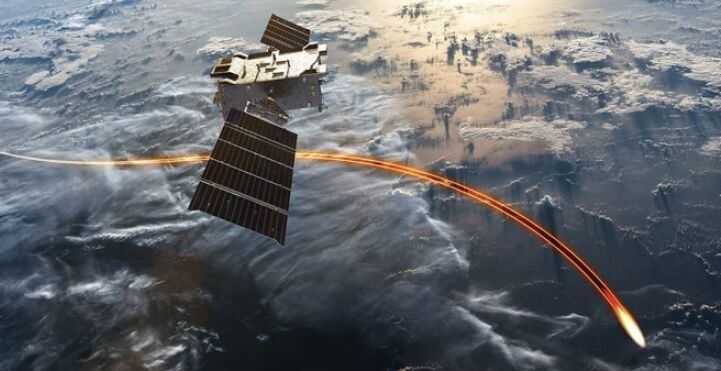
The United States’ admission represents a significant departure from prevailing norms regarding the militarisation of space, as the world’s major powers have historically been highly reluctant to permanently station dedicated offensive weapons in orbit. The 1967 Outer Space Treaty prohibits the placement of nuclear weapons and other weapons of mass destruction in orbit around Earth, as well as their stationing on celestial bodies. It does not, however, impose a comprehensive prohibition on conventional weapons in space.
