
China’s New Semi-Submersible Unmanned Missile Carrier a Game Changer For the Fleet’s Combat Potential
Military Watch Magazine Editorial Staff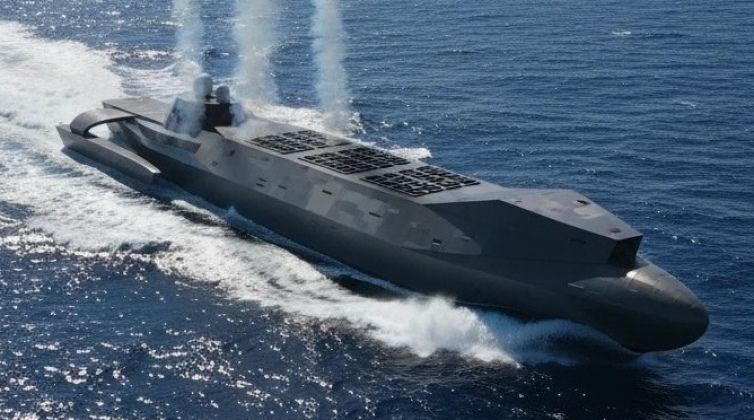
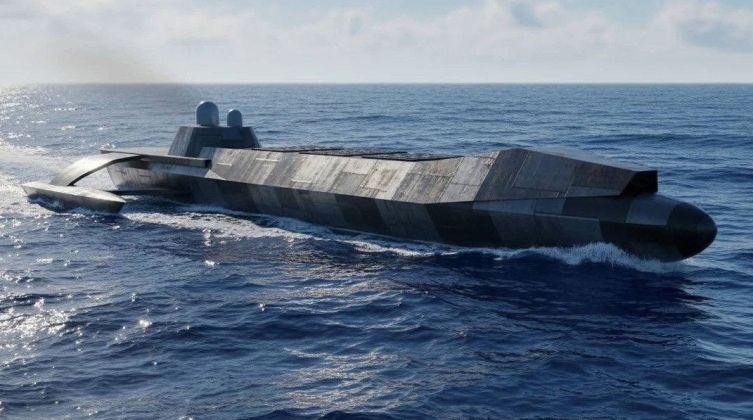
Chinese Unmanned Semi-Submersible Missile Carrier - Concept Art
The first of an entirely new type of unmanned missile ship is currently being constructed to equip the Chinese People’s Liberation Army Navy, and has the potential to serve as a major force multiplier for the service’s destroyer fleet and carrier strike groups in a wide range of roles. The ship is being built at the Huangpu Shipyard in Guangzhou, and is a semi-submersible missile carrier. Its unmanned design is expected to significantly increase efficiency, removing the requirement for accommodating and sustaining crew to achieve a significantly higher missile carriage per ton of displacement. Satellite images indicate that the ship as a long narrow body that extends approximately 65 meters, with trimaran outriggers extending from its stern. It is reported to have a slender hull with submarine-like contours.
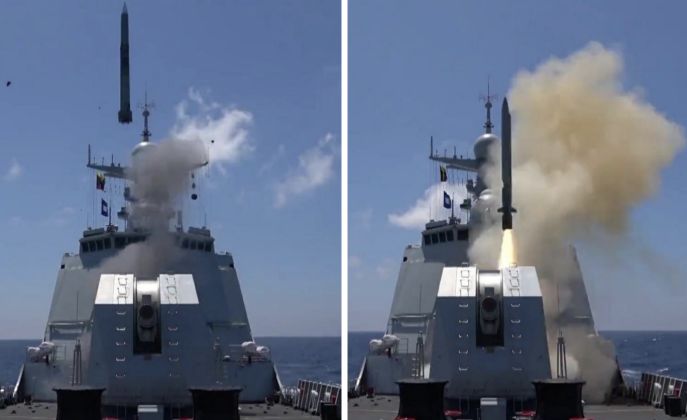
The aforementioned engagement saw unmanned support ships serve as carriers for large numbers of drones and unmanned boats, which were directed from the commanding Type 055 destroyer. The simulation highlighted the role of unmanned ships in forming a low cost “kill web” alongside destroyers. The publication of its results followed the publication of a paper on the utility of such vessels on January 13 by AI expert Professor Yu Minghui, who led the project team that worked on the simulation, in the Chinese Journal of Ship Research. Although the Chinese design is expected to have several unique features, the country is far from alone in developing unmanned missile carriers to support its destroyers, with the United States planning to pursue development of a similar program. The size of the Chinese destroyer fleet, which is expected to overtake that of the United States by the mid-2030s while relying on much more modern vessels, could result in a demand for hundreds of unmanned missile carriers for supporting roles.
