
China’s Y-20 Heavy Transport Has Transitioned to Use of Indigenous Engines: World’s Largest Military Aircraft Gets New Powerplant
Military Watch Magazine Editorial Staff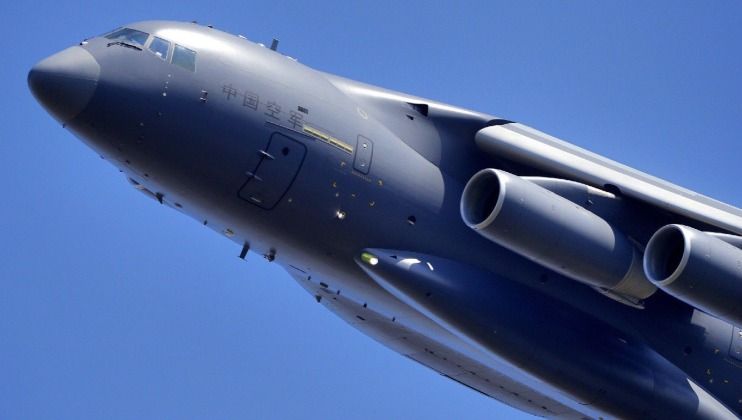
Chinese Y-20 Heavy Transport
China’s Xian Y-20 heavy transport, known as 'Chubby Girl’ domestically for its bulbous appearance, has reportedly begun flying with indigenous WS-20 turbofan engines after having previously relied on Russian sourced Soloviev D-30KP-2s since entering service in July 2016. The Y-20 is currently the world’s largest military aircraft in production, and its new engines are expected to provide a significantly greater performance than the Russian originals. Despite emerging as a world leader in many other fields of military technology China has lagged behind peer level competitors, and the United States in particular, in heavy lift capabilities which are key to potential wartime logistical efforts. While China benefited from the acquisition of large numbers of Il-76 heavy transports following the collapse the Soviet Union, many second hand from cash strapped successor states, its program to develop an indigenous capability has been relatively slow.
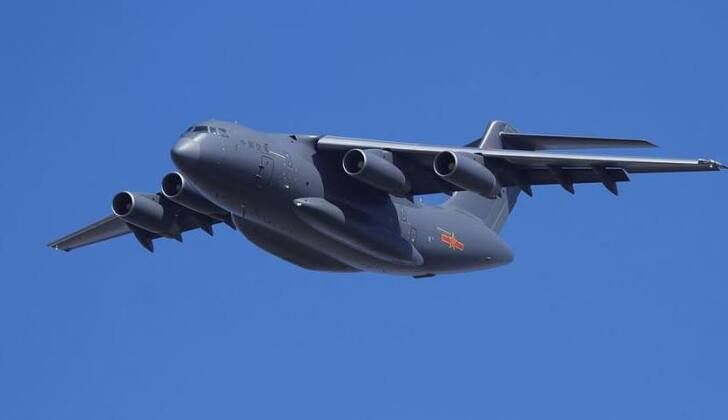
The American advantage in heavy airlift can largely be attributed to the fact that the U.S. has placed a far greater emphasis on such capabilities due to its global military presence and the fact that the bulk of its military operations are conducted thousands of miles overseas, which places a much greater logistical strain relative to China which conducts the vast majority of operations within its own territory. The Y-20’s new WS-20 turbofan is thought to provide approximately 133kN of thrust, compared to under 118kN for the D-30KP-2. While the Y-20 was previously expected to only be ready by 2024, its induction in 2020 marks one of several cases where a major Chinese military program has been completed before the expected date. The Y-20 conducted its first airborne operation in May 2018, and the aircraft is expected to see production accelerated to phase out foreign sourced designs and potentially revolutionise China’s airlift capabilities in the coming years. The country’s armed forces have reportedly also shown an interest in developing yet heavier designs, possibly comparable to the Soviet An-225 design which is the world’s largest aircraft of which just a single one was built before the state’s collapse, although it is uncertain whether these will have military uses.
