
China’s New JH-7AII Strike Fighter Appears in Russia
Military Watch Magazine Editorial Staff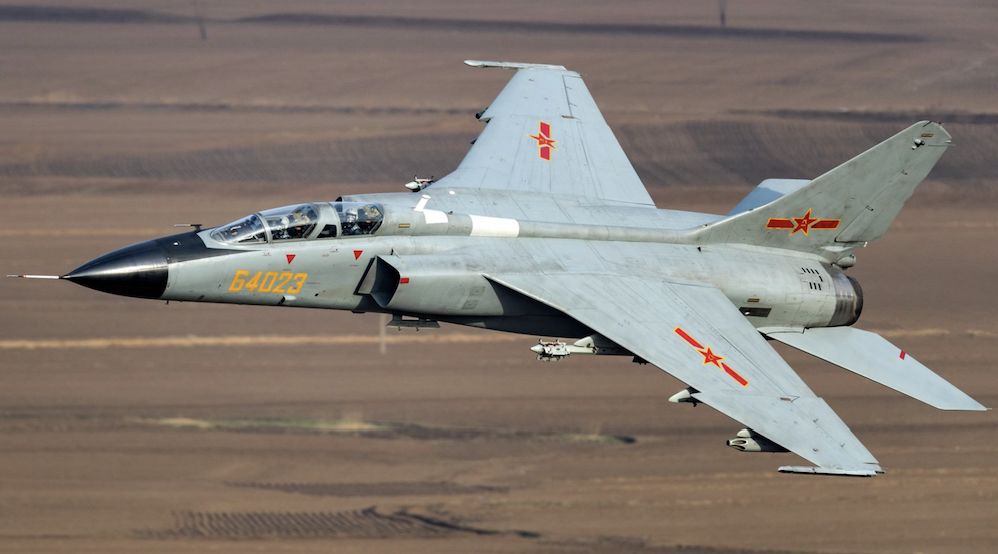
Chinese JH-7 Strike Fighter
China’s People’s Liberation Army (PLA) recently unveiled a new variant of the Xian JH-7 strike fighter, the JH-7AII, which recently appeared at the Avidarts competition in Russia as part of the International Army Games 2019. The JH-7A was developed as an enhanced variant of the original design, and benefits from greater use of composite materials to improve the airframe's durability and reduce its weight, a powerful JL10A Shan Ying J-band pulse doppler radar, additional weapons hardpoints, an increased payload and improved avionics. The capabilities of the new sub-variant JH-7AII remain uncertain, but have been speculated by a number of experts. The Global Times, a Chinese state media outlet, citied defence analyst Wei Dongxu stating: "While the aerodynamic design of the JH-7AII does not appear to vary much from the JH-7A, the aircraft's internal systems could have been upgraded.” Further details have yet to be unveiled. The JH-7 was one of the first two fourth generation fighters deployed by the PLA alongside the Russian Su-27, both of which were fielded from 1992, and the aircraft provided a suitable replacement to the ageing H-5 bombers. The aircraft are compatible some of China’s most sophisticated munitions, and are regularly allocated a maritime strike role with with over 100 fighters of the class operated by the PLA Navy. Some JH-7 units have reportedly been stationed to disputed South China Sea islets to reinforce the PLA’s maritime anti access area denial zone, and are equipped with PL-12 anti ship cruise missiles which makes them potentially highly lethal as ship hunters.
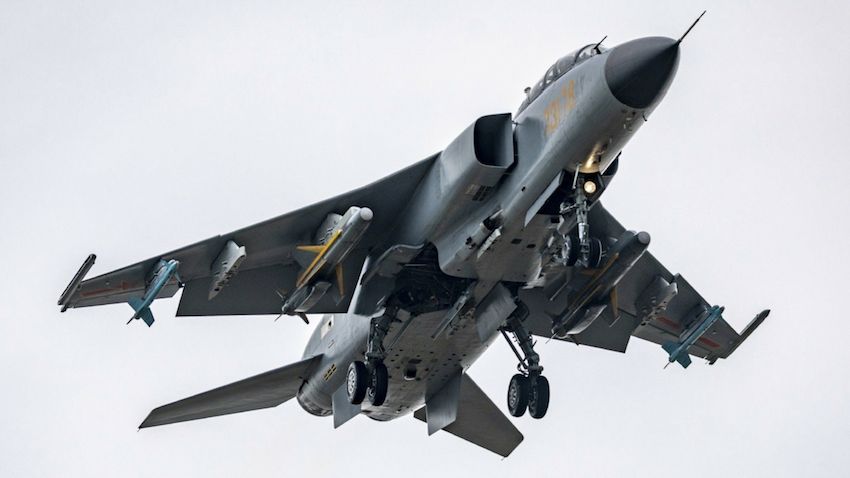
It is possible that the new variant of the JH-7 is intended to deploy some new types of munitions, with China reportedly developing a similar platform to the Russian Kh-47M2 hypersonic tactical ballistic missile which the fighter could be ideal for delivering - particularly if the new variant is capable of a greater rate of climb and has a strengthened airframe. The PLA has since developed a more capable strike fighter, the J-16, which entered service in 2013 and has significantly superior capabilities. A more advanced strike platform, speculated to be based on the design of the J-20 fifth generation air superiority fighter, is also reportedly under development - and will benefit from radar evading technologies and a new generation of more powerful indigenous engines.
