
China's J-10 Just Got A lot Stealthier and More Manoeuvrable; Three Dimensional Thrust Vectoring for the J-10C
Military Watch Magazine Editorial Staff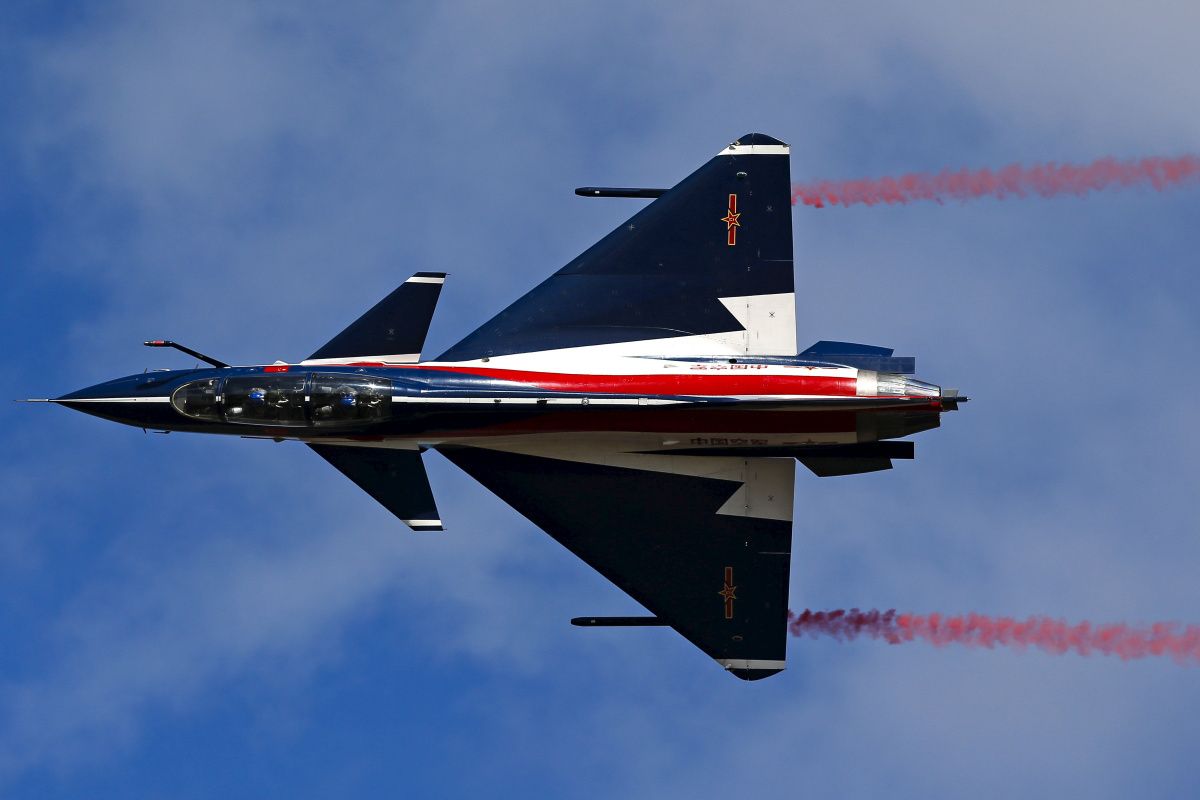
J-10 Single Engine Light Fighter
China's Chengdu J-10 light fighter entered service in 2006 as the People's Liberation Army (PLA) Air Force's first fully indigenous fourth generation fighter jet, and approximately 400 aircraft have been inducted into active service since to form ten battalion and two regiments in the Air Force and a single further regiment under Naval Aviation. The delta wing canard aircraft made extensive use of weight reducing composite materials, which combined with a powerful WS-10A engine gave it a world leading thrust/weight ratio of 1.15. The fighter's canard delta wing further served to facilitate the J-10's extreme manoeuvrability, while the fighter was capable of operating at speeds and altitudes unrivalled by other light platforms at Mach 2.2 and reach altitudes of 18km. This compared highly favourably with its American counterpart the F-35, which was restricted to speeds of Mach 1.6 and a maximum altitude of around 15.5km.
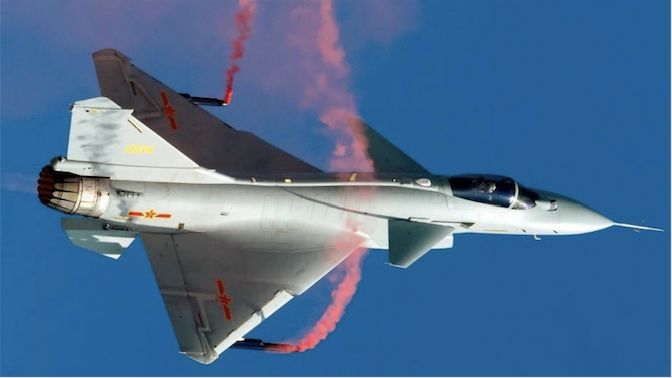
While formidable, China's Chengdu Aerospace Corporation has continued to progressively upgrade the J-10's capabilities for the People's Liberation Army (PLA) Air Force to ensure the fighter retains and can consolidate its advantage in air to air combat. The most recent iteration of the Chinese platform, the J-10C, boasts advanced capabilities well ahead of its predecessor and integrates a number of new technologies. These include several modifications to reduce the fighter's radar cross section and thus increase its beyond visual range combat survivability, a lighter and stealthier diverterless supersonic inlet and sawtooth edges on the exhaust nozzles to improve both frontal and rear aspect stealth characteristics - as most iconically implemented on the American F-22 Raptor stealth fighter. The J-10C has also integrated advanced active electronically scanned array (AESA) radars which have served to reduce its radar cross section while increasing its detection and tracking ranges against enemy aircraft by around 65%. A new higher level of situational awareness complements the advanced capabilities of the fighters' new air to air missiles, the PL-15, which are operated exclusively by Chinese next generation fighters such as the J-20 and provide a 150km air to air engagement range - almost 50% longer than that of its American counterparts the AIM-120C.
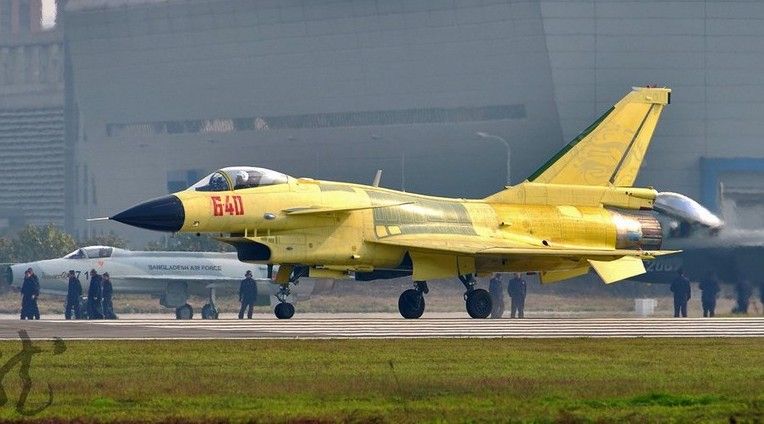
Another means of increasing the fighter's survivability has been the integration of thrust vectoring technologies, which will improve the J-10's already formidable manoeuvrability and make it only the fourth active fighter to use this technology - the very first with a single engine.. Whether the platform will incorporate basic two dimensional thrust vectoring similar to that used by the U.S. F-22 Raptor and Russian Su-30, or will use a three dimensional system for 'super manoeuvrability' similar to that of the Su-35 and upcoming MiG-35, remains to be seen. Such systems would however make the fighter extremely difficult to target in visual range engagements, and increase its survivability against long range missiles. The J-10C notably has part of the bottom of its brake parachute housing, located on the base of its vertical fin on previous variants, removed. This allows the fighter's thrust vectoring nozzle to be rotated upwards, meaning it can be applied in both vertical and horizontal plains - indicating that the fighter could potentially make use of three dimensional thrust vectoring and supermanoeuvrability in future.
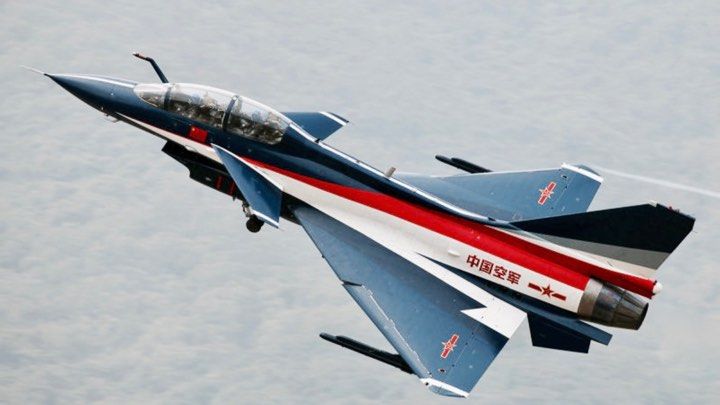
China's PLA has long been suspected of researching three dimensional thrust vectoring capabilities similar to those used by the Russian Air Force for its own elite fighters, and likely benefitted from the opportunity to study the two dozen Su-35 jets it acquired from Russia in the mid 2010s. The J-10C could well be the first testbed for such systems, which are expected to be applied to the twin engine J-11D air superiority fighter in future. Experimental thrust vectoring systems have according to some reports also been installed on the J-20, though application for the larger stealth platform is expected to be more far more complex. Whether the J-10 will be able to integrate three dimensional thrust vectoring remains to be seen, but if it does it could well become the world's most manoeuvrable fighter given its extensive use of lightweight composite materials and already extremely high thrust/weight ratio.
