
China’s Next Generation Stealth Frigate Makes First Carrier Escort Deployment: How Capable is the Type 054B Class?
Military Watch Magazine Editorial Staff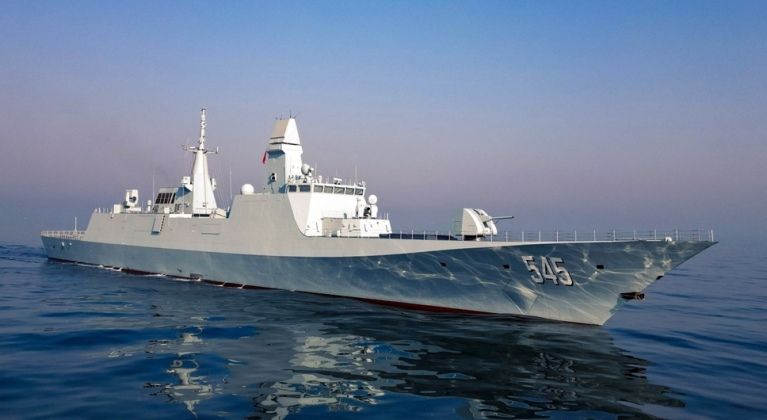
Chinese PLA Navy Type 054B Class Frigate
The Chinese People’s Liberation Army (PLA) Navy has deployed its first frigate of the new heavily enhanced Type 054B class, the Luohe, as part of the carrier task group led by the aircraft carrier Liaoning, marking the new class of warship’s first far-seas mission since entering service. The ability of Chinese frigates to contribute to the operational capabilities of carrier groups has long been overshadowed by the capabilities of the much larger Type 052D and Type 055 destroyers, which carrier larger sensor and armaments suites and more diverse arrays of more capable missiles. The Type 054B program has sought to narrow the performance gap and allow frigates to make much greater contributions to far seas operations.
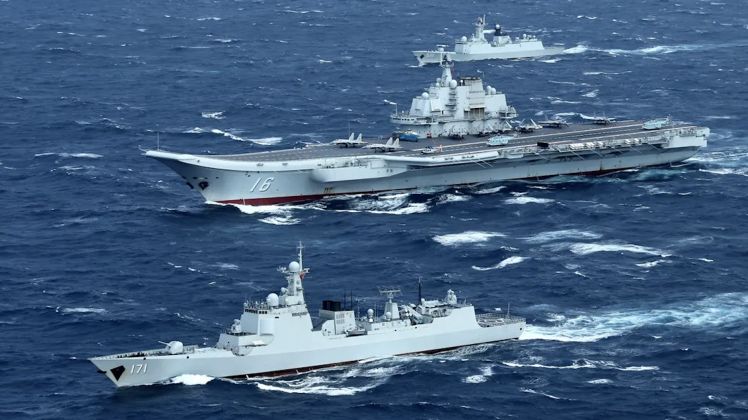
Building on the successes of the Type 054A design, which established itself as a highly capable and cost-effective multirole escort class of vessel, the newer Type 054B’s design has incorporated incorporating major advances in propulsion, sensors, stealth, automation, and long-range operations, providing a far superior blue water operational capability and greater suitability for carrier escort missions. While the Type 054A relied on relatively conservative diesel-powered propulsion systems, the Type 054B integrates a far more advanced integrated electric or hybrid propulsion architecture that reduces its acoustic signature while improving fuel efficiency and power generation. This is especially important for anti-submarine warfare operations, where quietness is critical. The ship’s increased electrical output also supports modern radar systems, electronic warfare suites, and future high-energy weapons that older designs could not easily accommodate.
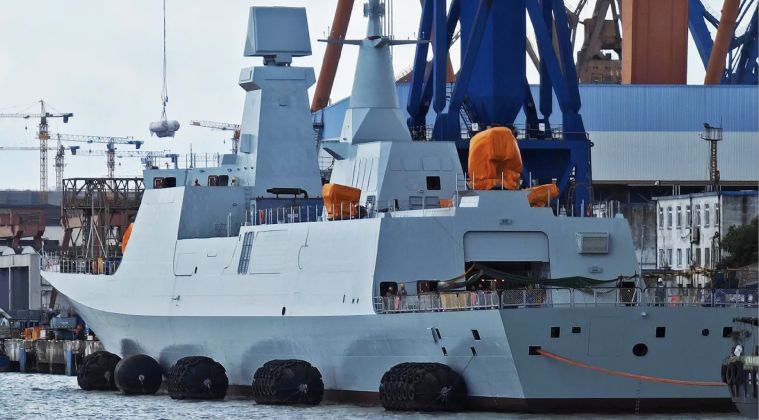
The Type 054B benefits from significant improved stealth characteristics, as is clear from its much cleaner and more modern superstructure with fewer exposed fittings, enclosed masts, and smoother hull integration. The vessel resembles the design philosophy seen on larger Chinese destroyers such as the Type 055 destroyer in this respect. Where the Type 054A used rotating radar systems, the Type 054B integrates a much more advanced active electronically scanned array radar system integrated into the mast structure. This provides a superior reaction speed, resistance to jamming, and simultaneous engagement capability against aircraft, missiles, and surface targets. Combined with more sophisticated combat management systems, the frigate is thought to have dramatically improved situational awareness and networking capabilities, enabling it to operate as part of a highly integrated fleet battle network, which is critical to providing effective support to carrier group operations.
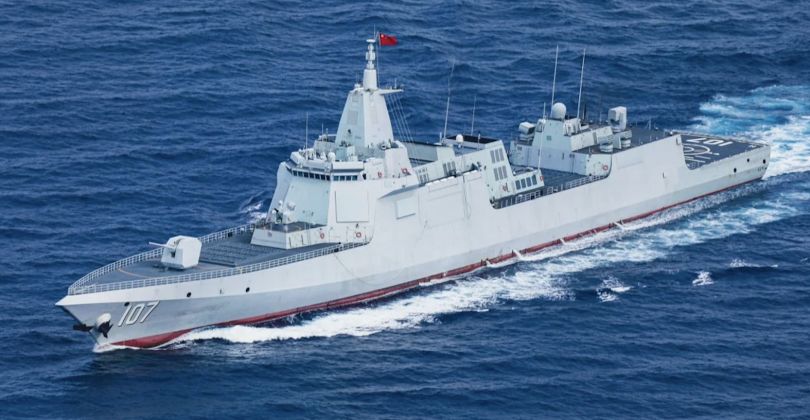
The Type 054B’s service entry appears to be a significant part of the Chinese PLA Navy’s broader transition toward a fully ocean-going naval capability, and complements major investments in destroyer procurements at rates that exceed those of the next several countries combined. A notable shortcoming of the design appears to be its lack of an upgraded armaments suite, with its 32 vertical launch cells restricted to integrating medium range surface-to-air missiles and Yu-8 anti-submarine missiles, but lacking compatibility with the latest YJ-18 and YJ-100 cruise missiles and YJ-20 hypersonic ballistic missiles integrated onto destroyers. This contrasts to similarly sized Russian and North Korean vessels such as the Admiral Gorshkov class frigate and Choe Hyon class destroyer which integrate top-performing cruise missile types and long range surface-to-air missiles. At 5,500 tons, the ships’ armament of 32 launch cells remains relatively light, compared to 74 vertical launch cells on the 5,000 ton Choe Hyon class ships. The limited armaments suite reflects the fact that Russia and North Korea have not constructed surface combat ships larger than frigates, meaning these smaller ships are relied on to bear the brunt of engagements, while the Type 054B was designed to support the operations of larger destroyers like the Type 055 class.
