
China Leads Air Logistics Revolution with First Test Flight of Tianma-1000 Unmanned Cargo Plane
Military Watch Magazine Editorial Staff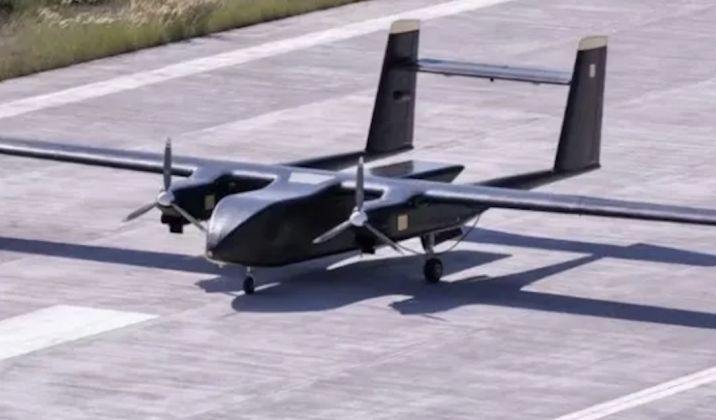
Chinese Tianma-1000 Unmanned Transport
The Chinese Tianma-1000 unmanned transport aircraft completed its maiden flight on Sunday January 11, marking a major milestone in the country’s efforts to pioneer advances in autonomous airborne logistics capabilities. The aircraft was independently developed by Xi’an Aisheng Technology Group, and can serve as a logistics transport, emergency rescue, and material delivery vehicle, while being able to operate in complex plateau terrain due to its ultra-short takeoff and landing distances. The new unmanned transport is equipped with an optical-guided landing assistance system, allowing it to identify landing zones in low-visibility conditions such as rain, snow, and fog, and is considered particularly valuable for operations in the country’s mountainous and coastal regions.
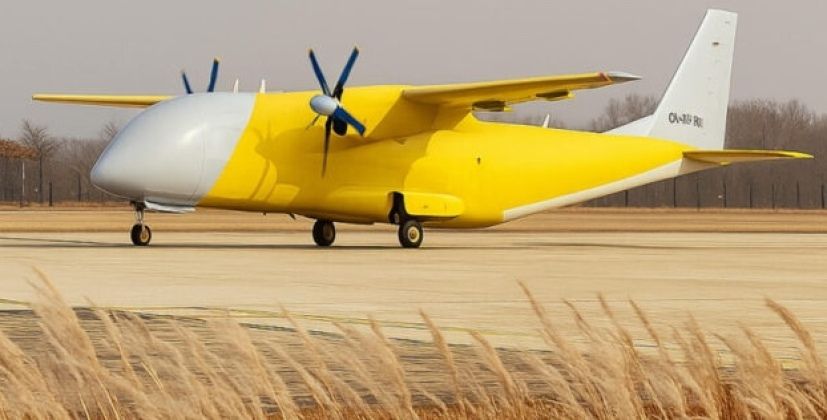
The Tianma-1000 has a 1000 kilogram payload and a 1,800 kilometres range, with its modular cargo bay allowing for the delivery of a wide range of payload types. Its first flight closely follows the maiden flight of another unmanned transport, the CH-YH1000, in May 2025. The primary difference between the two similar sized aircraft is the Tianma-1000’s greater focus on operations from unpaved surfaces and makeshift airfields in hard to reach regions, with the aircraft reported to also have superior intelligent route planning and quick cargo handling capabilities. The aircraft’s development is expected to pave the way to the development of significantly heavier and more complex unmanned transport aircraft, which have the potential to revolutionise logistics for the Chinese People’s Liberation Army.
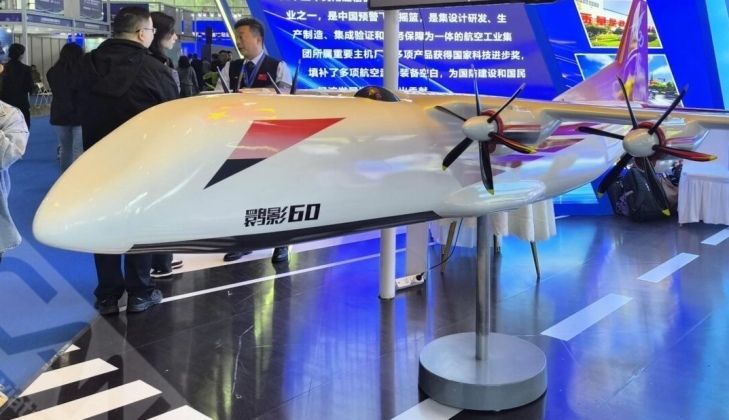
In October 2025 China’s aviation sector unveiled a model of the a significantly larger unmanned transport drone, the Ibis Shadow 60, which was developed based on the Y-9 transport, and has a takeoff weight of over 60,000 kilograms. Its development is expected to be one of the next major steps in the autonomisation of aerial logistics, and will be able to carry large payloads such as military vehicles, helicopters, and fighters, allowing for rapid deployment including to locations that are difficult to access. The development of the Tianma-1000 is expected to provide experience that will be highly valued for developing the Ibis Shadow 60 and other more ambitious programs. The Chinese aviation sector is currently producing the Y-20, the world’s largest military transport in production, and is reportedly working on the development of a larger strategic transport. Efforts in the United States and Russia to develop successors to the respective C-5 and An-124 strategic transports are expected to face considerable delays due to major issues that emerged in both countries’ aviation sectors in the post-Cold War years, with both countries also remaining far behind in the development of unmanned transports.
