
China Deploys H-6N Strategic Nuclear Bombers with Ballistic Missiles for Pacific War Drills
Military Watch Magazine Editorial Staff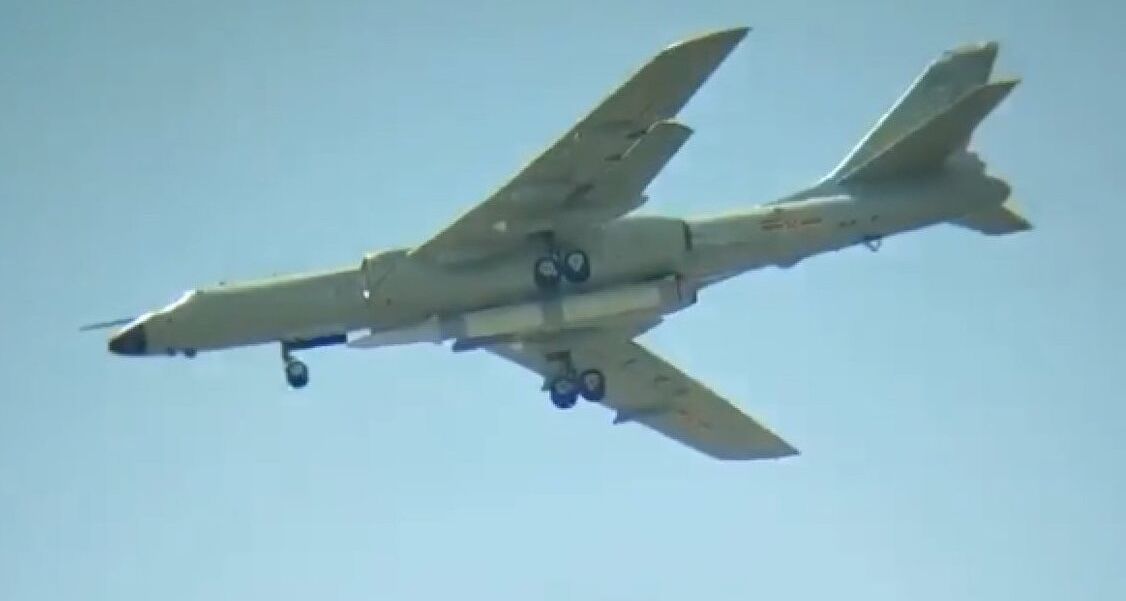
H-6N with JL-1 Ballistic Missile
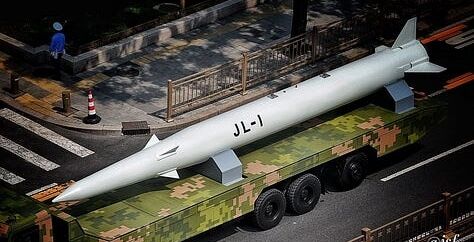
Footage released by the Chinese People’s Liberation Army (PLA) showed an H-6N medium range strategic bomber flying with the JL-1 ballistic missile during a joint anti-ship exercise, providing one of the clearest public indications yet of the aircraft’s role in China’s developing airborne nuclear force. The bomber has emerged as an increasingly important component of the country’s nuclear deterrent following the public confirmation that the aircraft can carry the nuclear-capable JL-1. The development is significant because the H-6N and JL-1 combination provides China with a third method of delivering nuclear weapons across intercontinental ranges, thus completing the country’s nuclear triad and posing new challenges for the defence of the United States mainland.
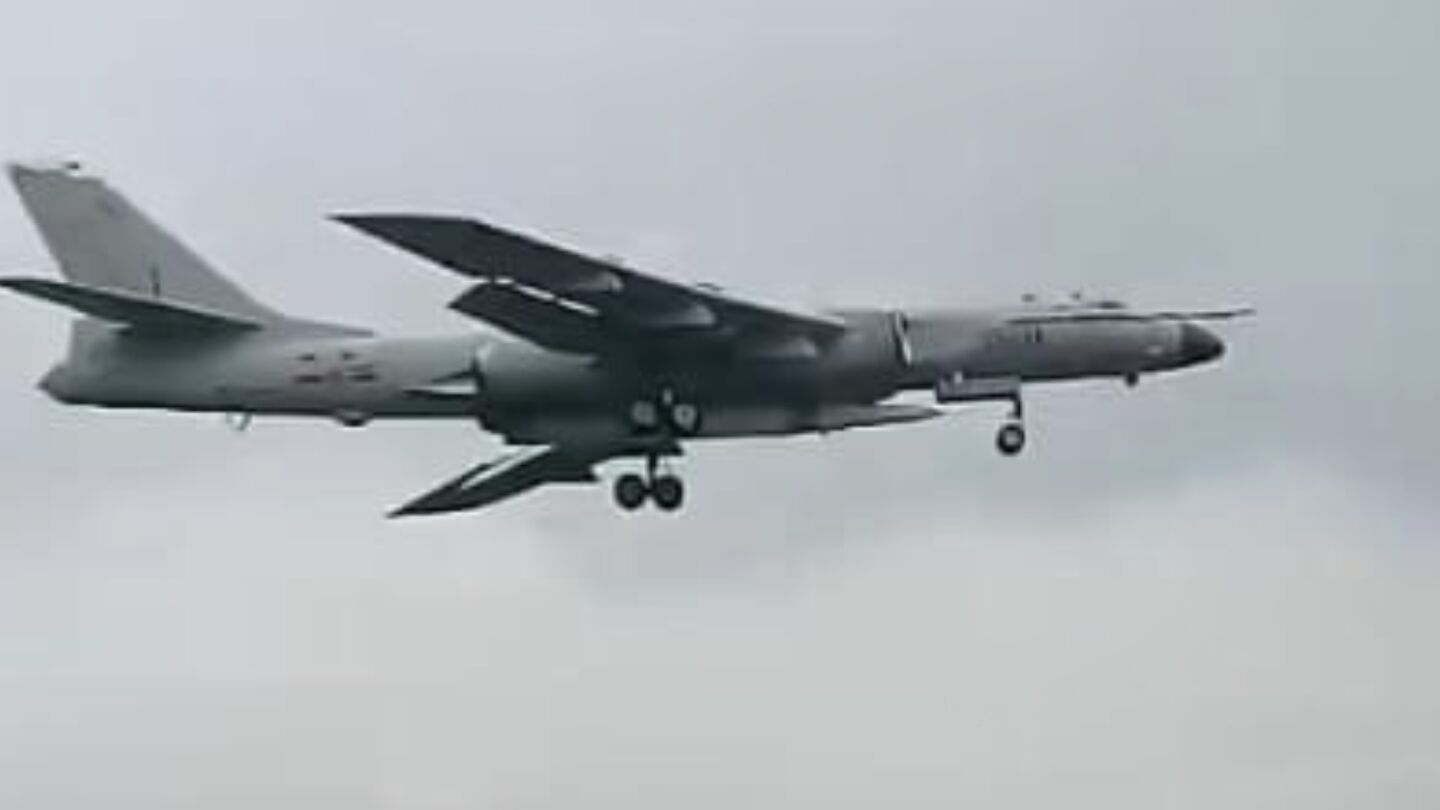
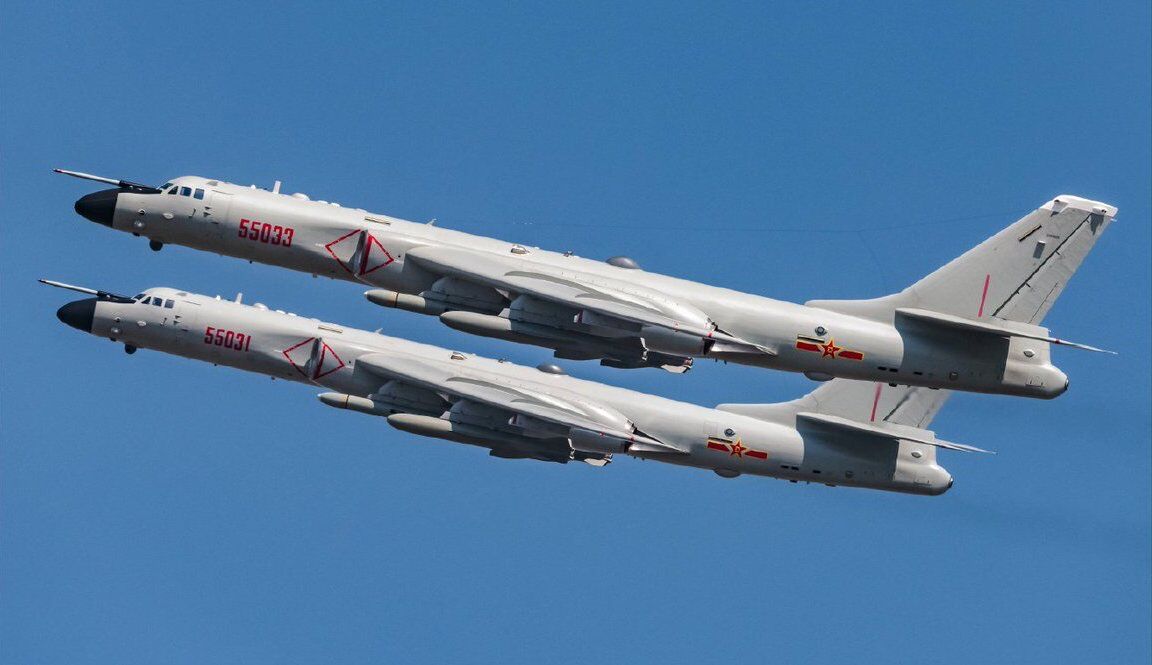
The H-6N is the latest and most extensively redesigned member of the H-6 family, which has served China for more than six decades with continuous production multiple comprehensive rounds of modernisation. Unlike earlier H-6 variants, the H-6N was designed with a modified fuselage to carry large external weapons and with an in-flight refuelling capability, substantially increasing its operational flexibility and allowing it to operate at considerably greater distances from Chinese airbases. The aircraft also benefits from the extensive avionics, sensor and weapons upgrades introduced across China’s modern H-6 fleet.
The combination of the H-6N and JL-1 has important implications for the survivability of China’s nuclear forces. A conventional fixed-site ballistic missile force can be vulnerable to a large-scale first strike if an adversary can locate and destroy its launch facilities, while ballistic missile submarines provide greater concealment but remain substantially more expensive and technologically demanding. Bombers, by contrast, can potentially be dispersed, placed on heightened alert and launched following indications of an incoming attack, reducing the likelihood that the entire force could be destroyed on the ground. More significantly, the aircraft can be used for nuclear signalling.
The aircraft’s expanding operational activity has also demonstrated a growing willingness to employ H-6 bombers well beyond China’s immediate territorial approaches. In July 2024, H-6 bombers conducted a joint patrol near Alaska alongside Russian Tu-95 strategic bombers, prompting US and Canadian aircraft to respond. Such operations demonstrated that the H-6 family can be employed for strategic signalling far from China’s coastline, although the nuclear H-6N’s operational employment would represent a substantially more consequential mission.
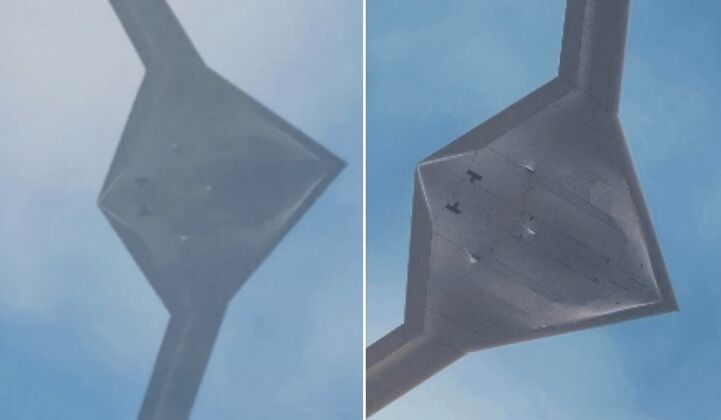
The H-6N is expected to play a limited role in strategic nuclear deterrence, before China’s first intercontinental range stealth bombers are brought into service around the year 2030. These aircraft have already been seen in flight testing for several years, and appear to be significantly larger and more heavily armed than the rival U.S. B-21 which is currently under development. While the H-6 relies on its advanced missiles to engage targets at long ranges, its successors were designed over 70 years later with flying wing stealth designs allowing them to launch not only missile strikes, but also deep penetration strikes. This is expected to be a game changer in the strain it places on the U.S. and its strategic partners’ air defences.
