
China Delivers Enhanced Type 59D Tanks to the Cambodian Army to Replace Older Tanks Destroyed By Thailand
Military Watch Magazine Editorial Staff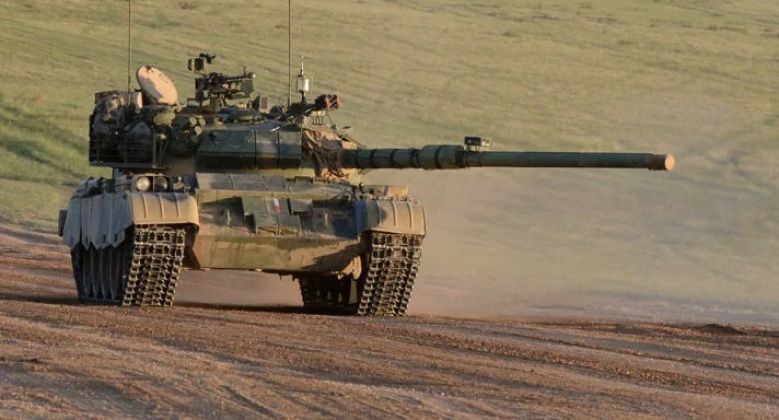
Type 59D Tank
Chinese Type 59D main battle tanks have begun deliveries to the Cambodian Army, with the vehicles appearing to have been drawn from reserves or possibly frontline units in the Chinese People’s Liberation Army, which still operates the type widely in rear units. Following concerns that the delivery would cause controversy in neighbouring Thailand, which was engaged in a brief border war with Cambodia in December, the Chinese military attache in Bangkok confirmed that, according to the annual military cooperation agreement, a total of 93 vehicles were being supplied to Cambodia. He stressed that this was unrelated to the recent conflict between Thailand and Cambodia. The tanks may be intended to replace Cambodian Army vehicles that were destroyed by Thai forces during hostilities.
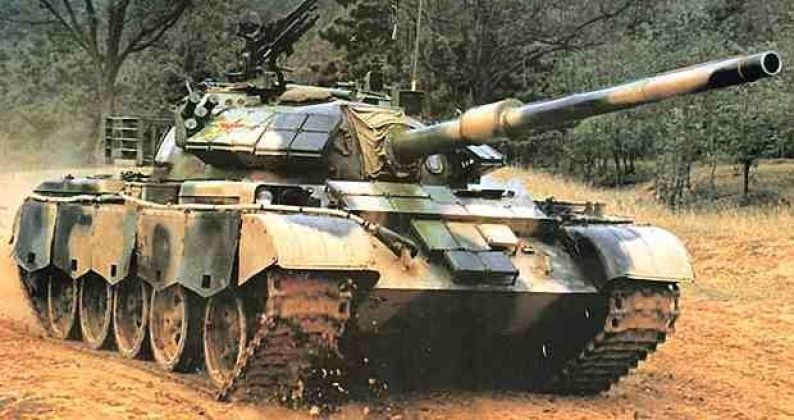
The Type 59D represents the most capable variant of the Type 59, a design which dates back to the late 1940s. Rather than introducing an entirely new platform, China upgraded hundreds of existing tanks with improved firepower, protection, and electronics to prevent them from becoming obsolete. The most outstanding feature of the Type 59D is the integration of a long-barrelled 105 mm Type 94 rifled gun, replacing the original 100 mm gun found on prior variants. It also integrates a thermal imaging system, artillery-launched missiles with a range of 5.5 kilometres, and explosive reactive armour, placing it close to parity with many late Cold War era vehicles. Nevertheless, when deployed by the Sudanese Army to engage South Sudanese T-72 tanks, they were overwhelmingly outmatched, leading Sudanese forces to deploy more modern Type 96 tanks to the conflict zone. Cambodia’s Type 59D tanks are similarly expected to be very comfortably outmatched by the Soviet T-84 and Chinese VT-4 tanks fielded by the Royal Thai Army. They may nevertheless perform well in infantry support roles.
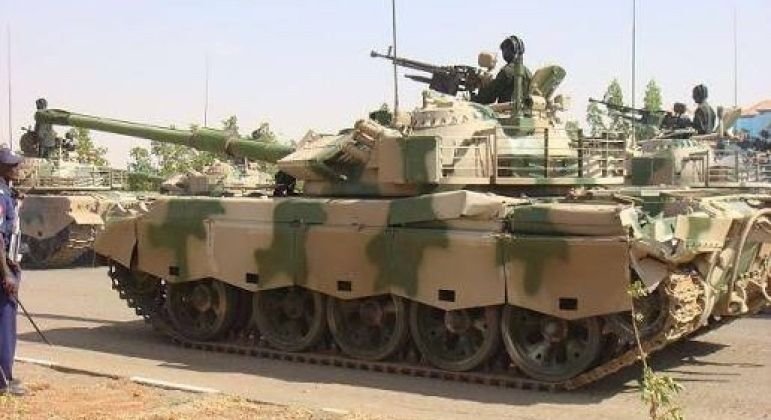
One of the greatest weaknesses of early Type 59s was their limited ability to fight at night, with the Type 59D having addressed this by incorporating thermal sights and improved passive night vision, allowing crews to detect and engage targets in darkness, smoke, or adverse weather. This represented a major leap over the active infrared systems used on earlier variants, which had shorter range and could reveal the tank’s position. The Type 59D received engine and automotive improvements that enhanced reliability and operational performance, with some versions integrating an upgraded 580 hp diesel engine, partially compensating for the additional weight of the explosive reactive armour and electronics.

A leading advantage of the Type 59D is that it is very simple to operate and maintain, even for underdeveloped countries with relatively low technical education standards, and places little strain on logistics. With the Type 59 being a derivative of the Soviet T-54/55 design, it is notable that the Russian Army has deployed its own T-54/55s for infantry support roles in the Ukrainian theatre alongside its more modern vehicles. T-54/55 tanks with North Korean modernisation packages notably also played major roles in Syrian Army counterinsurgency operations in the 2010s and early 2020s. China’s defence sector has continued to develop enhanced derivatives of Type 59 design for foreign clients, including the Al Zarrrar developed for Paksitan, and more recently the Al Kafil-1 has been assembled under license in Iraq with an entirely new turret nd a remotely controlled weapons station.
