
China Deploys J-10C Fighters and KJ-500 ‘Flying Radar’ to the United Arab Emirates For Unprecedented Joint Exercises
Military Watch Magazine Editorial Staff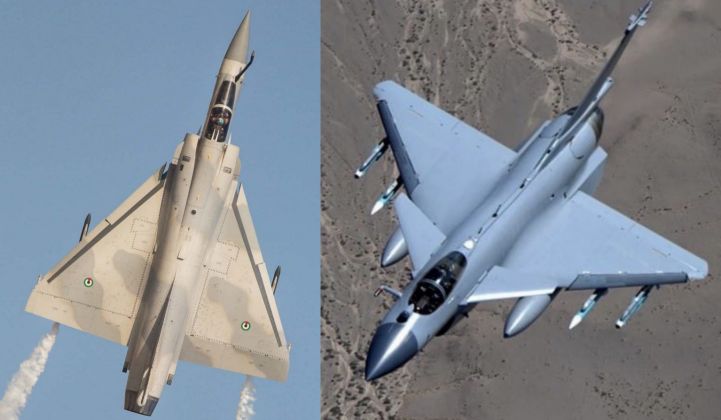
UAE Air Force Mirage 2000 (left) and Chinese J-10C Fighter
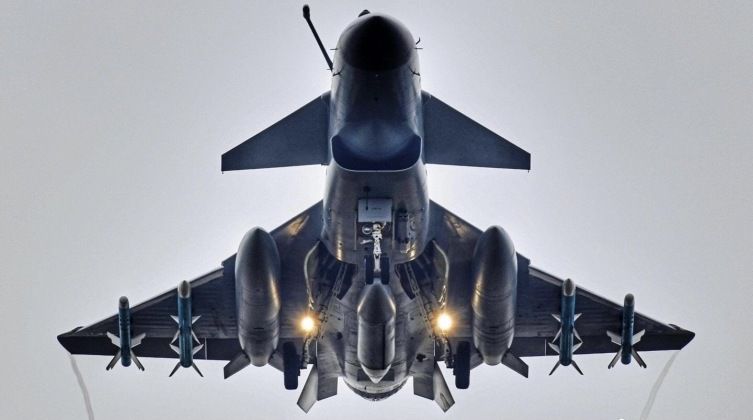
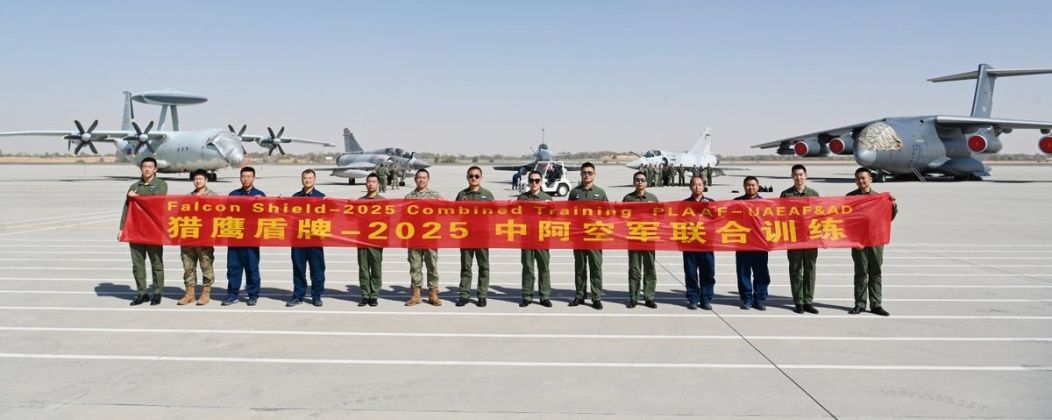
The Chinese People’s Liberation Army Air Force has or the first time deployed a contingent to the United Arab Emirates (UAE) for joint exercises with the UAE Air Force. Spokesman for China’s Ministry of National Defence Senior Colonel Zhang Xiaogang revealed that the drills were conducted from December 9 to 22, and represented the third iteration of the “Falcon Shield” exercises between the two countries, after the previous two rounds of exercises were hosted in China. The spokesman said the Chinese PLA Air Force deployed J-10 fighter jets, KJ-500 airborne early warning and control systems, and YY-20 aerial tankers tankers to the UAE for the first time, specifying that Chinese and Emirati forces operated in mixed formations. Exercises included command and control simulations, air superiority operations, and exchanges focused on night operations, unmanned combat, and battlefield search and rescue.
The UAE Air Force notably did not deploy its most capable fighter, the F-16E/F Desert Falcon, to participate in Falcon Shield exercises, instead deploying its older French-supplied Mirage 2000s which have longs since been considered obsolete. The United States strictly restricts the use of its fighters for joint exercises with potential adversaries, which has meant that operators of the F-16 such as the UAE and Thailand have consistently been forced to use only their secondary fighter types acquired from other sources to participate in exercises with China. The United Arab Emirates had previously reached a deal with the United States in late 2020 to procure F-35A fifth generation fighters to replace its Mirage 2000s, although an unwillingness to meet the very wide ranging requirements imposed by Washington, including the cutting of cooperation with the Chinese telecoms giant Huawei, were major factors preventing the deal from being finalised.
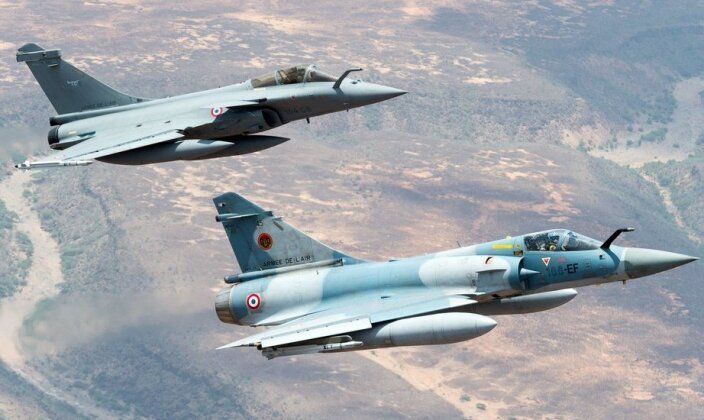
Although the UAE Defence Ministry has considered procuring non-Western fighter types in the past, most notably the Russian Su-27M and Su-37 in the 1990s, and even entered a joint fighter program with Russia in the late 2010s, the country has consistently come under significant Western pressure not to do proceed with contracts. Thus although the Chinese J-35 fifth generation fighter has been assessed to be an attractive alternative to the F-35, it is considered highly unlikely to be selected for political reasons. In December 2021 it was announced that the UAE Air force had selected the French Rafale to replace its Mirage 2000 fleet, and signed a $19 billon to procure the aircraft making it the type’s largest foreign operator. The Rafale had previously been rejected in favour of the F-16E/F during a tender in the early 2000s. The French fighter’s combat potential has long been criticised as highly limited compared to modern American and Chinese fighters, with the aircraft having fared poorly against Chinese-built Pakistan Air Force J-10Cs during its sole high intensity air-to-air engagement when flown by the Indian Air Force in May 2025.
The deployment of Chinese fighter and support aircraft for unprecedented exercises in the strategically located Persian Gulf region has provided some cause for concern among Western analysts, with the region having long been dominated by Western Bloc forces. The United Arab Emirates’ consistently close alignment with Western geopolitical interests, however, has raised the possibility that information on the performances of Chinese aviation units will be passed on to its strategic partners in the Western world. The Gulf state is currently playing a central role in supporting Western-backed war efforts in Sudan and Yemen, and hosts major United States and French military facilities on its territory, while its arms imports have for decades been almost exclusively focused on Western products providing a major boon to U.S. and European defence sectors. Its operations have included the deployment of personnel to oversee the ongoing war effort against the Sudanese state, and the financing of Colombian and Ukrainian contractor forces to participate in the war effort.
