
China Deploys DF-27 Long Range Hypersonic Missiles For Complex Urban Warfare Drills
Military Watch Magazine Editorial Staff
Chinese DF-27 Missiles Drive Through City
Footage published on Chinese social media has shown multiple launchers carrying DF-27 intermediate range hypersonic ballistic missiles travelling through a city, in what multiple sources have assessed to be an urban warfare drill. The vehicles moved in convoy formation through streets, representing a rare development for the country’s strategic arsenal. The DF-27 is estimated to have a range of between 5,000 and 8,000 kilometres, thus placing its reach between the DF-26 intermediate range ballistic missile with a 4,500 kilometre range, and the country’s intercontinental range arsenal aimed at the United States mainland. Its recent service entry has caused serious concerns in the United States, as it provides a deep strike capability that leaves U.S. warships and bases in the mid and eastern Pacific potentially vulnerable.
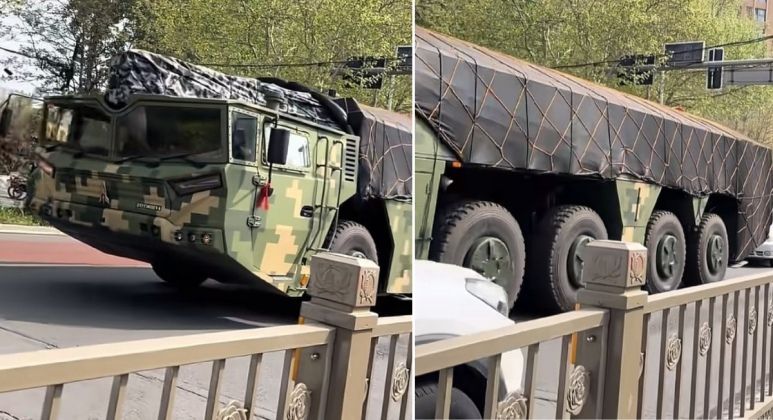
The DF-27 is one of three intermediate range ballistic missile types with hypersonic glide vehicles in the world, alongside the North Korean Hwasong-16B and the Russian Oreshnik. Unlike these other designs, however, it is assessed to be heavily optimised for strikes on warships such as destroyers and aircraft carriers. China has long led the world in the development of anti-ship ballistic missiles, which are not widely fielded by other countries, and which have the potential to pose serious threats to Western Bloc warships across much of the Pacific. The Chinese People’s Liberation Army has been building up medium and intermediate range missile arsenals for considerably longer than Russia, the United States, or North Korea, with the former two having been banned from developing such missiles under the Intermediate Range Nuclear Forces treaty, while North Korea only made major progress with medium and intermediate rate flight testing in the 1990s and 2010s respectively.
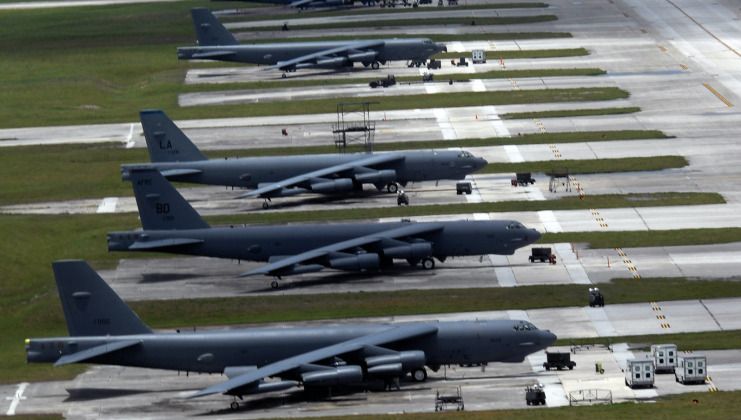
The DF-27 appears to be a dual-role missile intended to be used to strike both warships and ground targets, with warheads expected to vary depending on the target. It is likely that a portion of the arsenal will be equipped with nuclear warheads. The missile is also considered likely to be able to integrate penetration warheads optimised to destroy fortified targets, such as underground command centres on Guam and Hawaii. Analysts have wide assessed that the missile likely benefits from a multi-layered guidance architecture pairing both inertial and satellite guidance, with additional terminal guidance to engage targets with precision. Its terminal seeker is likely integrate a radar to be able to engage moving warships.
