
China’s Vast Coastal Defence Missile Network Tested in New Anti-Shipping Exercises
Military Watch Magazine Editorial Staff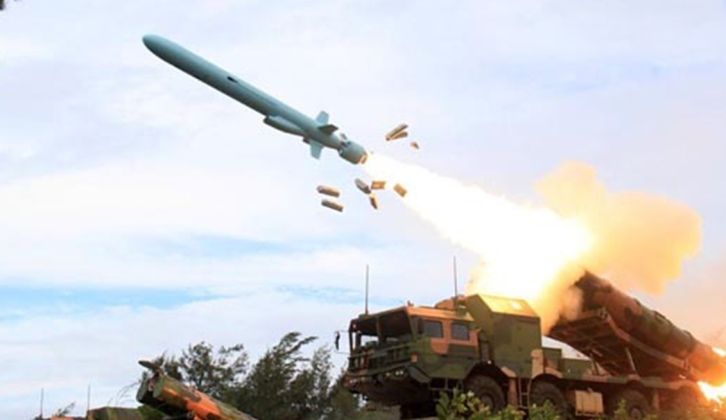
YJ-62 Anti-Ship Cruise Missile Fired From Mobile Launcher
The Chinese coastal defence network deployed under the People’s Liberation Army Navy’s Eastern Theatre Command has been put through a series of combat exercises, which were held in unfamiliar terrain to test and improve battlefield adaptability during high tempo operations. The unnamed coastal missile regiment involved focused on rapid deployment and strike coordination, conducting long-range cross-regional manoeuvres before carrying out live-fire training. Early warning systems involved rapidly identified incoming targets, transmitting real-time data over secure datalinks to the command post, allowing multiple assault groups to be coordinated to quickly plot optimised strike paths. Assault teams executed synchronised missile launches against simulated maritime targets, with deployment in a new more decentralised formation reported to increase engagement efficiency.
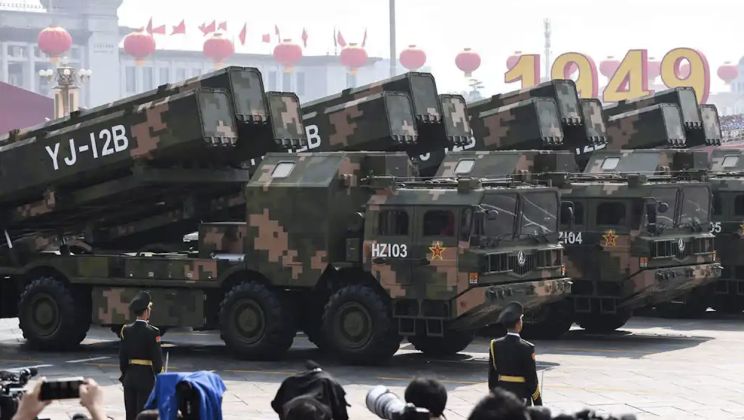
The Chinese People’s Liberation Army’s coastal defences are considered the most formidable in the world, and deploy a wide range of mobile cruise missile systems capable of engaging targets far out to sea. The majority of launchers in the arsenal are equipped with YJ-12 and YJ-62 anti-ship cruise missiles, although hypersonic missiles such as the YJ-20 are expected to also be brought into service o future launchers. Although coastal defence networks are relied on heavily by states which lack sizeable surface navies, such as Russia, Vietnam and North Korea, China has continued to invest in such capabilities despite fielding one of the world’s most formidable surface fleets. The service entry of new generations of much longer ranged and more capable cruise missiles, and the significantly improvement of reconnaissance capabilities over the East China Sea, Yellow Sea, Sea of Japan and South China Sea, allows coastal defence systems to play much greater roles in regional contingencies. The proximity of many key hotspots to the coastline of the Chinese mainland, including the Taiwan Strait and surrounding waters, is a further contributor to these systems’ high importance for China’s defence.
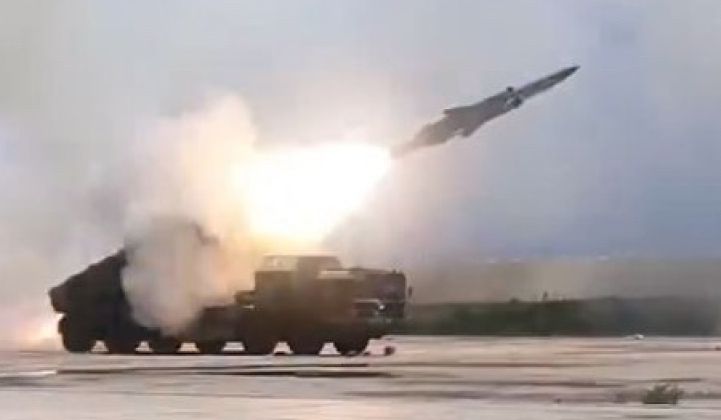
Exercises saw a number of scenarios simulated in which initial salvos failed to fully neutralise their targets, at which time reserve units would conduct immediate followup strikes. One such scenario saw a hostile ship attempt to evade destruction following an initial wave of missile attacks, with the command post using updated reconnaissance data to rapidly deploy a second strike group to finish off the target. The coastal defence regiment also tested its new counter-drone capabilities, implementing a three-layered defence system integrating electronic jamming, kinetic intercepts, and camouflage techniques to degrade the reconnaissance and strike capabilities of hostile unmanned aircraft. One scenario saw decoy assets deployed to confuse and divert hostile drone surveillance. Although coastal defences are relied on far less heavily than during the Cold War era, they have continued to receive funding for sustainment and large scale new procurements, with their costs remaining low despite the outsized impact the could potentially have on a regional conflict.
