
China and N. Korea in the Crosshairs: U.S. Expands Airbase on Disputed Wake Island
Military Watch Magazine Editorial Staff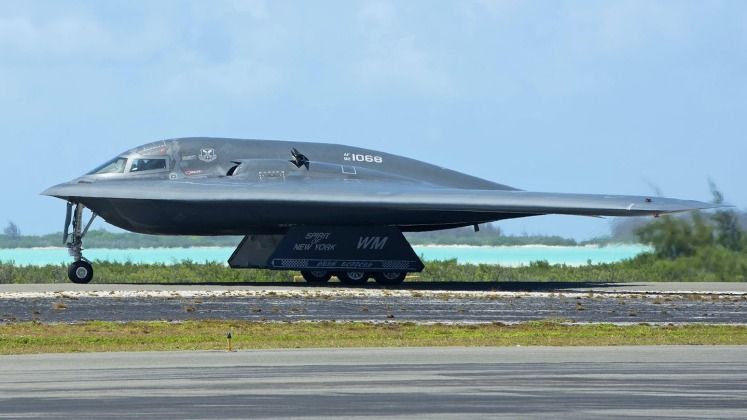
B-2 Spirit Stealth Bomber on Wake Island
U.S. Air Force
The U.S. Military has carried out a considerable expansion of its airfield at Wake Island, which is situated between Japan and Hawaii and is seen as a vital staging ground for projecting power into the Western Pacific. The expansion comes amid growing tensions with China and a simmering conflict with North Korea, both of which have invested heavily in ballistic missiles and a range of other assets capable of striking Guam - currently a central hub for U.S. air and naval operations in East Asia. The U.S. has notably sought to develop facilities further afield than Guam to provide greater survivability against possible Chinese or Korea strikes to neutralise them in a war’s early stages. This previously included a major Marine facility and airfield in Australia - the latter which will be used to house American intercontinental range B-21 stealth bombers. Increased militarisation of Wake Island could mark a furthering of this trend.
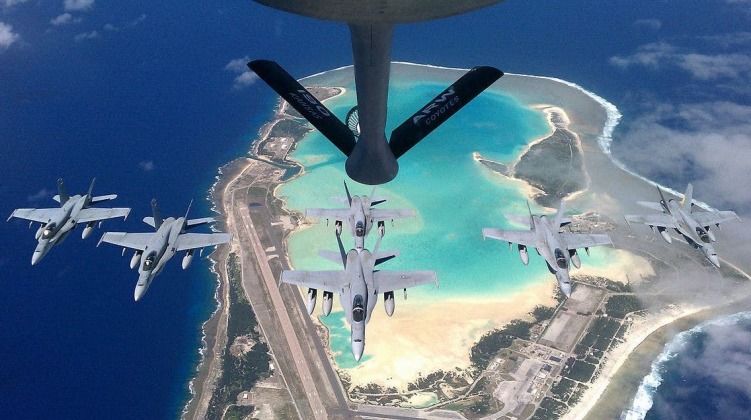
Wake Island serves as a reserve airfield should U.S. air units need to fall back from the Western Pacific, and is considerably closer to the U.S. mainland than Guam or Japan. The majority of the island is taken up by a 9,800 foot runway sufficient to accommodate anything in the Air Force’s inventory including heavy bombers. Wake Island is notably a disputed territory, and is also claimed by the Marshall Islands, although American militarisation of the territory and its value as a staging ground for offensive operations leaves little possibility that it will change hands or that the dispute could be arbitrated. The Pentagon has notably expanded its investment in military facilities on Wake Island for the past several years, reflecting its new focus on the Western Pacific region, with changes including apron and runway improvements and a installation of a large solar farm. It is expected that facilities on the territory will be hardened and fortified in the coming years to increase survivability against possible Chinese or Korean missile strikes, which are expected to occur very early in a possible conflict should the U.S. go to war in East Asia.
