
British Royal Navy Upgrades Type 45 Destroyers with Drone Launchers for Fleet Air Defence
Military Watch Magazine Editorial Staff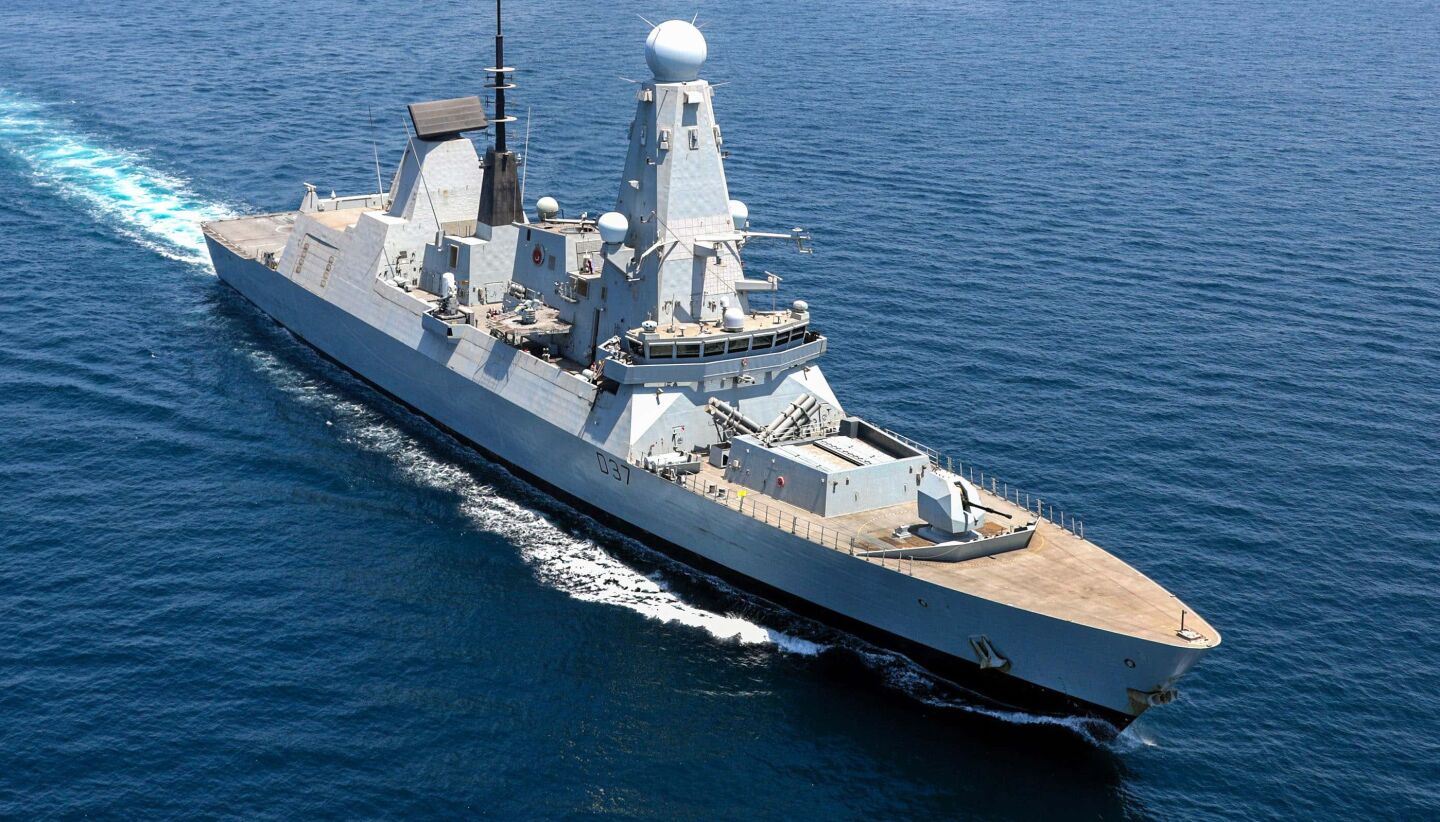
British Royal Navy Type 45 Destroyer
The British Royal Navy’s Type 45 class air-defence destroyer HMS Dauntless has been seen integrating what appear to be new launchers for interceptor drones, potentially marking a significant addition to the fleet’s capabilities against unmanned aerial threats. Images released by the UK Ministry of Defence show two previously unseen containers mounted on either side of the ship’s main communications mast. The installation suggests that the Navy is exploring additional means of countering hostile drones without relying exclusively on conventional surface-to-air missiles, which can be substantially more expensive than the targets they are intended to destroy. The precise identity and capabilities of the new equipment have not been confirmed.
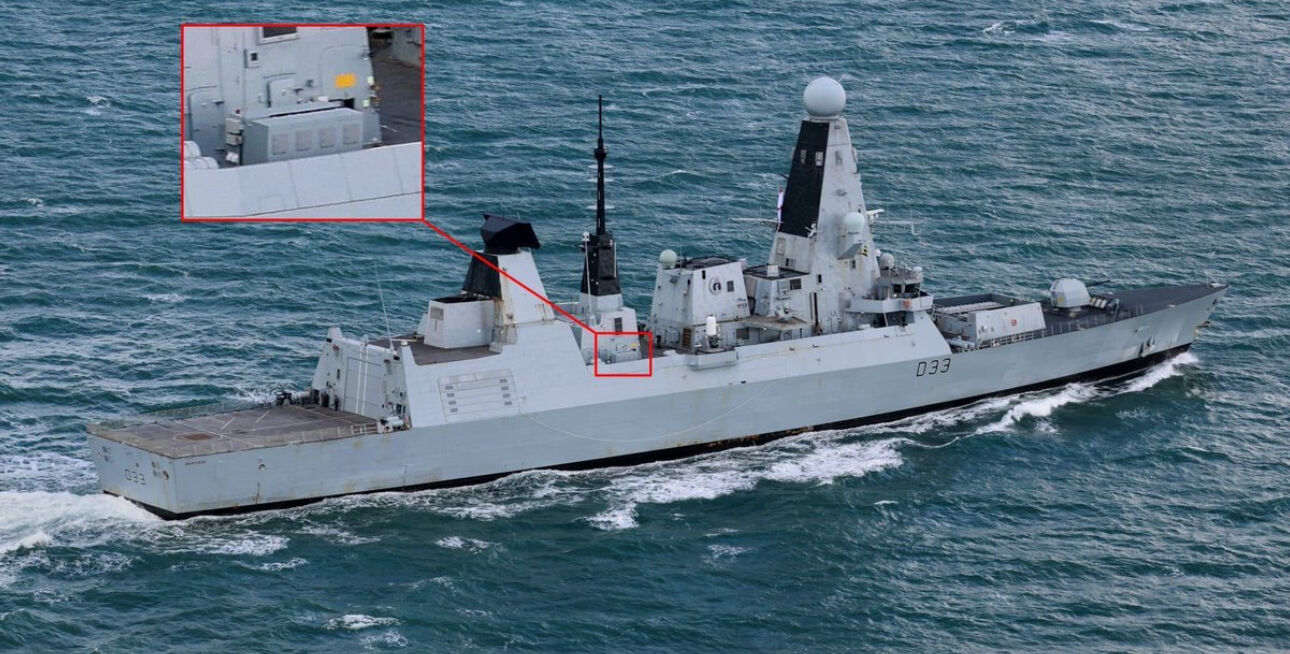
The photographs were taken during a passing exercise, or PASSEX, involving Dauntless and five Ukrainian minehunters off the Isle of Wight. The Ukrainian vessels were concluding Exercise Lion Protector, which began in August and aims to improve the ability of Joint Expeditionary Force nations to coordinate operations on Europe’s northern flank. According to Naval News, the two box-like structures are positioned to port and starboard of the communications mast and appear to measure approximately two metres by one metre. Their dimensions and configuration suggest multi-cell launchers designed to deploy interceptor drones, although this identification remains unconfirmed. The apparent lack of additional dedicated sensors on the launchers suggests that any interceptor drones could be receiving targeting information from the destroyer’s existing sensor suite.
The apparent integration of new counter-drone systems has been achieved as multiple navies seek to adapt to the proliferation of relatively inexpensive drones and coordinated attacks involving multiple unmanned systems. The Royal Navy has gained direct experience of these threats during operations in the Red Sea, where Yemeni Ansurullah Coalition forces have employed drones and missiles against commercial shipping and naval vessels. British ground forces including the Royal Marines and various special forces units have also gained extensive experience operating in drone-dominated battle spaces in the Ukrainian theatre, where they have been deployed since early 2022.
The Type 45 has become notorious for its outstandingly poor availability rates, as the ships have been prone to frequent breakdowns particularly when operating in warm waters. The ships have at times seen their Rolls Royce diesel engines “degrade catastrophically,” in hot climates such as those found around the Persian Gulf. In February 2024, the Navy withdrew the Type 45 class destroyer HMS Diamond from operations near Yemen, citing “technical problems,” fuelling speculation that engine issues were responsible. Highlighting prevailing issues with the vessels, the first destroyer of the class, HMS Daring, required a refitting and refurbishment period of over 3000 days which ended in 2025. With the Ministry of Defence having in June cancelled the Type 83 class destroyer program, however, the Type 45 is expected to continue to be heavily relied on and upgraded with new subsystems.
