
British Armed Forces Equip F-35B Jets With Indigenous Missiles; The New Face of the Royal Air Force Nears Full Operational Capability
Military Watch Magazine Editorial Staff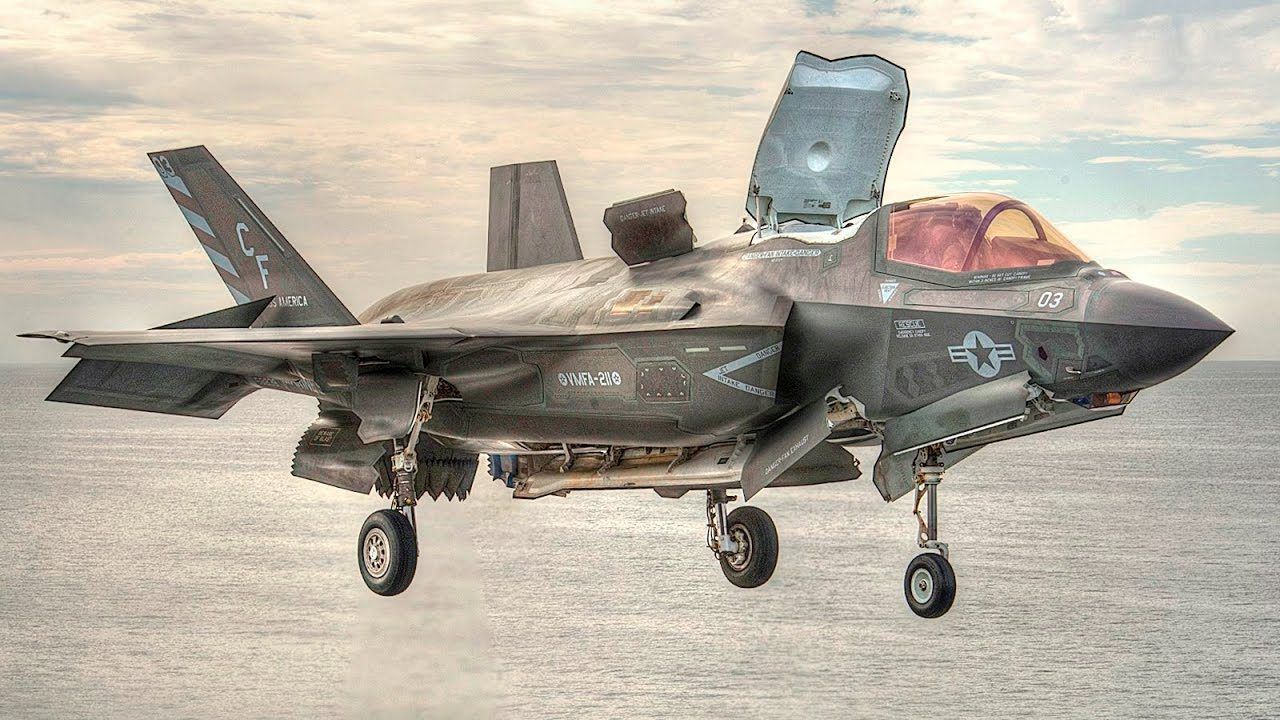
F-35B Stealth Fighter Performs Vertical Landing
As the largest foreign client for the F-35 Joint Strike Fighter, Britain’s armed forces have been the only Level 1 partner in its development and contributed significantly to the development of the F-35B variant in particular - largely through the provision of thrust vectoring technologies key to facilitating the aircraft’s short takeoff and vertical landing (STOVL) capabilities. With Italy having terminated its plans to acquire the F-35B, and with Turkey’s future in the F-35 program in serious question, Britain remains the only client for the F-35B outside the United States. The British armed forces are notably also the only military organisation in the world which have considered relying exclusively on the B variant of the new fighter, with most states relying heavily on the F-35A - a variant which lacks STOVL capabilities but is more capable in combat and more than $40 million less costly per aircraft. Unlike other potential operators which have sought to use the B variant for specialised roles, including deployment from carriers which lack arresting gear and catapults or from small runways such as those found on makeshift island bases, Britain’s Navy and Air Force are set to operate the fighters jointly - meaning all fighters deployed by either service will be compatible with the country’s Queen Elizabeth Class aircraft carriers.
As the first of Britain’s two Queen Elizabeth Class carriers begins preparations to receive the first fighters on its deck, the first of the country’s F-35 jets have reportedly been fitted with indigenous munitions - designed to be fully compatible with U.S. hardware. Compatibility has long been key to joint defence programs between Britain and the United States, with the predominantly British Harrier Jet and British operated Eurofighter Typhoon jets being equipped with U.S. AIM-120 air to air missiles. The fitting of the predominantly U.S. fighter with British short ranged air to air munitions, the British Aerospace ASRAAM, alongside the complementary long ranged AIM-120 and in future possibly the European Meteor missile, further this trend. The ASRAAM has highly similar capabilities to the American AIM-9 Sidewinder, which is operated in its place onboard the U.S. Military’s own F-35 jets. The British armed forces are currently the only service to deploy an indigenous short ranged air to air missile from the F-35, though Israel’s Rafael Advanced Systems is also reportedly developing a variant of its Python missile, its own analogue to the AIM-9, to deploy from Israeli F-35A fighters.
Visiting Defence Electronics and Components Agency (DECA) in Wales, a major repairs site for the F-35, the country’s Defence procurement minister Stuart Andrew MP stated regarding the development: "The F-35 Lightning fleet has moved another step closer to defending the skies and supporting our illustrious aircraft carriers with this landmark flight. Exceptional engineering from the UK is not only helping to build what is the world's most advanced fighter jet, but is also ensuring it's equipped with the very best firepower. This flight by a British pilot, in a British F-35 jet with British-built weapons, is a symbol of the major part we are playing in what is the world's biggest ever defence programme, delivering billions for our economy and a game changing capability for our armed forces." Ultimately with Britain’s ageing Tornado swept wing fighters nearing retirement, the F-35 will provide a much needed complement to the Eurofighter Typhoon and provide the country with its first new carrier based fighter in many decades. Whether the armed forces will go ahead with purchasing the 138 planned F-35B jets - or whether due to the fighters’ massive acquisition and operational costs the military will instead opt for a smaller number of aircraft - possibly alongside some less costly F-35A variants - remains to be seen.
