
Britain's Royal Air Force Has Yet to Induct a Single Stealth Fighter into Active Service - It Could Have Had them 30 Years Ago
Military Watch Magazine Editorial Staff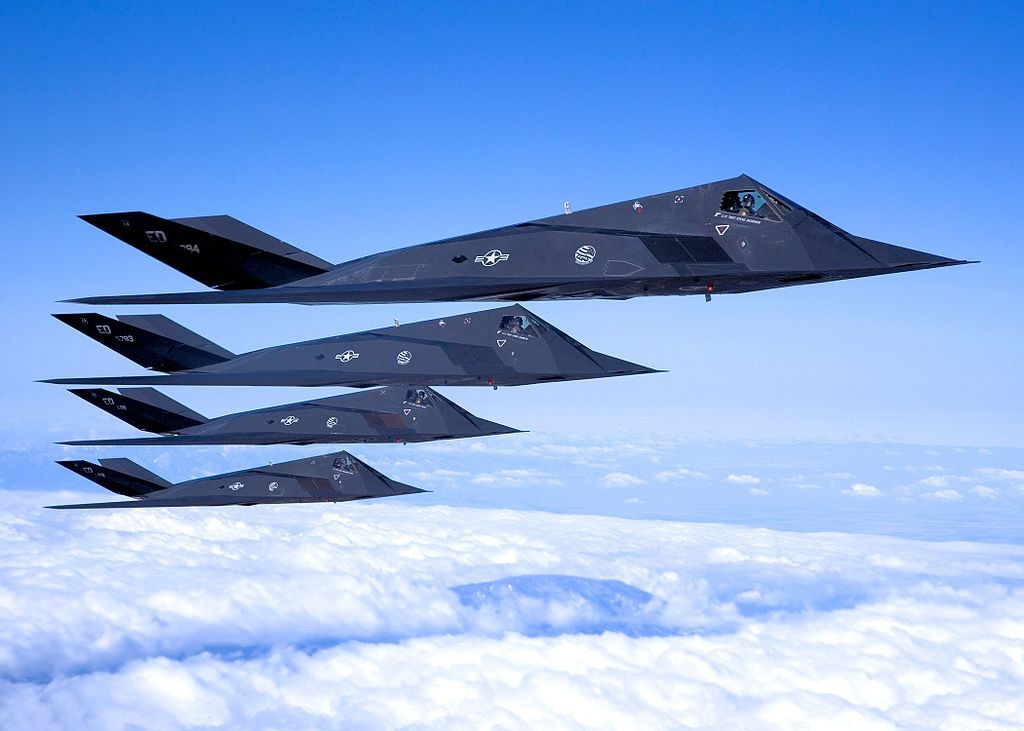
F-117 Nighthawks Stealth Fighters
Wikimedia Commons
The United States Air Force's F-117 Nighthawk strike fighter pioneered the stealth technologies used by American fifth generation fighters today. Developed by Lockheed Martin's Skunk Works based on the Have Blue technology demonstrator, the fighters first entered service in 1983. With Soviet built surface to air missile platforms serving as a major inhibitor to U.S. operations, and with these technologies continuing to advance with the induction of the S-200 and S-300, the F-117 was designed as a force multiplier to evade radar and thermal detection and neutralise SAMs - thus allowing the remainder of the Air Force access to enemy airspace. The fighters never faced modern Soviet air defence systems in combat, and their only major operations were against Iraqi air defences in 1991 during the Gulf War. Iraq relied primarily on systems dating back to the 1960s, and lacked any long range systems more capable than the S-125. The training of its SAM crews was also highly questionable, as also demonstrated by their previous performance during the Iran-Iraq War. The Nighthawks were well within their limits to conduct airstrikes to cripple the Iraqi SAM network and proved an invaluable asset. Taking no losses, they proved far less vulnerable than other U.S. aircraft which overall suffered 45 losses during the brief conflict.
While stealth technology was kept a well guarded secret until the Gulf War, the United States did attempt to sell the F-117 to one of its closest partners - the United Kingdom. Project Moonflower was the code name for the program to sell the still top-secret fighters to Britain - which would have allowed for larger production and lower acquisition costs for the United States Air Force's own Nighthawks. U.S. Defence Secretary Casapar Weinberger reportedly held secret meetings with British Prime Minister Margaret Thatcher on the potential sales, and Britain was the first U.S. ally informed of the program. The British Prime Minister reportedly replied with the following words to U.S. President Reagan: “Dear Ron, I was immensely impressed by your splendid achievement: three cheers for America! I was also very touched by the generosity of the offer of participation which (Sec. Weinberger) brought. It brings home once again who our real friends are.”
While acquiring the Nighthawk initially appeared promising, a number of factors made acquiring the F-117 unfeasible for the Royal Air Force. The fighters cost approximately $160 million each to acquire, making them the second most expensive fighters ever produced other than the F-22 Raptor. What really stood out however were the fighter's maintenance requirements and operational costs, more than twice those of any fighter in service in the world, with the F-117 requiring well over 100 hours of maintenance for every hour in the air. The fact that the Nighthawk was a 'black project', a well kept secret, dissuaded the British Armed Forces from acquiring the platform. A letter by the Ministry of Defence to Charles Powell, the prime minister’s foreign affairs adviser, in 1986 stated: “Mr Weinberger has offered us a chance to purchase the current U.S. aircraft but we have replied that we would not wish to actually buy hardware while the programme remains strictly black.” This would very likely have prevented British forces from deploying the Nighthawk without U.S. consent, as the platform's secrecy would be compromised and inevitably lead to the Soviet Union developing anti stealth countermeasures far earlier than the U.S. would have liked. Ultimately such countermeasures were eventually developed shortly after Iraq's defeat - with Serbian SAM crews operating missiles no more modern than those of the Iraqi military, heavily modifying them with basic anti stealth technologies, and successfully targeting two F-117 fighters and downing one in the 1990s. The F-117 was retired by the U.S. Air Force in 2008, and the FB-22 strike fighter meant to fulfil a similar role was cancelled due to budgetary constraints. Had the UK acquired the platform it would have made it the second country in the world to field stealth fighters - a capability it lacks until today.
