
Britain Receives First New Apache Attack Helicopters For Its Queen Elizabeth Class Carriers
Military Watch Magazine Editorial Staff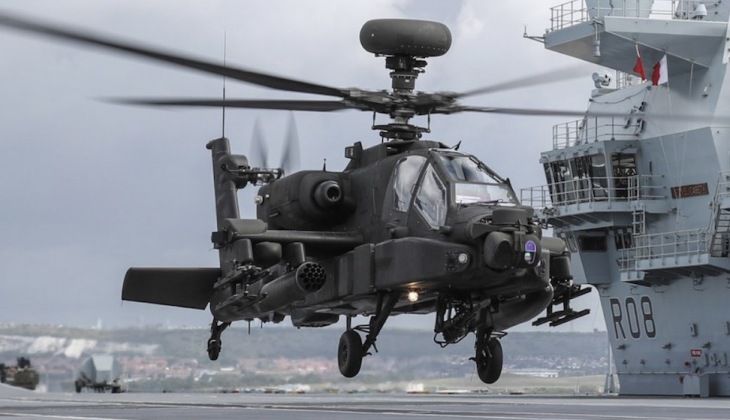
British AH-1 Apache Attack Helicopter on Carrier Deck
The British Armed Forces have received their first pair of AH-64E Apache attack helicopters from the United States, with the new aircraft boasting a range of new capabilities well ahead of those of the much older Apaches already in British service. Britain previously built 67 Apache helicopters under license, with the indigenous AgustaWestland Apache known as the AH-1 entering service from 2004 and having seen extensive combat service in Afghanistan and Libya. Differences between the British and U.S. versions include the former’s use of Rolls-Royce engines, modified communications systems, CRV7 rockets and a folding blade mechanism allowing it to operate from the decks of Royal Navy warships. 38 British AH-1 Apaches are set to be upgraded to the latest American AH-64E Version 6 standard, with a further twelve acquired ‘off the shelf’ from Boeing to provide a total fleet of 50 aircraft. Under this program, the last non-upgraded AH-1 aircraft will be retired in 2024.
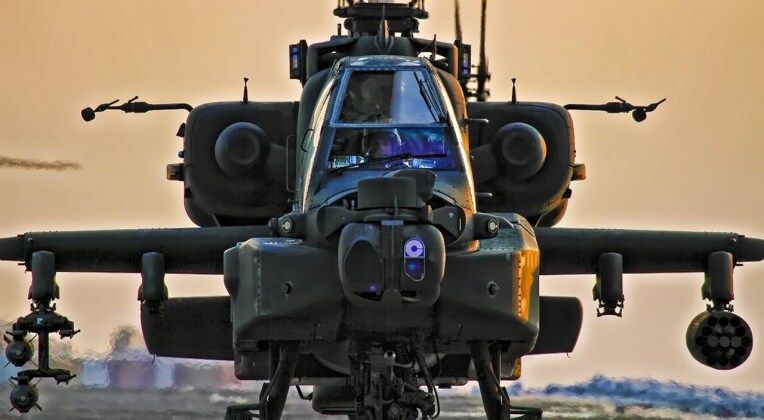
The British Army’s Director of Capability, Major General Jez Bennett, highlighted regarding the importance of the delivery: “The arrival of the first Apache E-model attack helicopter to be delivered to the British Army over the next two years marks the beginning of a significant uplift in capability to enhance the Army’s contribution across the spectrum of military operations.” The new aircraft are expected to place a particularly high emphasis on suitability for naval operations, much as the original AH-1 did, with the British Armed Forces expected to deploy the aircraft from its two new Queen Elizabeth Class aircraft carriers. The carriers notably cannot carry fixed wing aircraft except the specialised F-35B vertical landing capable jet, leading some analysts to allude to them as large helicopters with rotary wing aircraft relied on for almost all roles ranging from airborne early warning to resupply and logistics - missions usually assigned to fixed wing aircraft. The new Apaches will benefit from fire control radars with special maritime strike modes, and with around double the detection range of older Apache variants, as well as vastly improved avionics, data links, communication and communication relay systems and network centric warfare capabilities. Britain has also traditionally modified its attack helicopters to carry external fuel tanks, which is an upgrade its new AH-64E aircraft are expected to benefit from to improve endurance at the expense of flight performance.
