
Britain Finally Receives Last F-35 Fighters 20 Years After Orders Placed
Military Watch Magazine Editorial Staff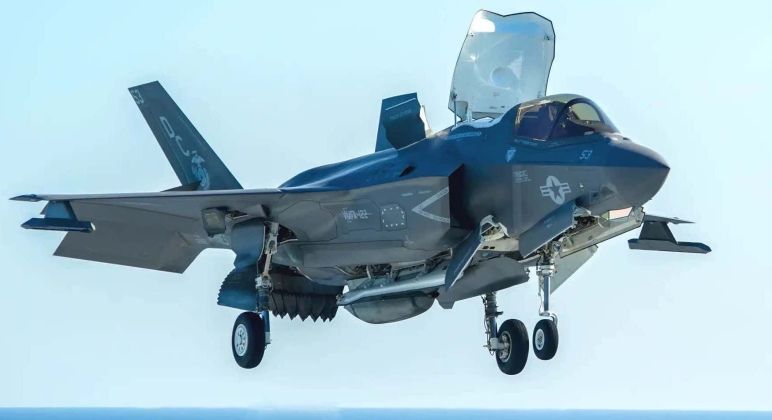
F-35B Fighter
The British Armed Forces on March 27 received the last of 48 F-35B fighter aircraft ordered from the United States, drawing attention and criticism to the highly protracted timeline of deliveries which has left the country’s combat aviation fleet significantly under strength. The milestone delivery has occurred years after the first orders were placed in 2006, and over a decade after the first of the aircraft was delivered. Commenting on the delivery, the Ministry of Defence announced: “The final Tranche 1 F-35B Lightning has been accepted, completing the UK’s first batch of the world’s most advanced fighter jet,” stressing that they would demonstrate the country’s defence capability while operating from the Royal Navy’s Queen Elizabeth class aircraft carriers.
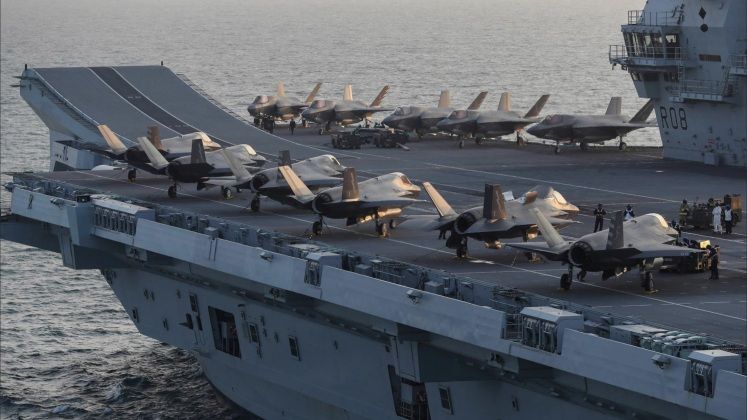
Although the British Armed Forces has previously planned to procure 138 F-35B fighters, significant economic decline from the late 2000s have made this increasingly unviable, limiting the utility of the country’s two large aircraft carriers. While the carriers were previously planned to integrate the more capable and less costly F-35C fighters, the F-35B was selected for multiple reasons including the greater contributions to its production made by local industry, and the lower crew requirements on carriers due to the lack of a need for catapults and arresting gear for launch and recovery. A leading factor driving demand for the F-35 has been the lack of other NATO-compatible fifth generation fighters in production, which has ensured it has competed only against much less advanced fourth generation aircraft that lack comparable capabilities particularly in terms of stealth and electronic intelligence collection.
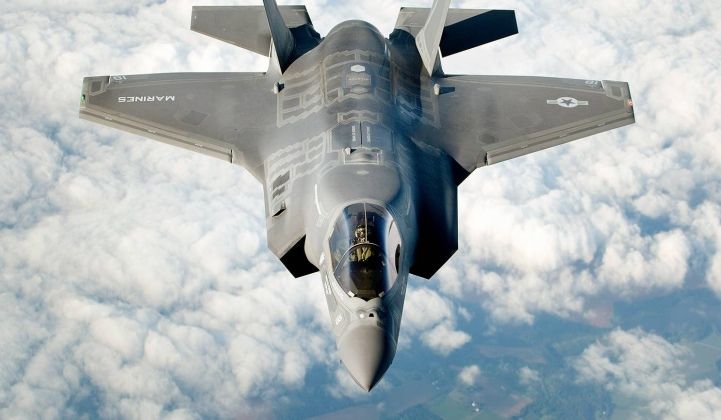
Significant reliability issues have plagued not only the British Armed Forces’ Queen Elizabeth class carriers, but also its F-35s, with two of the fighters forced to make emergency landings in mid-2025 in separate incidents, one in India and the other in Japan. The former incident saw the aircraft grounded for 39 days as efforts to make it airworthy continued to fall short. The two incidents have generated significant negative press for the F-35, which has been much maligned for over a decade for its deficiencies in reliability and low availably rates. The protracted grounding in India drew significant ridicule from netizens and media outlets in the country, and was considered to have further undermined the attraction of the F-35 at a time when the United States had intensified efforts to market the fighter to the country.
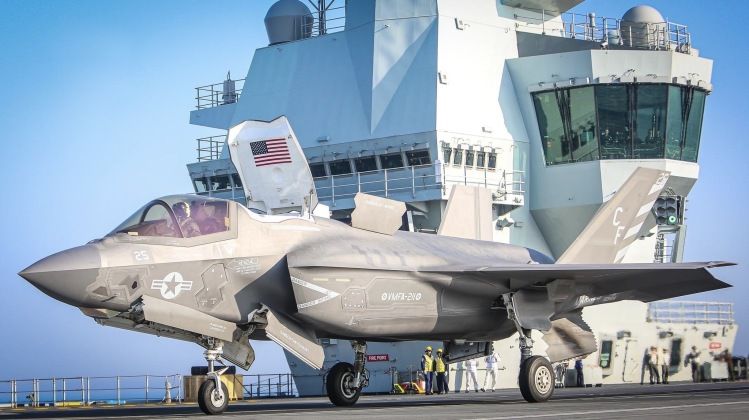
The United Kingdom is the sole Tier One partner in the F-35 program, rather than an external client for the aircraft, which prevents it from imposing penalties for delivery delays. The U.S. defence sector has struggled to keep fighter deliveries on schedule, with even its lightest and simplest fighter type in production, the F-16, seeing repeated delays in deliveries. Delivery delays have led the Royal Navy to rely on deployments of U.S. Marine Corps F-35B fighters and personnel onboard its ships to field an effective carrier air wing. The F-35B is the most costly type of tactical combat aircraft known to currently be in production anywhere in the world, with its cost being approximately 50 percent higher than that of the more widely produced F-35A, as a result of its specialised short takeoff and vertical landing capabilities. The fighter nevertheless has significantly more limited combat capabilities than the F-35A, including a much poorer flight performance, shorter range, and smaller main weapons bays which reduce its internal air-to-air missile carriage by one third.
