
Blackout Bomb; South Korea's New Weapon Developed to Target Northern Cities
Military Watch Magazine Editorial Staff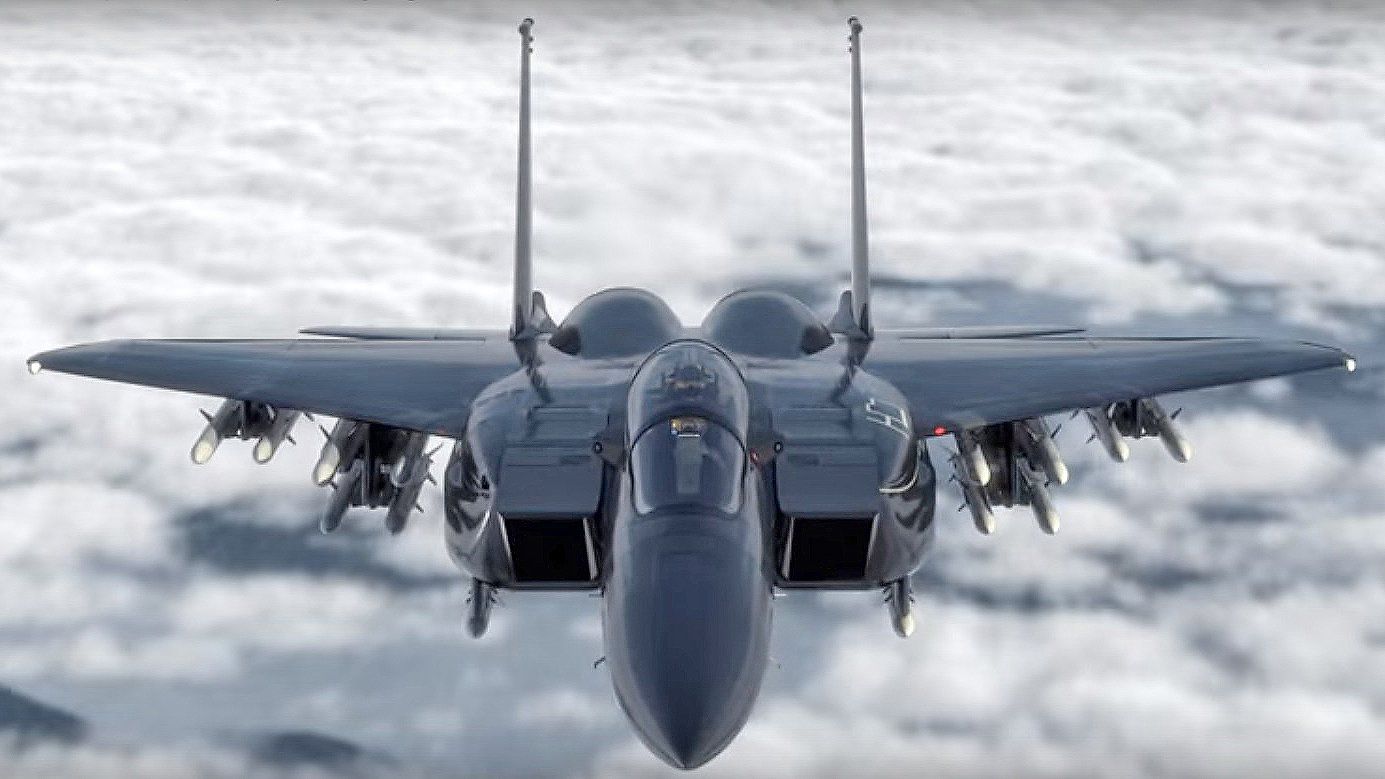
South Korean F-15K Strike Fighter
The South Korean military has announced the development of "blackout bombs" with the aim of targeting North Korean infrastructure. The bombs are made of graphite, and are designed to cut off electricity and paralyse any civilian or military equipment relying on electricity, making it potentially an invaluable tool against radar and communication systems, transportation and computer systems. The bombs will become part of the country's the Kill Chain pre-emptive strike program. Upon exploding, the bomb will emit fine cloud-like graphite filaments which will cover North Korea's electricity system. It will cause short circuits and electrical discharges, blowing safety devices and burning out essential parts. Power plants, transformer stations and power lines are all ideal targets for such a weapon.
Graphite based 'blackout bombs' were first developed during the Cold War for use against Soviet power systems. They were used by U.S. forces in 1991 during the Gulf War, where they were proved highly effective effect - disabling 85% of Iraq's power systems. NATO forces similarly deployed these weapons in Yugoslavia, disabling 70% of power systems there. While these can be effective, there are significant drawbacks to using such weapons. While highly effective against civilian targets such as power stations, Russian made weapons systems are designed specifically to avoid reliance on complex electronics as a precaution against EMP or other such electronic strikes. Against the North Korean, Iraqi and large parts of the Yugoslav military therefore they would do little in terms of compromising actual hardware. They would on the other hand put civilians at risk, as the bombs would not discriminate between military systems and civilian ones such as life support machines, sewage, water purification systems, metro trains and - should they be used in the bitter Korean winter - heating systems.
Ultimately both Koreas have more than enough weapons to devastate one another many times over, and the creation of such new weapons systems is more for propaganda and intimidation rather than any actual potential to turn the tide of a war. While both Koreas maintain the capabilities to strike each other, what could prove a game changer for a future conflict on the Peninsula would be a North Korean capability to strike the United States - something currently under development. The idea of a blackout bomb may well be intimidating, but with South Korea already having the capability to wipe out northern cities with missile strikes, the added capability of causing a power outage is of far less consequence.
