
Ballistic Missile Submarines in the Chinese Navy; Developing a Second Stage Nuclear Deterrent - Part Two
Military Watch Magazine Editorial Staff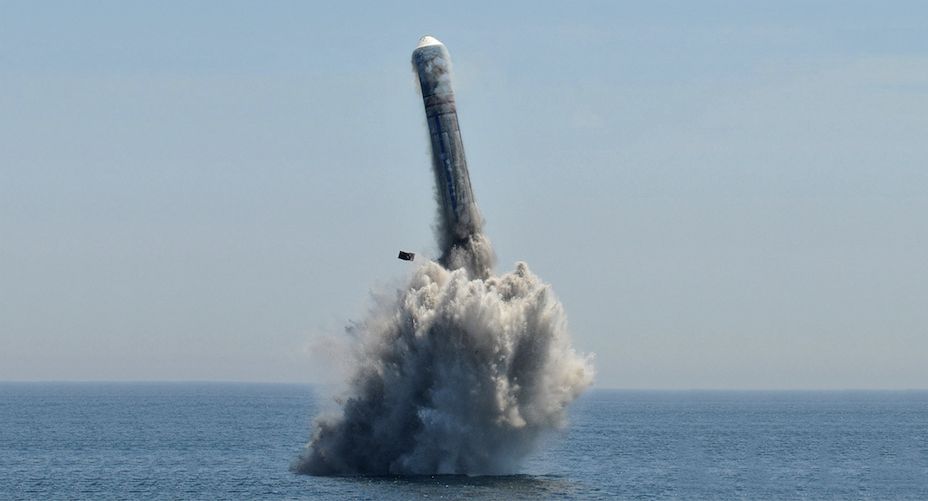
Chinese JL-2 Submarine Launched Ballistic Missile
The replacement for the Type 092 Class submarine, the Type 094 Jin Class, was commissioned almost 30 years later and is estimated to have entered service in 2007. The ballistic missile submarine measured 135 meters, displaced 11,000 tons submerged, and was far more sophisticated than its predecessor in all its capabilities. With China’s economy having multiplied in its size, the PLA Navy has been able to afford the commissioning of a far larger fleet of ballistic missile submarines, with five of the Type 094 Class in service and another three planned. The warships provide a significantly more viable strategic deterrent than the Type 092, and each deploys 12 JL-2 ballistic missiles with an estimated range of 7,500-8,000km. The JL-2 is a three stage solid fuel platform is closely based on the DF-31 ICBM, and allows the Jin Class submarine to target much of the United States mainland from near China’s coasts. The missile’s range means that the submarine can even launch attacks from the Yulin Naval Base on Hainan island, a heavily defended facility complete with underground shelters and docks for submarines on Hainan Island. Each missile deploys a multiple reentry vehicle allowing them to deliver four nuclear warheads.
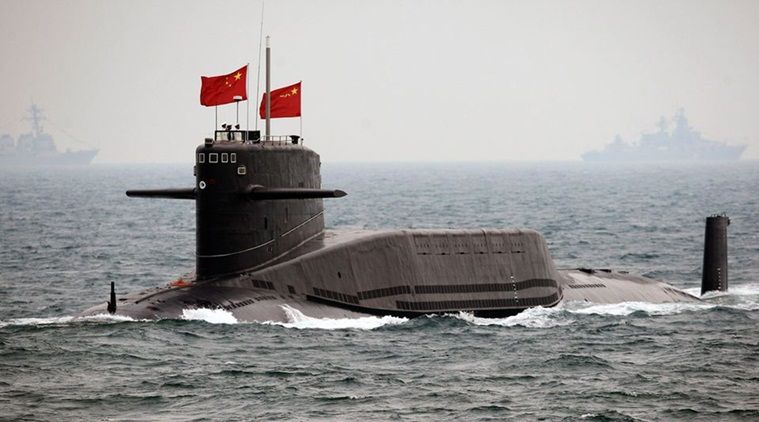
The Type 094 has far stealthier features to improve its survivability relative to the Type 092, with the older warship rarely leaving Chinese territorial waters despite its long range due to its vulnerability to sophisticated anti-submarine systems. The warship is also equipped with some basic tactical weapons, deploying six 533 mm torpedo tubes. While the Jin Class is highly formidable, and deploys one of the world’s most capable submarine launched ballistic missiles, the warships themselves are sill considered significantly less sophisticated than their Russian and U.S. counterparts such as the Borei Class and Ohio Class, lacking their large payload (16 and 24 missiles respectively), stealth and sonar evading capabilities and powerplant among other capabilities. The number of warheads carried by the JL-2 missile is also somewhat limited compared to its Russian counterpart, with Bulava submarine launched ballistic missile deployed by the Borei class carrying up to 10 warheads in its multiple launch reentry vehicle.
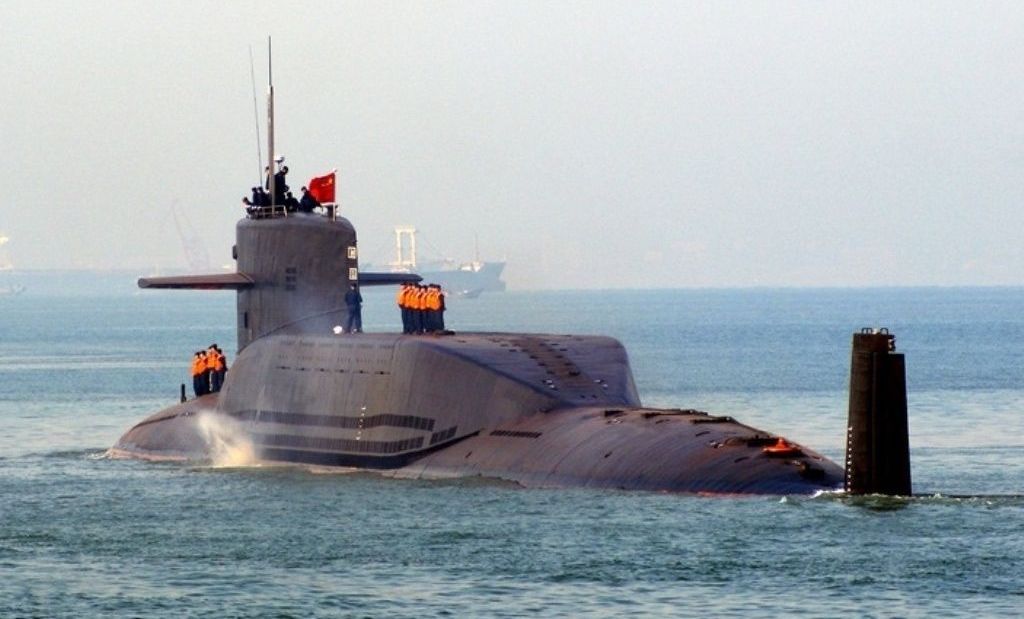
Despite its shortcomings, the Type 094 remains both a formidable asset for the PLA Navy and a valuable stepping stone from which to develop its submarine capabilities and close the technological gap with Russia and the U.S. The U.S.-China Economic And Security Review Commission’s 2017 Report To Congress stated regarding the platform: "China’s four operational JIN-class SSBNs represent China’s first credible, sea-based nuclear deterrent. China’s next-generation Type 096 SSBN, will likely begin construction in the early-2020s, and reportedly will be armed with the JL-3, a follow-on SLBM." The PLA has already begun development of the Type 96 Tang Class ballistic missile submarine, which is set to have capabilities comparable to the latest American and Russian warships. The warship will reportedly carry 24 JL-3 ballistic missiles, placing it among the most heavily armed submarines in the world. The new missiles’ capabilities are unknown, but it is speculated that they could carry ten or more warheads each and make use of the latest Chinese technologies to travel at hypersonic speeds and manoeuvre to evade enemy air defences. Much as the JL-2 was based on the ground based DF-31, so too is its successor the JL-3 reportedly based on the new ground based DF-41. Should these capabilities be realised, even a single fully armed Tang Class warship would present a game changing asset to the naval arm of China’s strategic nuclear deterrent force. The Type 094 Class submarines currently in service are also reportedly set to receive the JL-3 to replace the JL-2, which will considerably improve their firepower despite their limited survivability.
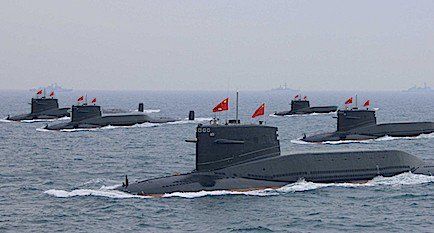
If China’s Type 096 warships are able to perform as expected, their induction into service will mark a major milestone in the modernisation of the People’s Liberation Army and yet another field in which the military has matched or surpassed the technologies of Russia and the Western bloc - a position from which Beijing’s weapons systems may well go on to exceed these rival powers. The new warship is set to integrate some of the world’s most sophisticated stealth systems, sensors and propulsion systems and far exceed the capabilities of the Type 094 Jin Class currently in service. The PLA’s investment in a ballistic missile submarine fleet comes as a number of nuclear powers have taken a similar approach, with the United States, Britain, France, Russia, China, India and North Korea all fielding nuclear capable ballistic missile submarines and developing all new platforms to strengthen their deterrent forces. Israeli and Pakistan, the only nuclear powers which lack ballistic missile submarines, have instead invested in less costly cruise missile armed platforms capable of delivering nuclear warheads at shorter ranges - in part a result of the two states’ relative proximity to their potential adversaries which they do not require intercontinental ranged missile systems to target. The PLA Navy’s growing ballistic submarine fleet, currently standing at six vessels and fast growing, is set to cement Beijing’s position as a world superpower with a second stage nuclear deterrent matched only by the United Stats and Russia - and potentially eclipsing the capabilities of even these in the not too distant future.
