
American Missile Defenses' Repeated Combat Failures; Implications for East Asia and the Middle East - Part Two
Military Watch Magazine Editorial Staff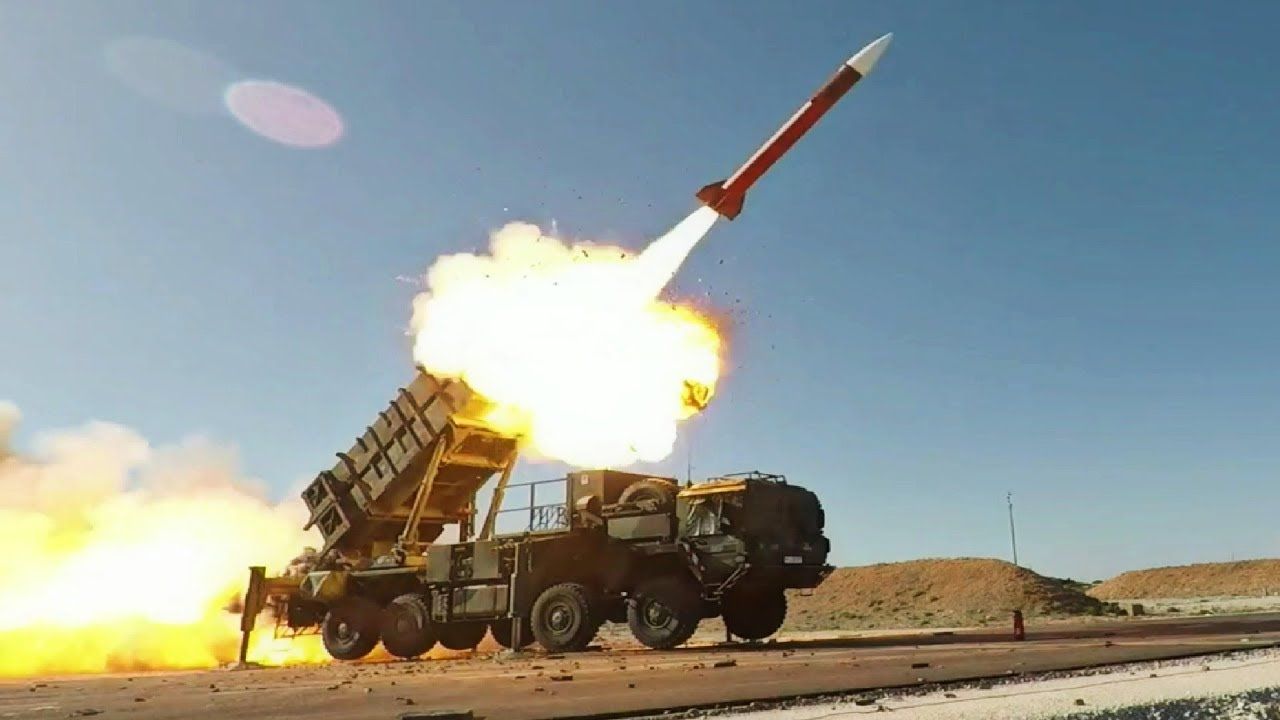
Patriot Missile Battery
A military report titled Patriot Missile System Effectiveness During Desert Storm, released in 1992 stated that of the 158 Patriot Missiles fired by the U.S. military during the Gulf War, 45% were launched against false targets. A 1992 report prepared by nuclear weapons expert and Ploughshares Fund president Joseph Cirincione for the U.S. House of Representatives Government Operations Committee on the performance of Patriot Missiles in the Gulf War stated that due to the limited damage caused by Scud missiles the public was mislead to attribute this not to Iraq’s limited capabilities, but to the success of the Patriot Missiles. Meanwhile the substantial “evidence to the contrary was neglected or dismissed.” Patriot missiles were far from a success, and coalition forces were only saved from sustaining more damage by the poor state of Iraq’s missiles and their resulting tendency to land in the desert - rather than the ability of U.S. systems to intercept them. “The Scuds were wildly inaccurate. Most fell harmlessly into the sea or the desert.” Circincione’s report gave substantial evidence proving that Patriot systems were almost completely ineffective. The deception not only benefitted the producer Raytheon - but also had a substantial impact on morale and public perceptions of the war.
Theodore Postol, Amercian professor of Science, Technology and International Security at the Masseuses Institute of Technology (MIT), a leading expert in missile defence technology, himself studied the performance of the Patriot in the Gulf War. He was highly skeptical and critical of U.S. claims as to the effectiveness of their anti-missile defence systems. Postol closely analysed military data from the 1991 Persian Gulf War. In April 1992 after carrying out preliminary studies Postol stated: “The Patriot's intercept rate during the Gulf War was very low. The evidence from these preliminary studies indicates that Patriot's intercept rate could be much lower than 10 percent, possibly even zero." Despite their “miracle performance” of Patriot Missiles being hailed by the US military and by Raytheon, Postol concluded that the system had most likely failed to shoot down a single Scud missile in Iraq, and at most may have possibly shot down a single missile. Postol noted that even “the most primitive of adversaries," even those as basic as the Iraqi Scud B dating back to 1964, could easily evade the Patriot system. Postol’s investigation was backed by evidence from several of those involved in the program and employees of the defence contractor responsible for the system’s production, all of whom alleged that claims the defence system’s test was a success were unfounded.
It remains critical for the United States to give its allies a sense of security against the missile capabilities of U.S. adversaries - be they Iranian, Russian, North Korean or otherwise. Much like the Gulf War, evidence strongly indicated that the missile fired by Yemen's Ansurallah Coalition, thought it was no more advanced than those fired by Iraq, was not intercepted and that the United States claimed a victory for its weapon systems for political gain. Much as had been the case in the Gulf War, 26 years later the the Patriot proved wholly effective against a single extremely dated and primitive missile.
Continued in Part Three
