
America’s Lethal New Air Superiority Fighters; F-15 Derivative Will Boast World's Largest Missile Payload and Fifth Generation Technologies
Military Watch Magazine Editorial Staff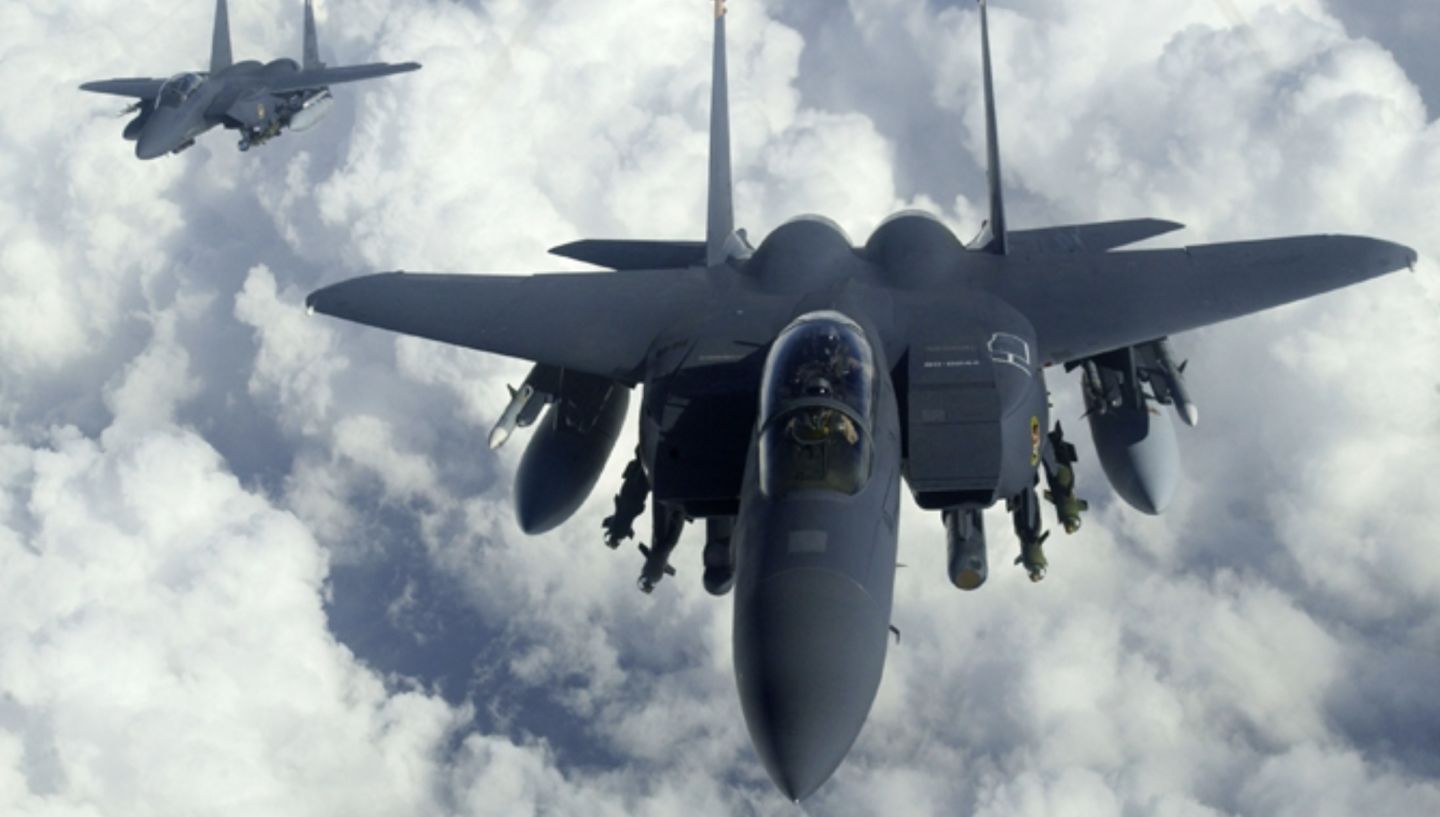
F-15 Eagles
In an effort to keep the F-15 Eagle elite fighter program alive after over 40 years of service in the U.S. military, the Boeing company has proposed a new and more capable variant of the aircraft intended to ensure American air superiority for decades to come. Following on from the proposed F-15 2040C, a platform set to deploy 16 AIM-120 air to air missiles - a 100% increase from the eight missiles carried by the original Eagle - the new variant, dubbed F-15X, is set to deploy 24 air to air missiles. The fighter is to deploy the latest variant of the AIM-120, the 180km range AIM-120D, alongside new avionics systems which will allow it to remain viable for years to come. With a number of key figures in the U.S. military leadership warning that the F-15 threatens to become obsolete as an air superiority fighter in the near future, and the Air Force reportedly considering retiring existing F-15C fighters from service due to their considerable operational cost and inability to contend with rival Russian and Chinese platforms such as the Su-35 and J-11B, this comes as a much needed enhancement which could well save the Eagle.
Alongside new missiles, which more than double the Eagle’s engagement range relative to the 75km range AIM-120B, the new F-15 is also set to be equipped with an Infra Red Search and Track (IRST) system - an asset long deployed by Russian fourth generation fighters which would allow the Eagles to better engage enemy stealth aircraft such as the Chinese J-20. An Eagle Passive/Active Warning Survivability System (EPAWSS) is also set to be deployed alongside an updated active electronically scanned array (AESA) radar - reducing the fighter’s radar signature and thus improving its survivability at range. Conformal fuel tanks are also set to be added to enhance the fighter’s range, while modernizations to the jet’s electronic warfare (EW) systems are also expected. AESA radar and EW systems are likely to be derived from those currently used by the F-35 and F-22 fifth generation fighters. The enhanced fighters will be available both off the production line and as upgrades for existing F-15C fighters and are likely to be offered to Israel, Saudi Arabia and Japan - the only countries permitted to purchase air superiority variants of the F-15.
The F-15X’s advanced next generation technologies and massive missile payload, by far the largest of any fighter in the world, would make it one of the most formidable air superiority fighters in service - and belatedly provide the U.S. and its allies with an answer to the Russian Su-35 ‘4++ generation’ fighter. Much as the Su-35 was a considerable upgrade of the Su-27 airframe - fielded until Russia could begin to induct a next generation replacement - so too is the F-15X set to strengthen I.S. air superiority capabilities alongside the relatively small F-22 Raptor fleet until a next generation platform can be developed under the F-X Air Dominance Fighter Program to replace them. The induction of the F-15X may well spur Russia to induct a further upgraded variant of the Su-27 into service, possibly designated Su-40 and incorporating further next generation technologies recently developed for the Su-57.
Much like the F-15 2040C, the F-15X is likely to have been designed specifically to operate alongside and support F-22 Raptors in battle as a less costly but better armed complementary fighter. While the F-22 has had significant problems communicating with other fighters in the U.S. fleet, including the F-35, Boeing has indicated that it will position the new F-15 as the perfect platform to accompany the F-22 and has developed a new EMD pod known as Talon HATE to facilitate easy data transfers between the Raptor and Eagle - based on the Boeing "Phantom Fusion" computer system. With light multirole fighters such as the F-16 and F-35, which make up the vast majority of the Air Force’s combat fleet, hopelessly inadequate in an air superiority role, the F-15X has considerable potential to be a highly successful and popular design for the U.S. and its allies - one which could keep Boeing’s Eagle production lines open for many years to come.
