
America’s Newest Electronic Warfare Aircraft Deployed Against Russian Forces in Kaliningrad
Military Watch Magazine Editorial Staff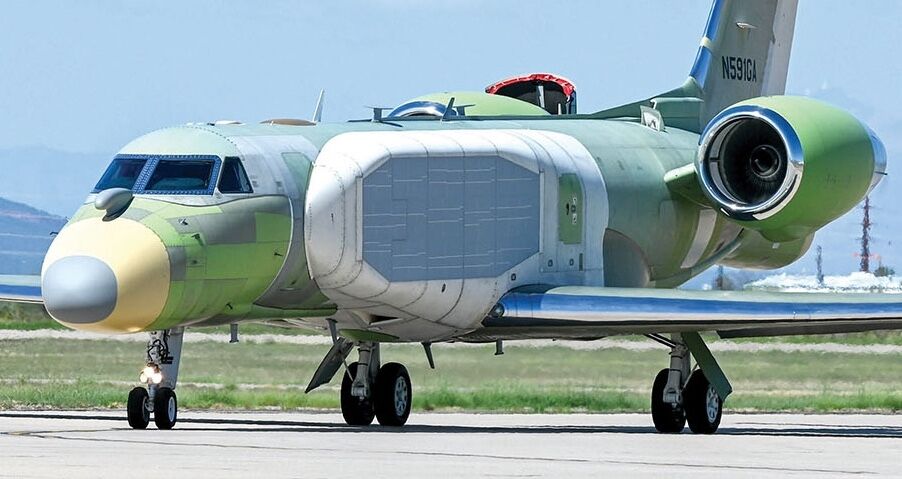
EA-37B Electronic Warfare Aircraft
A new U.S. Air Force EA-37B Compass Call electronic warfare aircraft has flown intensified operations along the borders of Russia’s Kaliningrad exclave in Central Europe, operating closely alongside a NATO E-3 AWACS and a U.S. Army ARTEMIS II intelligence aircraft. Kaliningrad is one of the most sensitive areas on NATO’s eastern flank, as it is geographically separated from mainland Russia and lies between Poland and Lithuania, leaving it surrounded by hostile states. Russia has deployed significant air-defence, missile, electronic warfare and naval capabilities there, making the region an important area for NATO surveillance.
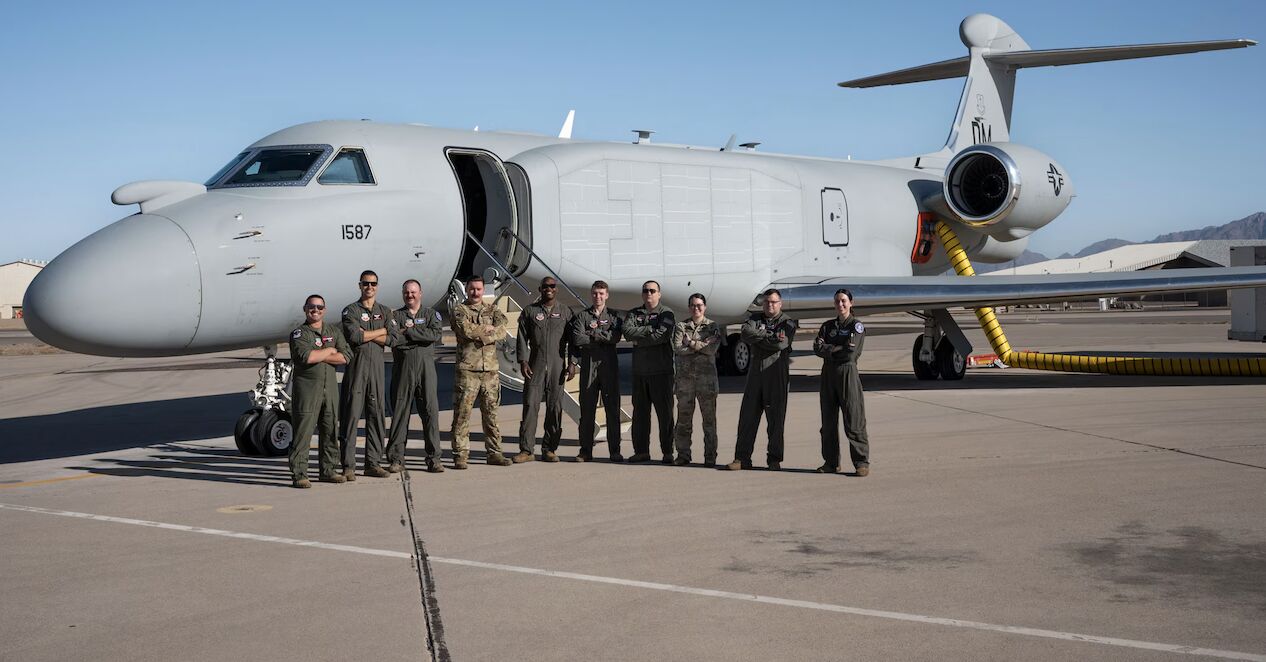
Developed to replace the EC-130H, the EA-37B Compass Call represents a major shift in the U.S. Air Force’s approach to airborne electronic warfare, replacing the large turboprop-powered platform with a much faster, higher-flying and more efficient Gulfstream G550-based platform. Large conformal antenna arrays are mounted along the fuselage, supporting systems designed to identify and attack electromagnetic emissions across a broad range of frequencies. This makes the EA-37B an important component of the U.S. approach to defeating increasingly networked military forces without necessarily having to physically destroy every component of their sensor and communications infrastructure.
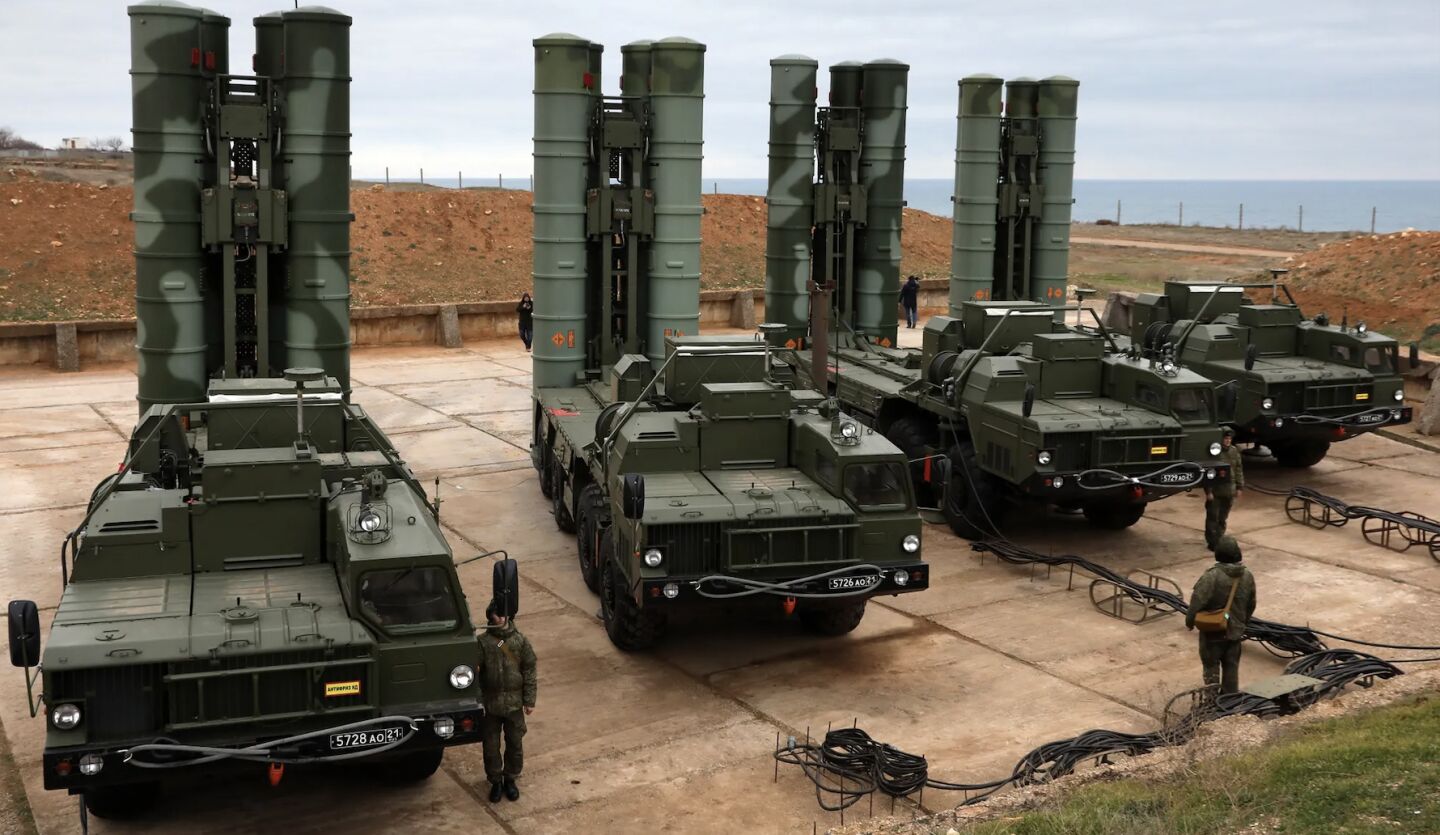
The EA-37B is particularly significant in a high-end conflict because modern military operations depend heavily on electromagnetic connectivity. Air-defence systems require communications networks to pass information between radars, command centres and missile batteries, while ground forces depend on radio and digital communications to coordinate manoeuvre and fires. Disrupting these connections can therefore have effects considerably greater than simply jamming an individual radio or radar. The system is consequently intended to support offensive counterinformation and suppression of enemy air-defence operations, including by attacking the networks that allow an integrated air-defence system to function effectively.
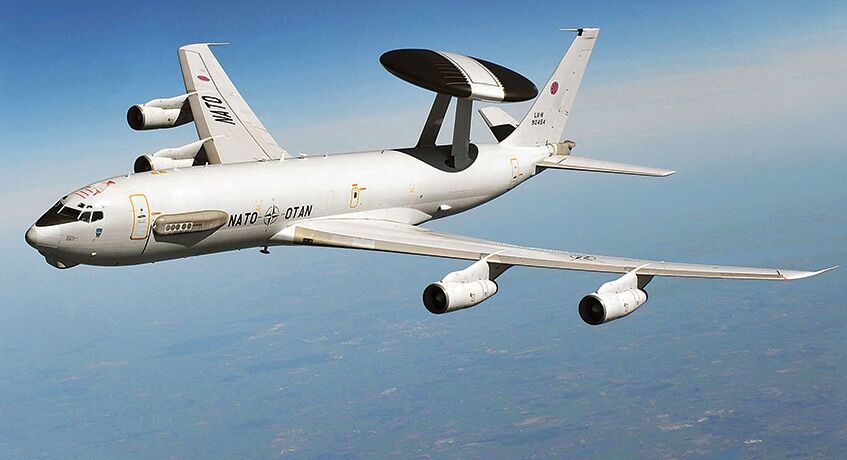
The EA-37B was temporarily redeployed from Greece to Powidz, Poland, before flying near Kaliningrad. Its operations alongside the E-3 and ARTEMIS II could indicate a coordinated intelligence or electronic warfare mission, although the precise purpose cannot be established from flight activity alone. The three aircraft have complementary capabilities, allowing NATO to collect intelligence on Russian radar, communications and other electromagnetic activity while maintaining an airborne picture of the surrounding airspace. NATO aircraft regularly conduct intelligence collection operations along Russia’s borders, particularly around strategically important regions, with. Kaliningrad providing an especially valuable environment for such operations because Russia has concentrated sophisticated military systems there.
