
America’s Most Advanced Air-to-Air Missile DeliveredAbroad for the First Time: AIM-260 Seen on Australian F-18 Fighter
Military Watch Magazine Editorial Staff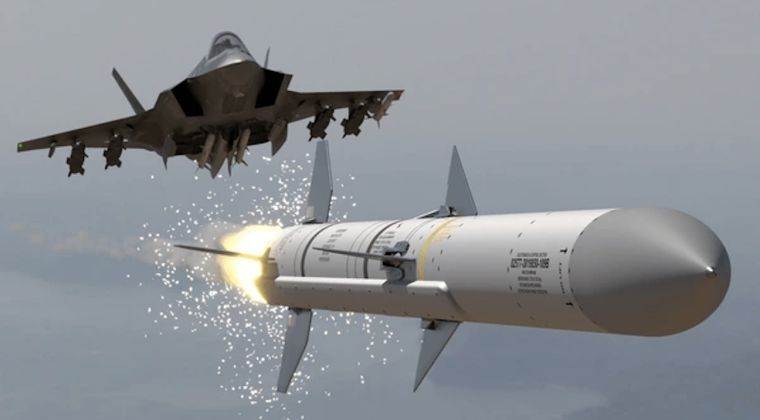
F-35 Launches AIM-120 Missile - Artwork
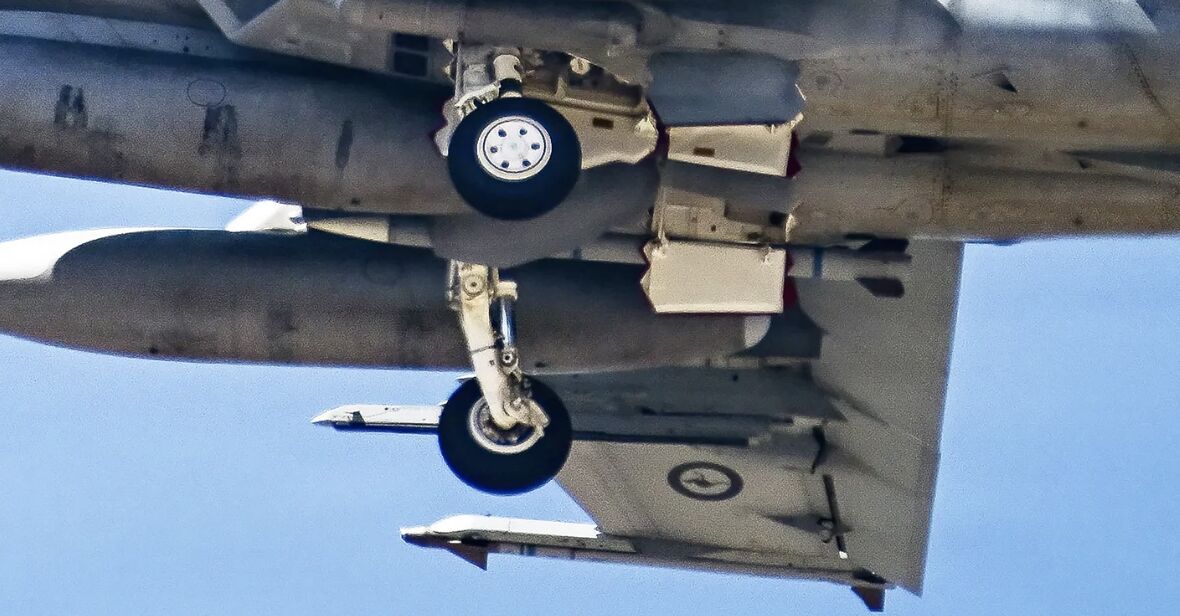
A Royal Australian Air Force F/A-18F Super Hornet has been photographed carrying an inert AIM-260 Joint Advanced Tactical Missile (JATM) during the U.S. Navy’s Gray Flag 2026 test exercise in California, providing the first public evidence of an Australian aircraft carrying the highly classified long-range air-to-air weapon. The aircraft, assigned to No. 1 Squadron, was photographed taking off from Naval Base Ventura County Point Mugu on September 11. The aircraft was also equipped with a CATM-9X inert AIM-9X training missile, a CATM-120 inert AIM-120 air-to-air missile, three external fuel tanks, an AN/ASQ-228 ATFLIR targeting pod and a Tactical Combat Training System pod. The AIM-260 itself was an inert test round rather than a live operational missile.
The AIM-260 was developed by Lockheed Martin as a successor to the AIM-120, and is intended to provide substantially greater range while retaining dimensions compatible with internal weapons bays of the F-35. The weapon’s development has been driven in part by the rapid expansion of China’s long-range air-to-air missile capabilities. The Chinese PL-15, carried by aircraft including the J-20 fifth generation air superiority fighter, has a significantly greater publicly assessed engagement range than the most advanced variants of the AIM-120, as well as more sophisticated sensors. The United States has consequently pursued the AIM-260’s development as part of a broader effort to retain parity in beyond-visual-range air-to-air combat.
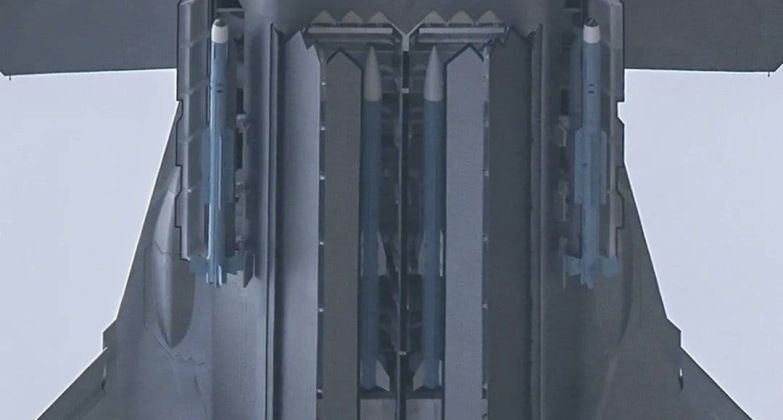
The first public image of an AIM-260 in the United States occurred only in May 2026, also on an F/A-18F operated by U.S. Navy Air Test and Evaluation Squadron 31. The appearance of the AIM-260 in Australia comes only weeks after local sources announced that the country would become the first other than the United States to acquire the missile. Canberra approved almost A$736 million for the weapon through the U.S. Foreign Military Sales system, with the missile initially being integrated onto Australia’s F/A-18F Super Hornets before being introduced on the F-35A fifth generation fighter. The appearance of an F-18F carrying an AIM-260 indicates that integration work has already progressed to the point where the weapon can be carried by an Australian aircraft.
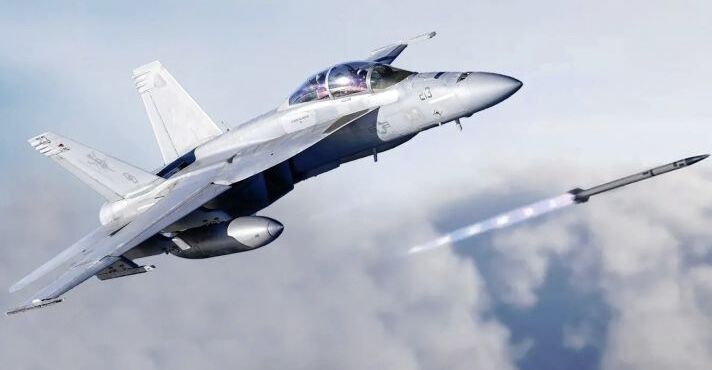
While the majority of U.S. strategic partners in NATO have equipped themselves primarily to prepare for a potential conflict with Russia, Australian military modernisation is primarily focused on preparing to support a U.S.-led war effort against China. The Royal Australian Air Force operates 24 F/A-18F and 72 F-35A fighters and 11 EA-18G electronic attack aircraft. Introducing the AIM-260 across all three types of combat jet will give Australia a common long-range air-to-air weapon for conventional fighters, stealth fighters and electronic warfare aircraft. Australia has also been developing the MQ-28 Ghost Bat collaborative combat aircraft, which could potentially become another candidate for AIM-260 integration in the future.
