
Allies of Convenience; The Background to Iran's Restoration of Ties with the Palestinian Militant Group Hamas
Military Watch Magazine Editorial Staff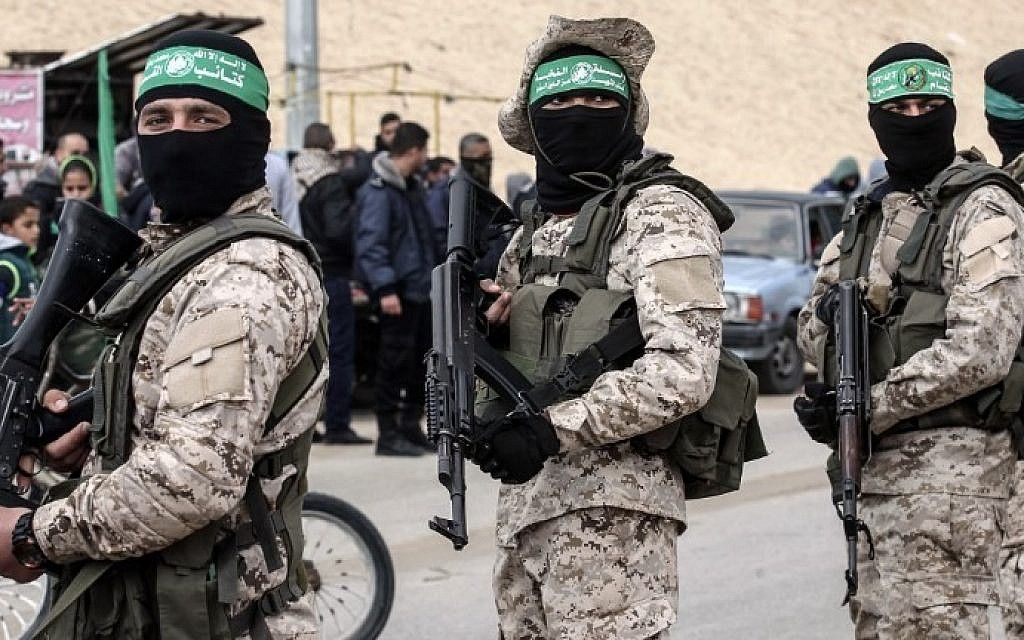
Hamas Al Qassam Militiamen
During its 1979 Islamic Revolution Iran underwent a significant foreign policy shift, affecting not only its ties to the Western bloc but also its relations with Israel - its foremost regional ally in the Shah era. The new Islamic Republic of Iran adopted a strongly anti-Zionist foreign policy and has established ties with a number of state and non state actors in the Middle East which oppose Israel. Following the emergence of the Palestinian Islamic extremist group Hamas in 1987, the group received financial and military support from Iran and its close ally Syria. Despite significant ideological differences their alliance was based on shared enmity towards Israel and Zionism which led to their cooperation. Hamas seized power in the Gaza Strip in 2007 and both its social service wing, the Dawah, and its military wing, the Al Qassam Brigades, were longstanding recipients of millions of dollars of Iranian aid annually - making Iran by far the most critical supporter and sustainer of Hamas. In 2011 alone Hamas received an estimated $15 million in aid from Iran as well as access to advanced missile technologies, many of them smuggled to Gaza through Sudan. Syrian support was also critical to Hamas, whose political bureau had long been based in Damascus. Despite this longstanding support however, in 2011 Hamas' foreign policy underwent a significant realignment. In mid 2011 as foreign jihadist forces backed by Western and Arab states began to wage war in Syria Hamas pivoted away from the Iranian-Syrian axis and formed close ties with other Islamist extremist groups such as Al Qaeda, as well as with their backers such as Qatar and Turkey which had supported Islamic extremist groups to advance their own interests in the Middle East. The militant group bit the hand that had for so long fed it.
Hamas forces in Syria began to directly wage war on the Syrian government alongside groups such as Islamic State and the Al Nusra Front, and this inevitably led to a suspension of Iranian and Syrian assistance to the militant group and a shutting down of all Hamas offices in Syria. Hamas forces provided anti government jihadist forces in Syria with training and intelligence to fight their former supporter, the Syrian government. They believed that should the Syrian government fall, the support they would gain from Western aligned Arab states and from Turkey would be a greater asset to them than Iranian and Syrian assistance had. Largely as a result of the shift in Hamas' foreign policy, several European states considered removing Hamas from the list of terrorist organisations and lifting restrictions on sending funds and support to the Islamist group. Having waged war in Syria alongside Western and Arab backed extremist groups for near six years however, Hamas and its partners failed to bring about regime change in the country - and with the war nearing its end the group has been forced to reconcile its differences with its former allies to ensure its continued existence.
At the beginning of August 2017 a Hamas delegation attended the inauguration of Iranian President Rouhani, and there agreed with Tehran to "turn a new page in bilateral relations." Iranian Foreign Minister Mohammad Javad Zarif declared afterwards that Iran was "ready to put aside all disagreements for the sake of supporting Palestine and the Palestinian people as well as the unity of the Muslim world." Ultimately their joint opposition to Israel meant that Hamas remained a very useful asset for Iran - for which the Islamic Republic was willing to overlook the militant group's previous betrayal and start relations afresh.
On August 28th Hamas' new leader, Yahya Sinwar, claimed to have successfully repaired the groups' relations with Iran. Sinwar stated that Iran was one again "the largest backer financially and militarily" of the Al Qassam Brigades. He continued: "the Iranian military support to Hamas and al-Qassam is strategic," claiming that the group's relations with Iran had "become fantastic and returned to its former era." While in Iran the Al Qassam Brigades' leadership had also reportedly met with the Iranian Revolutionary Guard to discuss further military cooperation against Israel. Hamas will likely continue to be a major Iranian asset in its conflict with Israel, while Iran is able to provide assistance to the militant group particularly in the military field beyond what other states such as Qatar are able to offer. Following their brief alignment with the Arab Gulf states and Islamic terror organisations such as Al Qaeda against the Syrian-Iranian axis, Hamas is likely to remain more a convenient asset against a common enemy than a genuine and trusted ally.
Note: While it has not been internationally recognized as a terrorist organization, Hamas have been designated a terror group by the United States, European Union, Japan and Israel.
