
New AIM-174 Air to Air Missile Introduced For F-18s: Can it Bridge the Missile Gap with Chinese and Russian Aviation?
Military Watch Magazine Editorial Staff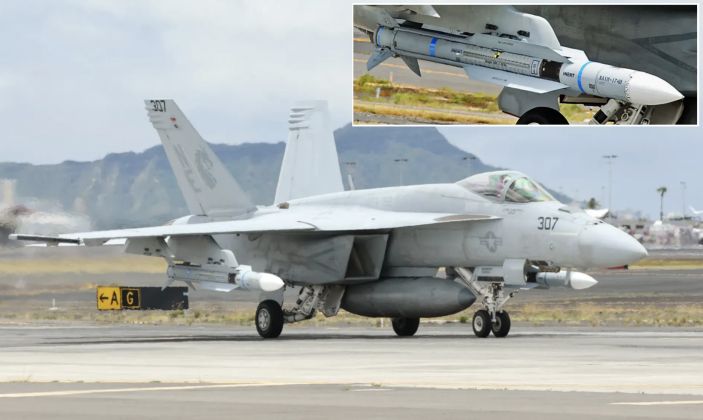
AIM-174 (top) and F-18E with AIM-174
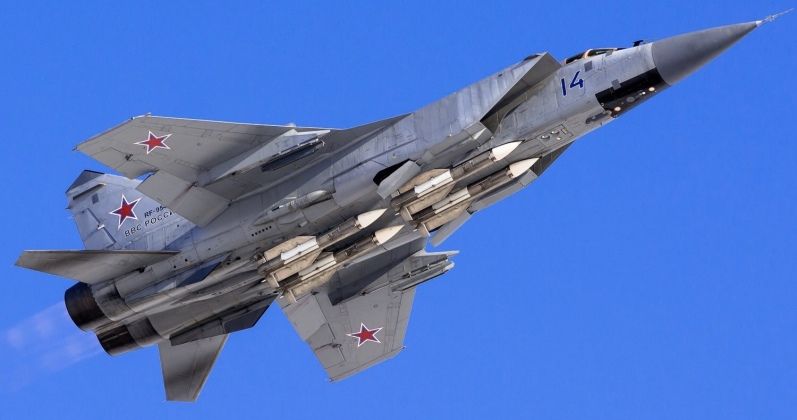
The U.S. Navy has been confirmed to have begun deploying the new AIM-174 air to air missile in its F-18E/F Super Hornet fighter squadrons, which serve as the workhorse of the service’s carrier fleet and currently make up the overwhelming majority of American carrier based fighter jets. The missile class made its overseas debut at Exercise Rim of the Pacific (RIMPAC) 2024, and was developed as an air launched derivative of the new SM-6 anti ballistic missile deployed by the Navy’s Arleigh Burke Class destroyers. The AIM-174 is an oversized air to air missile that provides the U.S. Navy with an equivalent to the Russian R-37M and Chinese PL-XX, which are primarily deployed by MiG-31BM interceptors and J-16 fighters into the two respective fleets. It remains uncertain how close the missile comes to matching the Russian and Chinese models’ respective 400km and 500km ranges, with Western sources speculating a range of 400-450km. This would place the engagement range of an F-18E/F with such a missile at over double that of any other Western fighter class, with the AIM-120D previously relied on by American aircraft having had a maximum range reported at between 160 and 180 kilometres.
Oversized very long range air to air missiles are particularly highly valued for use against large unmanoeuvrable enemy aircraft with high radar cross sections such as airborne early warning, and control (AEW&C) systems, aerial tankers, and bombers. Indeed, the U.S. Navy previously introduced such a missile the AIM-54 Phoenix, in 1974 primarily for the defence of carrier strike groups against Soviet cruise missile armed bombers, although the missile’s performance record left much to be desired in multiple engagements with Iraqi aircraft. Improvements in targeting technologies and missile design allows oversized missiles to also play a significant role against fighter sized targets, as demonstrated by the highly successful use of the R-37M by the Russian Air Force over Ukraine. China’s development of the world’s longest ranged air to air missile the PL-XX, its fielding of the world’s largest bomber fleet, and the rapid expansion and modernisation of its tanker an AEW&C fleets, has provided a strong incentive for both the U.S. Navy and the Air Force to develop their own similarly missiles to narrow the range gap and hold key new aircraft at risk.
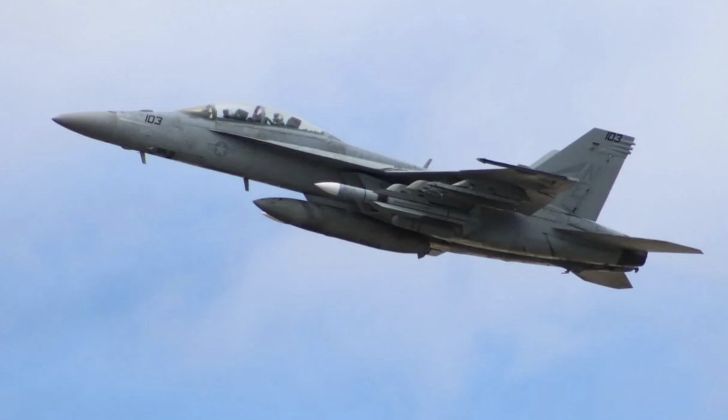
The deployment of an air launched SM-6 variant has long been speculated, particularly since an F-18F was photographed in 2021 carrying an inert SM-6 without its half meter long MK72 first stage booster. With the SM-6 itself having only entered service in 2013, it has been speculated that the missile was envisaged as having an air launched variant from the outset. Nevertheless, the extent to which the AIM-174 can truly bridge the gap with Chinese and Russian aviation remains in serious question. Air launched derivatives of surface to air missiles have historically fared much more poorly than those developed from the outset as air to air missiles as the R-37M and PL-XX were. Furthermore, the MiG-31BM and J-16 are much larger aircraft than the F-18E/F which carry radars several times the size and over 150 percent and over 200 percent the range respectively. The result is that while the MiG-31BM and J-16 can loiter with oversized air to air missiles for extended periods, and can launch such missiles without support, the F-18’s capacity for carrying them will be more limited, and compared to the MiG-31 in particular it will launch from much lower speeds and altitudes limiting its engagement range.
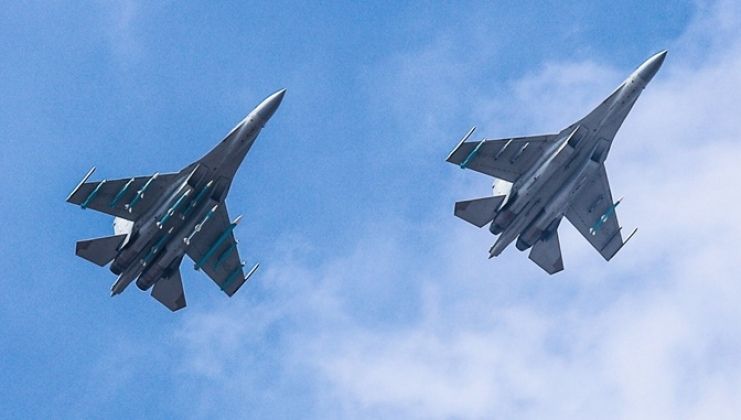
The importance of the launch aircraft for oversized missiles was recently demonstrated over Ukraine, with the Russian Su-35, which has a much smaller radar, lower operational altitude, and lower cruising speed than the MiG-31, proving far more limited in its ability to utilise the R-37M. The missiles travelled significantly less far when launched from the fighter, it could carry less of them per sortie, and it relied on targeting data from AEW&C aircraft to engage targets near the limits of the missile’s range. The F-18E/F will similarly suffer disadvantages compared to the J-16, and particularly the MiG-31. Unlike the F-14 or the MiG-31, and to a lesser extent than the J-16, the F-18E/F was not designed for very long ranged air to air engagements, with its much smaller airframe limiting its carrying capacity and its radar size. Thus although the AIM-174 is a revolutionary new development for American carrier aviation, it is likely to fall far short of fully bridging the missile gap with Chinese and Russian aviation unless deployed from larger aircraft that are better optimised for such engagements.
