
AI Powered MQ-20 Unmanned Fighter Demonstrates Landmark Air Interception Capabilities: The Future of American Air Defence
Military Watch Magazine Editorial Staff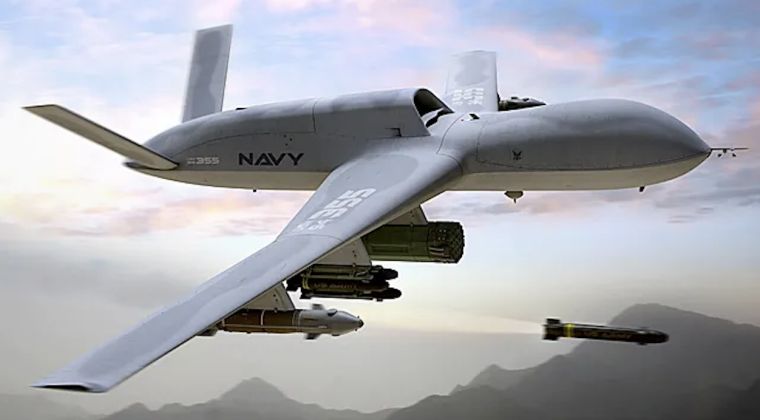
MQ-20 Fires Missile - Artwork
The MQ-20 Avenger autonomous unmanned aircraft has demonstrated the ability to intercept a crewed aggressor aircraft during a live air combat exercise, making a major landmark in the enhancement of combat drone software and sensors. The exercise on January 18 focused on decision-making, flight control, and airspace discipline under realistic operational conditions spanning, and saw the MQ-20 deployed to protect a wide area of airspace. The MQ-20 has for years been used as a flying laboratory to test technologies that allow unmanned aircraft using artificial intelligence to find, track, and engage hostile aircraft, which required particularly complex advances in software and sensors, and an ability to process data and react in real time. The aircraft relied on a live Anduril Infrared Search and Track sensor to locate and follow the aggressor aircraft using its heat signature.
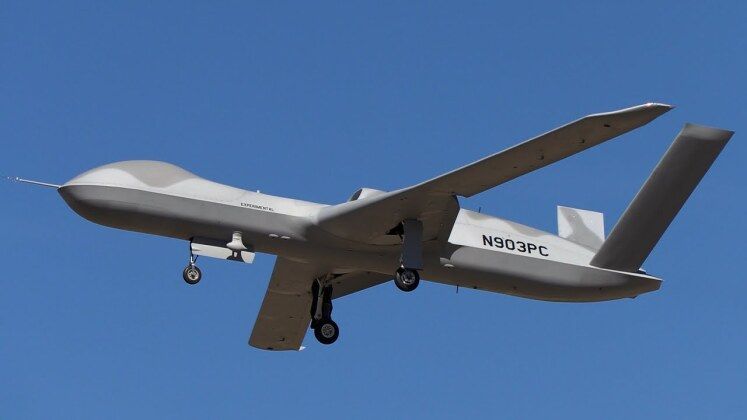
During the engagement the MQ-20 used onboard computers to build a track file, with software predicting the target’s flight path and autonomously calculating an intercept solution, generating a firing solution, and executing a simulated shot that resulted in a simulated kill. The test was particularly revolutionary due to the aircraft’s autonomy from constant human input, and its autonomous processing of information and decision making. The aircraft followed standard rules for operating in integrated airspace even when faced with targets carrying out aggressive manoeuvres, and stayed within its assigned Keep In Zone and avoided all Keep Out Zones, which is considered critical for patrols of friendly airspace to avoid potential threats to civilians or infrastructure.
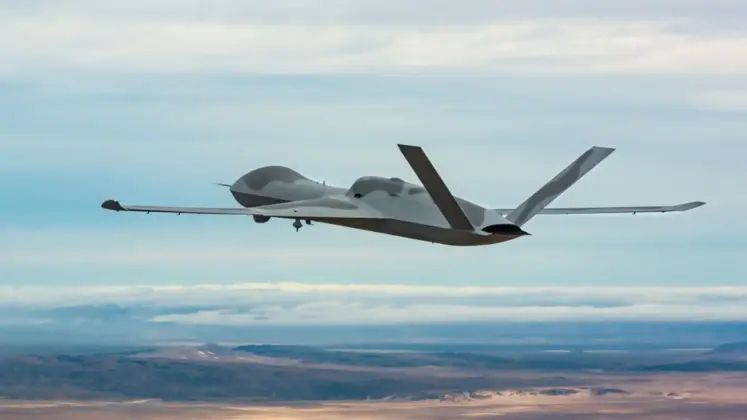
The development of unmanned aircraft capable of engaging in high intensity air-to-air operation has long been a key objective of the defence sectors of the United States, China and other countries with major combat aviation industries, although developing sufficient levels of autonomy in doing so with minimal human input has been particularly challenging. Experiments by the U.S. Air Force in August 2020 showed that the viability of manned combat aircraft could quickly be greatly diminished by artificial intelligence, with the service pitting a veteran F-16 fighter pilot against an AI pilot in five simulated air-to-air battles, which resulted in the AI pilot winning overwhelming victories in all rounds. By early 2021 AI-piloted F-16s were simulating working in teams and engaging targets at longer ranges. The lack of a comparable sensor to the human eye has nevertheless been a primary factor complicating efforts to develop an effective AI-piloted air-to-air combat platform that can operate in the real world rather than solely in simulations.
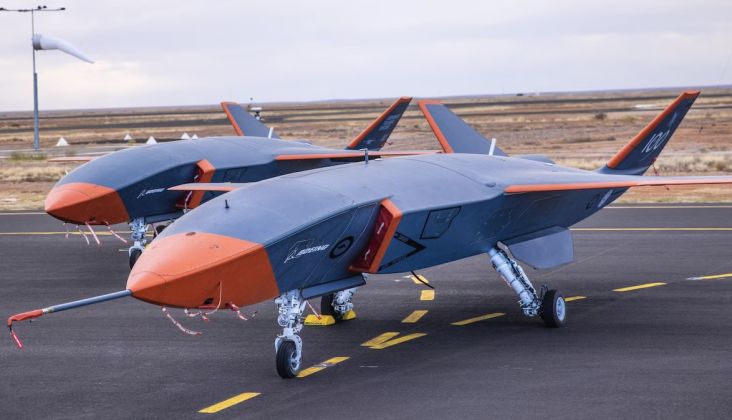
The implications of the MQ-20’s successful test are significant, with unmanned aircraft having multiple advantages over their manned counterparts for air-to-air engagements. One of these is the ability to ‘learn’ from experience through simulations, which they can do 24 hours a day, rather than for a limited workday as is the case for human pilots. Another is that such aircraft have effectively no training costs, which makes fleets far less costly to sustain than those piloted by humans. The lack of a need for a cockpit and life support system also allows much more efficient and manoeuvrable designs to be developed. The MQ-20’s success may thus mark a major milestone in the anticipated looming replacement of humans in air-to-air combat roles, which is likely to begin to materialise in the mid-2030s. The implications of this for the global balance of power, and for multiple combat aviation programs such as the F-35 and F-47 fighters, remains highly significant.
