
After Decades of Desert Warfare, U.S. Marine Corps Prepare for Combat in Sub Freezing Temperatures Simulating Russian and North Korean Climates
Military Watch Magazine Editorial Staff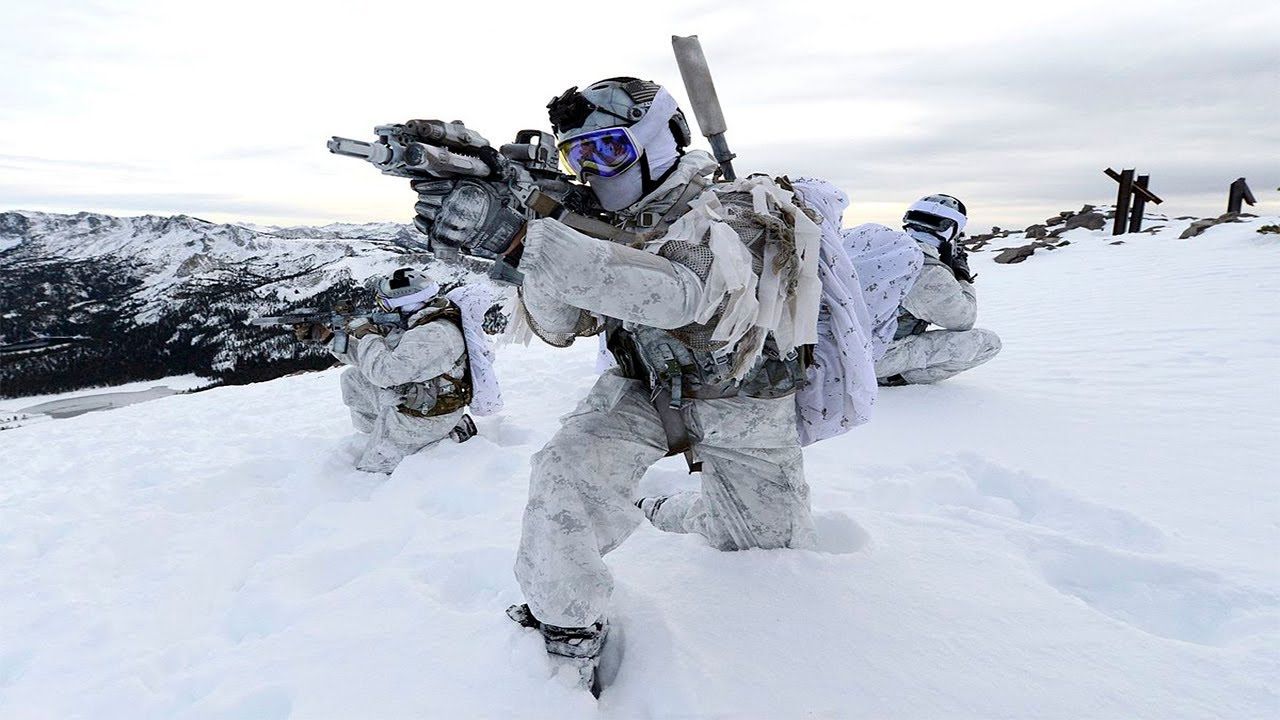
Russian Special Forces in Snow Gear
Decades of counterinsurgency in desert climates in the Middle East and Central Asia have left U.S. ground forces somewhat ill prepared for war in sub freezing climates. While during the Cold War combat readiness for Eastern European and Soviet arenas was considered essential, this capability has since been largely neglected. The importance of preparedness for sub freezing combat climates and the handicap that a lack of such preparedness can impose was demonstrated by numerous conflicts including the battle of Stalingrad in the Second World War and the battle of Chosin Reservoir in the Korean War - where German troops in the former and both U.S. and Chinese troops in the latter suffered due to a lack of winter combat preparation and equipment.
The U.S. Military announced in early 2018 a plan to roll out equipment for operations at sub freezing temperatures for its ground forces. This came amid growing tensions with both Russia and North Korea, both do which field large and well equipped ground forces which would at present enjoy a considerable advantage if fighting a defensive war in winter conditions. Preparation to fight these potential adversaries at any time of year comes as part of the U.S. military's full spectrum dominance, which requires readiness to combat and defeat up to two major adversaries simultaneously under any conditions and at any time. As U.S. Army Sergeant Daniel Bryan stated: "We don't want (the cold) to hibernate us. We want to be physically and mentally prepared."
Among the equipment the U.S. ground forces are set to receive were touchscreen friendly gloves that are fast drying and water repellant at extreme temperatures, as well as clothing suitable for cold weather and 2,648 sets of the NATO ski system - essential for both scout snipers and reconnaissance Marines. The division also received shorter and wider skis that can be more easily manoeuvred by inexperienced soldiers in snowy conditions. The Marine Corps has also been focusing its efforts on extreme cold operations. Last month, the Corps made requests for caps and gloves suitable for intense cold. The division asked for in temperatures below 50 degrees Fahrenheit. The Marines also want the gloves to be touchscreen-friendly. The Marine Corps' Rotational Force Europe, based in Norway where a climate similar to those of prospective warzones, will be the first to test the new equipment.
Marine Corps Commandant General Robert Neller, stated regarding the new emphasis the corps places on winter combat skills: "No Marine is going to leave here unless they know how to ski." He stated regarding the reasons this emphasis: "I hope I'm wrong, but there's a war coming… I think probably the focus, the intended focus is not on the Middle East. The focus is more on the Pacific and Russia." Russia, China and North Korea, three of the United States' four 'great power adversaries', all have large areas of strategically critical territory where temperatures drop well below freezing. U.S. military drills planning attacks on North Korea have repeatedly emphasised the importance of quickly seizing and controlling the country's borders with Russia and China to ensure the military maintains a free hand to operate within the country. Operations in such a climate could entail combat at below -20C.
