
A New Tactical Nuclear Weapon for America’s Deadly F-15E Strike Fighters: B61-12 Bomb Provides Significant New Capabilities
Military Watch Magazine Editorial Staff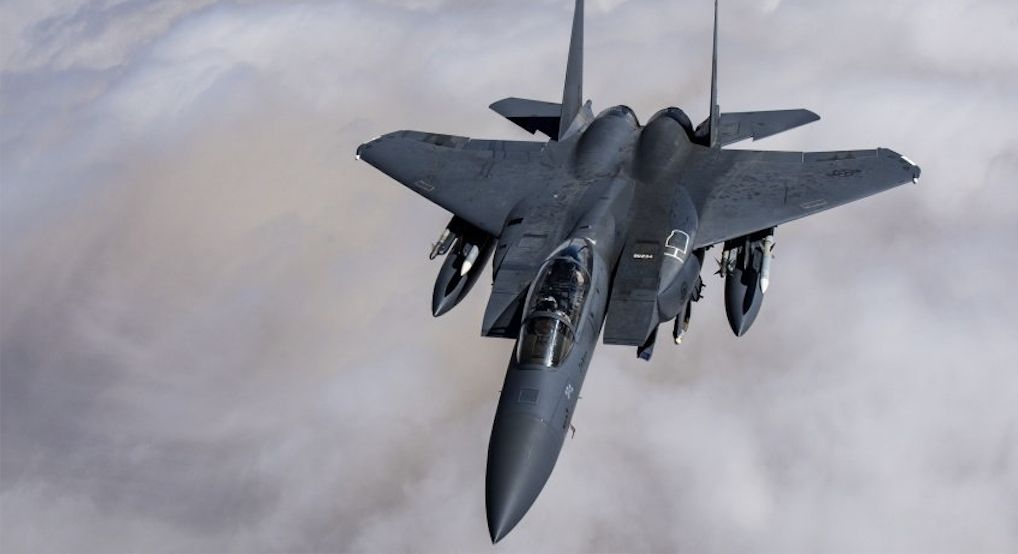
F-15E Strike Fighter
The U.S. Air Force’s F-15E Strike Eagles have become the country’s first strike fighters certified to carry the B61-12 nuclear gravity bomb. The completion of the bomb’s last round of testing was announced on June 8th by the Department of Energy's Sandia National Laboratories, and the Strike Eagle is currently the only aircraft in the world capable of deploying the munitions. The bomb's final flight tests were completed in March 2020, and saw flight crews demonstrate the ability to simulate employment of the weapon from both high and low altitudes. The F-15E is a twin seat derivative of the F-15C, the Western Bloc’s prime air superiority fighter during the Cold War which is today considered second among Western platforms of its type only to the F-22 Raptor. The newer Strike Eagle variant benefits from conformal fuel tanks and improved avionics which optimise it for a high endurance strike mission - allowing it to fly close to the ground to evade detection with an advanced terrain tracking radar. The aircraft has a standard twin seat configuration, meaning it accommodates a weapons system officer who is tasked with operating air to ground munitions.
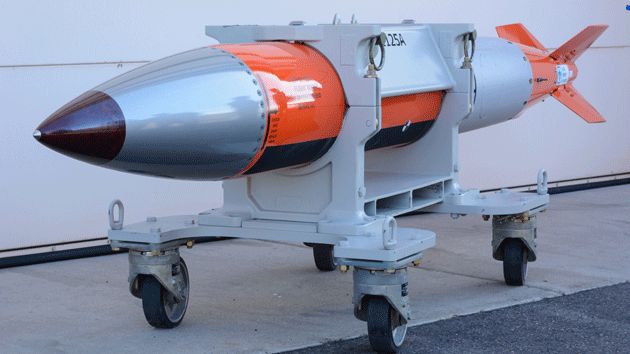
Commissioning of the B61-12 into frontline service comes amid a broader effort by the United States to modernise its nuclear forces. Although it is extremely costly, the bomb is prized for its ability to deliver nuclear strikes of different size depending on the settings at the time of launch - making it an extremely versatile asset in the event of a nuclear war. With the U.S. Air Force fielding a fleet of around 200 F-15E fighters, and multiple other classes of aircraft which are likely to also be equipped with the tactical nuclear bombs in future, the new munition type is expected to be manufactured in considerable numbers. 400-500 of the weapons are reported planned, and they have a service life of around 20 years. Critics of the B61-12 weapons program specifically have highlighted the fact that such a precise low yield nuclear weapon could lower the threshold for a nuclear attack and thereby increase the likelihood that it would be employed relative to other classes of nuclear weapon. Other aircraft expected to deploy the bombs include B-2 Spirit and B-21 Raider heavy bombers, F-16C lightweight fighters and F-35 stealth fighters. The F-35 is the only active stealth fighter designed to carry nuclear gravity bombs, and its bomb bays are designed to be deeper than those of the heavier F-22 Raptor to specifically allow it to incorporate the B-61 and other similar munition types.
