
A Much Needed Upgrade; Taiwan to Purchase Elite U.S. M1A2 Abrams Tanks Amid Growing Cross Strait Tensions
Military Watch Magazine Editorial Staff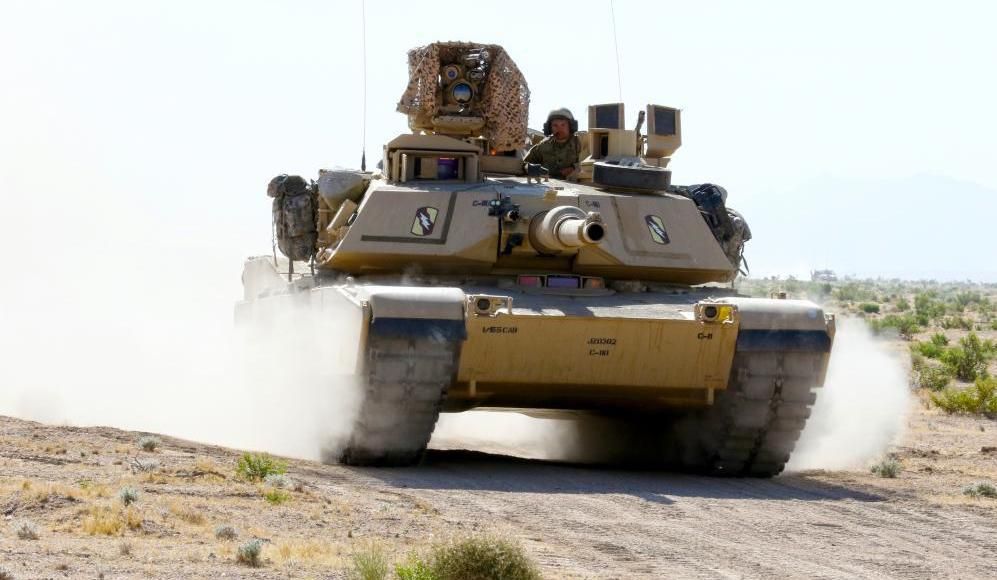
M1 Abrams Battle Tanks
Taiwan’s Defence Ministry is reportedly planning to acquire more than 100 U.S. made M1A2 Abrams battle tanks, part of a larger military modernisation program which has seen the military make plans to acquire missile attack boats, diesel attack submarines, amphibious transports and Apache attack helicopters among other assets. The 62 tons Abrams tanks arguably offer a far more cost effective and capable alternative to European designs such as the German Leopard and French Leclerc, making use of a powerful multifuel turbine engine, mesh reinforced composite armor, and a heavy 120 mm L/44 M256A1 smoothbore gun carrying 42 rounds. While Taiwan initially planned to acquire 200 tanks, The military revised its decision and sought to purchase 120 second hand platforms due to funding constraints. This decision was later again revised, and it was recently announced that the military had reached a final decision to acquire 108 new M1A2 tanks. With the A2 being by far the most advanced variant of the Abrams, and very likely the most capable Western battle tank ever built, its cost remains a considerable strain for Taipei’s $11 billion defence budget. The operational costs of the fuel hungry combat vehicles in particular, though fielded in limited numbers, are likely a key factor influencing the military against acquiring the Abrams in larger numbers.
With the Chinese People’s Liberation Army fielding some of the world’s most capable battle tanks, namely the elite Type 99A, and otherwise deploying several thousand of the highly capable Type 96, the discrepancy in quality between the armoured warfare capabilities of the mainland and Taiwan is currently among the greatest of any two potential adversaries in the world. The mainstay of Taiwan’s armoured forces are comprised of Korean War era M48 tanks, a first generation design dating back 65 years and long considered obsolete, with a small elite of Vietnam War era M60 tanks - platforms considered uncompetitive from the early 1970s. The vast majority of these tanks were manufactured indigenously under licence, and have since been upgraded considerably, though due to a combination of the deterioration in relations between Taipei and Washington, pressure from Beijing and the immense cost of the Abrams platform no new tanks were acquired since.
With the Abrams’ induction, some of Taiwan’s older M48 tanks are expected to be retired from frontline service. The new tanks are set to reinforce Taiwan’s modern anti tank capabilities, the only outstanding asset of which was a small fleet of 29 elite AH-64 Apache helicopters specialised in a tank hunting role - which entered service in 2018. The Abrams will prove by far the most survivable armoured platform in the Taiwanese inventory, but with the United States Army itself seeing its battle tanks’ defences as in need of an upgrade, and as a result acquiring the Israeli Rafale Trophy active protection system which Taiwan’s Abrams platforms will lack, the new platforms delivered Taipei may lack the survivability required to go head to head with the elite of China’s PLA Army. Whether Taiwan’s defence industry will be able to upgrade the defence systems on the Abrams, drawing on their long experience modernising the M48 and M60, remains to be seen - but such an upgrade could be key to improving the capabilities of the new battle tanks and allowing them to better contend with the cutting edge tanks fielded by the Chinese mainland which are like to spearhead a ground offensive should a cross strait war break out.
