
A Harbinger of Things to Come? Taiwan to Receive U.S. Assistance in Developing Much Needed Next Generation Submarines
Military Watch Magazine Editorial Staff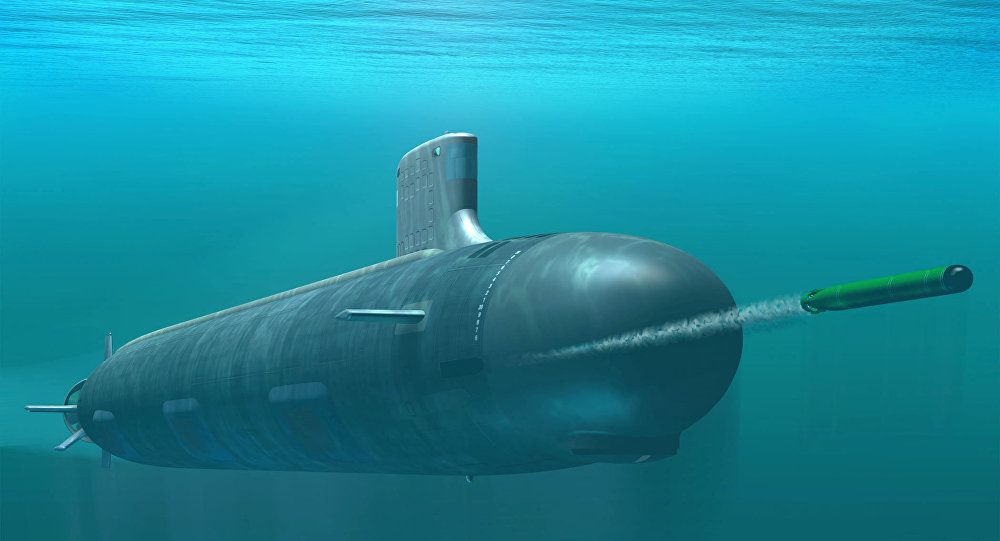
Artwork of U.S. Navy Virginia Class Submarine
With Taiwan’s military preparing for a potential conflict with the Chinese mainland, Taipei's naval capabilities have long left much to be desired both qualitatively and numerically. While China’s People’s Liberation Army (PLA) Navy counts some of the most modern and capable warships in its service, supported by world leading land based anti ship weapons platforms, ship hunting aircraft and military satellites among a number of other formidable assets, Taiwan’s small fleet of extremely dated U.S. and French built warships is almost hopelessly outmatched technologically - with its surface vessels easy targets well within range of Chinese coastal missile batteries. While even the latest U.S. warships would seriously struggle to operate so close to China's coasts in the Taiwan straits, Taipei's fleet is far less capable still and largely relies on second hand U.S. designs long since retired and smaller European warships which are similarly lacking in their capabilities. Taiwanese air defences are also grossly insufficient in their capabilities according to the leadership of its own military, particularly when considering the sophistication of China's Air Force, meaning surface warships will be highly vulnerable to attacks from the air.
In the face of an overwhelmingly more powerful potential adversary, Taiwan’s armed forces have invested in developing asymmetric naval capabilities - namely commissioning diesel submarines. Such platforms have repeatedly proven extremely difficult to detect, with an excellent test record in wargames held across the world, and are relied on heavily by a number of states including Japan, North Korea and Russia to counter potential superpower adversaries. Such platforms could potentially prove lethal not only against Chinese surface vessels, but also against larger nuclear powered submarines against which their quieter diesel powered counterparts have an excellent test record.
A diesel submarine fleet would cause significantly greater complications for a Chinese naval operation across the Taiwan’s Straits than Taipei’s ageing cruisers and destroyers ever could, and development of such capabilities remains a cost effective means to deter military action by Beijing. It was therefore a significant development when Taiwan’s next generation diesel submarine program received a boost from Washington, with the United States agreeing to approve the sales of military submarine technology to Taipei in an apparent snub to Beijing. This came amid fast growing tensions between the United States and China, and based on signals sent by the Trump administrations regarding its stance towards Taipei could well be but the first of many steps towards closer military cooperation aimed at undermining China’s position in the South China Sea and the Taiwan Straits. While Taiwan has relatively little military shipbuilding experience, U.S. assistance in developing eight new submarines could well be key to facilitating. Taipei’s deployment of truly lethal assets which will go along way to compensating for the poor state of its surface fleet.
