
MiG-29 Over Delhi; The Indian Air Force and Navy’s Special Relationship with the Versatile Russian Jet
Military Watch Magazine Editorial Staff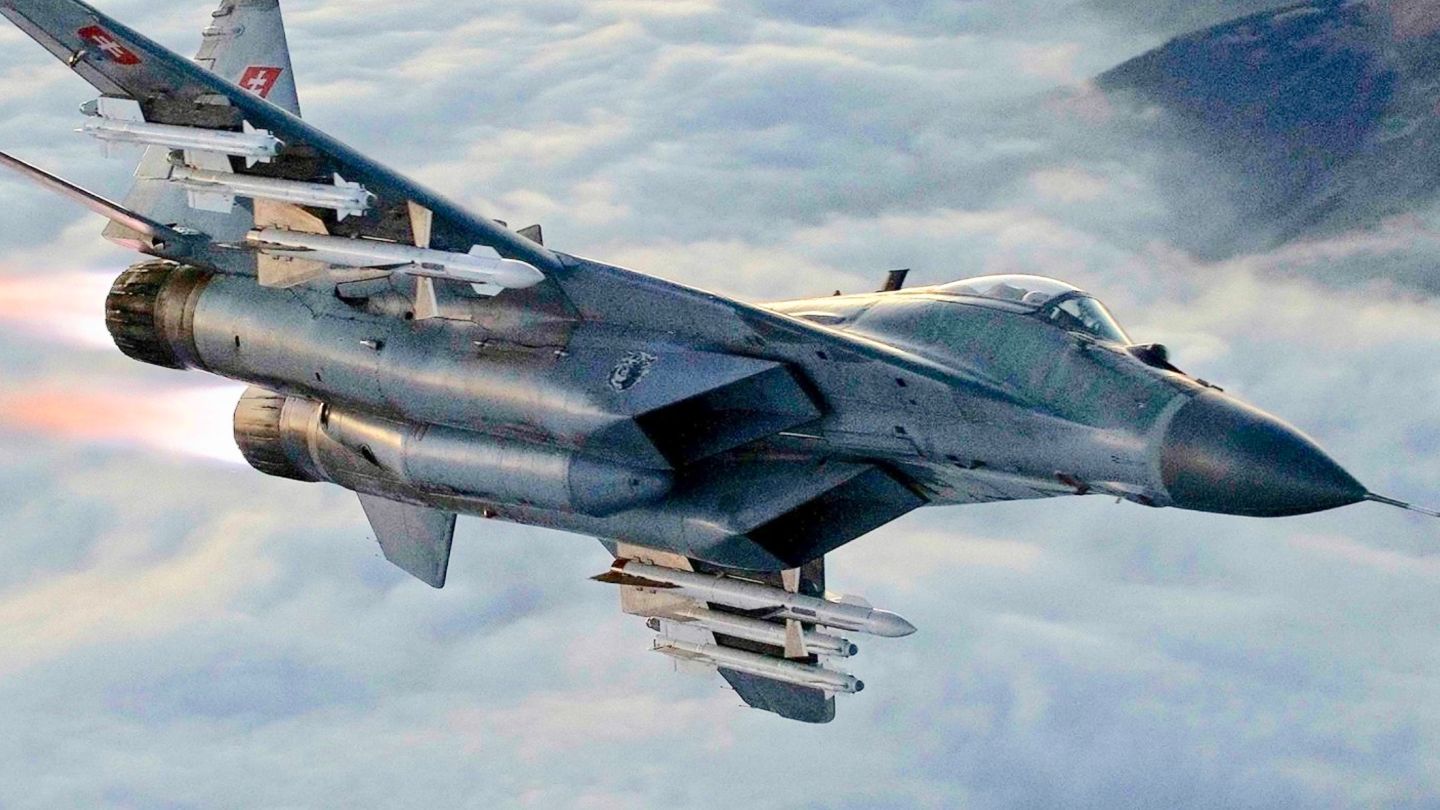
MiG-29 Twin Engine Fighter
The Indian Air Force currently operates approximately 70 MiG-29 twin engine medium fighters, which before the induction of the elite Su-30MKI in the early 2000s represented the country’s most advanced and capable combat jet for both air to air and strike missions. The Indian Air Force placed its first order for 50 of the fighters in 1980, five years before it was ready for frontline service, and the service became the first other than the Soviet Air Force to operate the platform. Acquisition of the MiG-29 was considered a high priority due to the advanced capabilities of neighbouring Pakistan’s U.S. built F-16 Fighting Falcons - which the heavier, faster and more manoeuvrable Soviet jet was designed specifically to counter. The MiG-29 proved an invaluable asset during the 1999 Kargil War, where they were able to effectively deter any interventions by Pakistani F-16s due to their superior capabilities and access to beyond visual range air to air munitions which their counterparts in the Pakistani Air Force lacked. The Soviet built fighters regularly patrolled the Indo-Pakistani border during this period, and in at least one incident locked onto Pakistani F-16s to warn them away from intervening in support of Kashmiri insurgents.
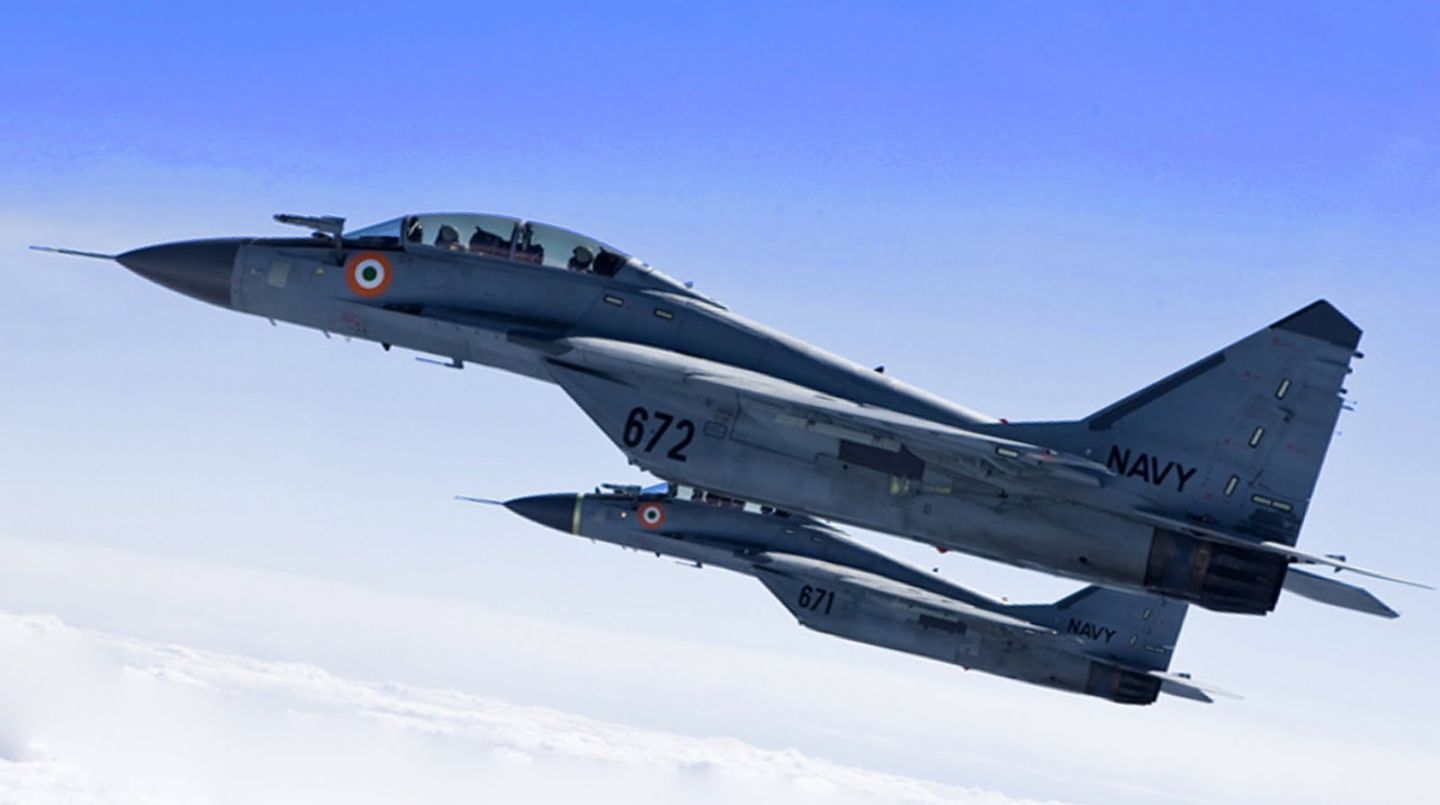
Since its induction into Indian service in 1985, the Indian Air Force’s MiG-29 fleet has been extensively modernised, and in the early 2000s a $888 million contract was signed to upgrade the fighters with more capable beyond visual range capabilities - namely the ability to deploy advanced variants of the R-77 long range air to air missile. These munitions retained a range of approximately 110km, and were deployed to preempt the Pakistani acquisition of the AIM-120C from the United States - a platform with comparable capabilities. India thus began to widely operate the advanced Russian missile on its MiG-29s before the Russian Air Force itself - which facing budgetary constraints prioritised equipping its Su-27 and Su-30 air superiority fighters with the costly munitions. The Indian Air Force’s would commission further upgrades including new avionics and electronic warfare systems and the replacement of the N-109 radar with the more capable Phazotron Zhuk-M. This brought the capabilities of the fighters closer in line with those of the MiG-29M - an advanced ‘4+ generation’ variant of the platform developed by Russia in the 1990s.
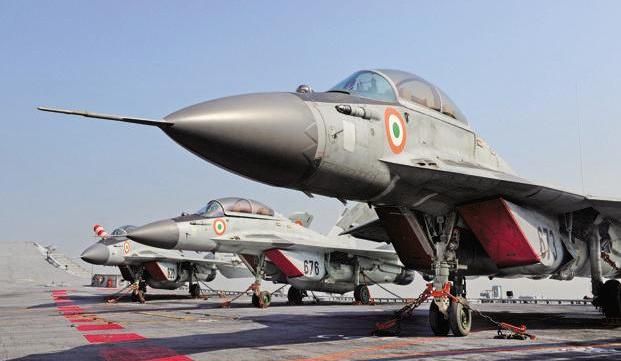
Alongside the Indian Air Force’s orders a further 45 MiG-29K variants, carrier based platforms with folding wings based on the ‘4+ generation’ MiG-29M, were later acquired to serve in the Indian Navy. The first of these entered service in 2010, and approximately two dozen were acquired to operate from the country’s sole carrier INS Vikramaditya. The Vikramaditya was itself modified in Russia to be able to deploy conventional takeoff fixed with aircraft - with the platform initially having been designed as a Kiev Class carrier for the Soviet Navy which exclusively deployed vertical takeoff jets such as the Yak-38 and Yak-141. The fighters were tested onboard the Russian carrier Admiral Kuznetsov, and were deployed to the airbase INS Hansa on India’s west coast for three years until the carrier’s modifications were complete in 2013. The Indian Navy is set to deploy the MiG-29K from its upcoming carrier INS Vikrant - which is currently under construction at Cochin Shipyard in Kerala and will deploy over two dozen fighters from its deck.
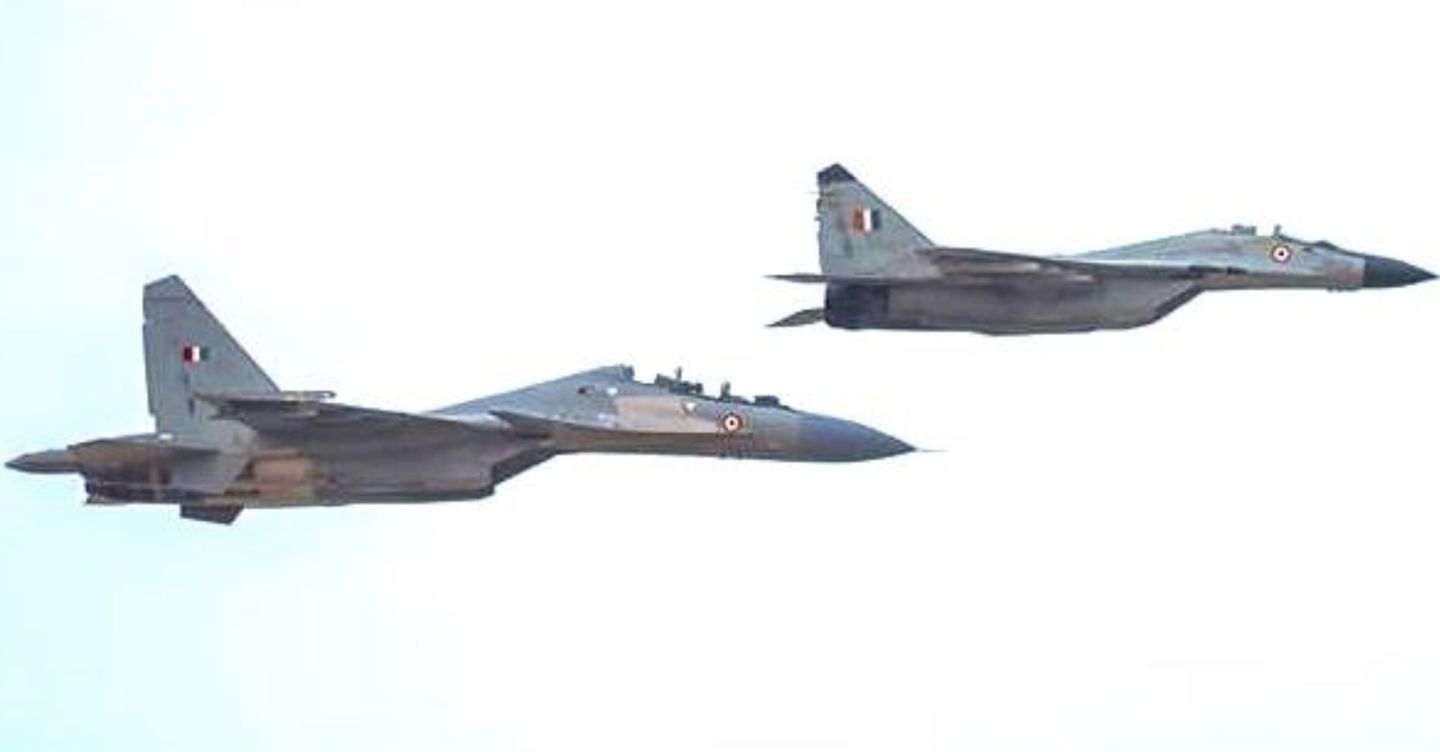
While the MiG-29K will remain India’s foremost naval fighter for the foreseeable future, the importance of MiG-29UPG in the Indian Air Force has diminished considerably since the early 2000s with the induction of the Su-30MKI air superiority fighter. While they cost considerably more to operate, these heavier fighters have replaced the MiG-29 as the country’s foremost aerial warfare platforms and retain a considerable advantage against the Pakistani Air Force’s F-16 Fighting Falcons - while repeatedly winning overwhelming victories in simulated combat against both American F-15 Eagles and British Eurofighter Typhoons. The MiG-29 nevertheless remains critical as a lighter counterpart to the Su-30 - particularly given the cancellation of a larger order for 136 costly French Rafale medium weight jets and the issues which continue to stall the development of the indigenous HAL Tejas light fighter. The Indian Air Force thus moved in February 2019 to place an order for 21 further MiG-29 fighters - platforms manufactured for the Soviet Air Force but never assembled due to the USSR’s collapse and the subsequent contraction of the Russian air fleet. The fighters are set to be assembled and upgraded to the MiG-29UPG standard to provide a much needed expansion to the country’s medium fighter fleet. Further orders for ground based MiG-29 fighters, or possibly their next generation derivative the MiG-35, remain likely - complementing future orders for both the MiG-29K for the Navy and further advanced Russian Air Superiority platforms such as the Su-57 for the Air Force.
