
KJ-1; China Tried to Develop the American B-29 WWII Bomber Into Its First AWACS Aircraft
Military Watch Magazine Editorial Staff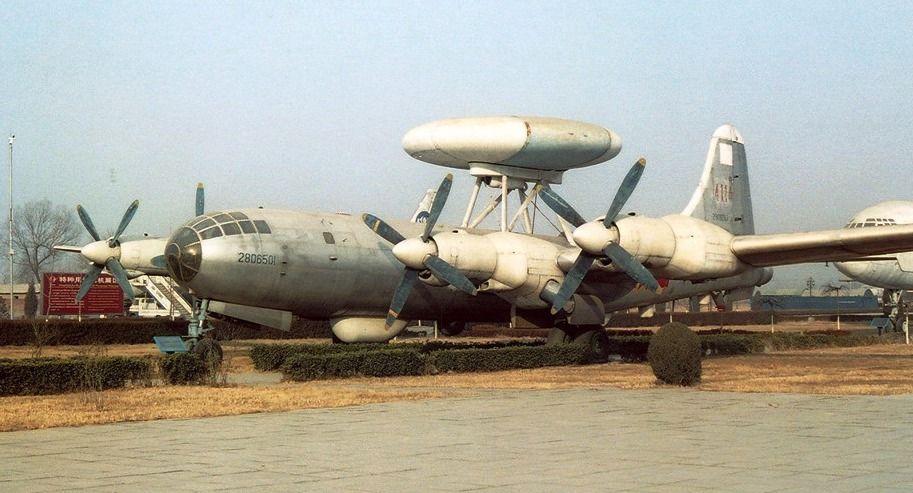
KJ-1 Prototype Based on Tu-4 Bomber
The American B-29 Superfortress is well known as the foremost bomber of the Second World War, the heaviest aircraft to be mass produced in its time which played a key role in facilitating an Allied victory over the Axis powers. The bomber was responsible for casualties in the millions, carrying out the bulk of the firebombing campaign against the Japanese mainland and in one instance under Operation Meetinghouse killing over 100,000 civilians in a single night on March 9th 1949 during the firebombing of Tokyo. The B-29 was also responsible for carrying out American nuclear attacks against Japanese population centres in Hiroshima and Nagasaki, killing over 220,000 civilians with many estimates placing the death toll significantly higher. Almost 4000 B-29 bombers were built, with the aircraft having been ordered into mass production even before their development was complete due to their unique capabilities. After the Second World War, they played a leading role in the Korean campaign from 1950 - dropping more ordinance on the Korean Peninsula than in the entire Pacific theatre and devastating population centres across the Peninsula with a similarly effective firebombing campaign - leading to the deaths of an estimated 20-30% of the North Korean population. The bomber’s capabilities were so highly prized that the Soviet Union had actively sought to acquire it from the United States under Lend Lease during the Second World War, but had been denied this platform in order to protect the highly sensitive and unique American technologies which had been integrated.
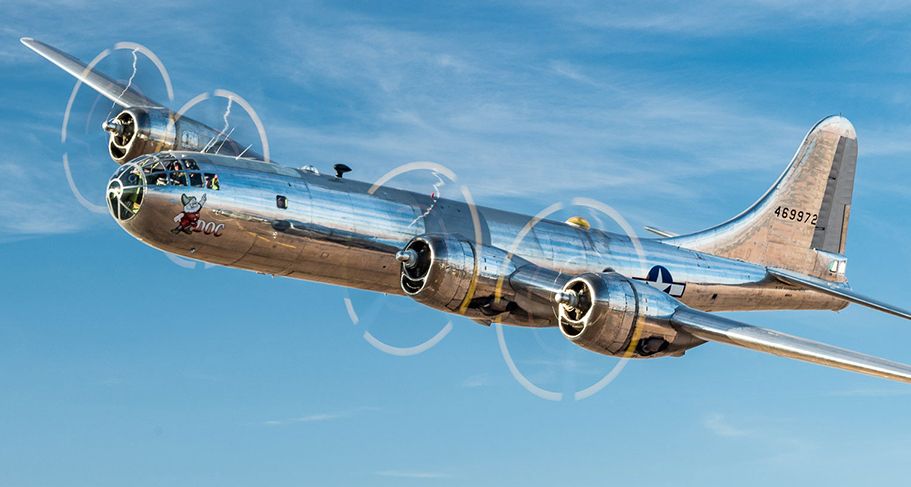
The USSR managed to obtain three Superfortress bombers in 1944, with the aircraft making emergency landings near Vladivostok in Russia’s Far East during bombing raids in Japan and subsequently being interned along with their crew under the terms of the Soviet-Japanese neutrality pact. The USSR went on to reverse engineer the bomber, and within three years the Tu-4 - a near exact replica of the platform - made its first flight in May 1947. The bomber entered service in 1949 with almost 850 being built. The demonstrated vulnerability of the American B-29 against modern jet aircraft, namely the Soviet MiG-15, over the skies of Korea from 1951, made both the Superfortress and its Soviet derivative appear increasingly obsolete. The Tu-4 thus began to be phased out of service in favour of the Tu-16 theatre bomber, with the intercontinental range Tu-95 being developed in parallel. Both of these new bombers saw their first flights in 1952 during the Korean War, and with over 1,500 of the Tu-16 entering service from 1954 there were few remaining uses for the Tu-4 in Soviet service. Before its decommissioning however, the USSR provided the People’s Republic of China with over a dozen of the aircraft in an attempt to deter the United States from extending the air campaign over Korea northwards. The bombers would remain in Chinese service until 1988, and from 1969 were supplemented by the more advanced H-6 - a heavily modified licences copy of the Tu-16.
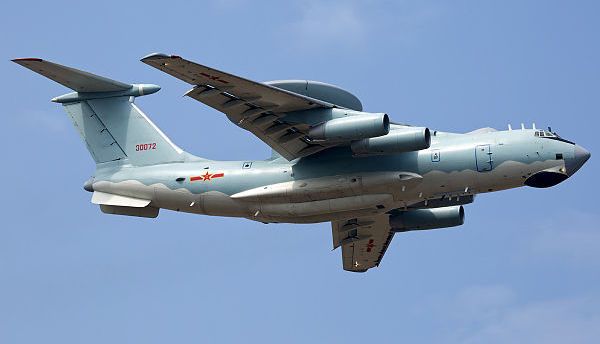
China’s Tu-4 fleet saw little active service, with the H-6 demonstrating far superior capabilities and used to carry out the country’s first nuclear test. The People’s Liberation Army (PLA) did however attempt to modify the aircraft into an airborne early warning and control system (AWACS) to counter the American E-2 Hawkeye and E-3 Sentry. In 1969 a single Tu-4 was thus modified to mount a Type 843 rotodome, with the resulting prototype names KJ-1. It is unclear whether the PLA intended to produce more Tu-4 airframes to accommodate the radars, or whether the intention was to modify the dozen or so existing Tu-4 aircraft in the fleet into AWACS platforms now that they were no longer needed as bombers due to the induction of the H-6 that year.The test reportedly failed with the radar experiencing excessive clutter which undermined its viability as a a force multiplier for the Chinese combat fleet. According to PLA reports, the K-1’s value would have been equivalent to forty ground based radar stations - and Chinese understanding of the importance and high value of AWACS in modern aerial combat spurred investment in obtaining such capabilities. The poor state of Chinese military aviation at the time however meant that it could not afford to develop a more capable AWACS platform of its own however, which would change only in the 1990s when massive technology transfers from Soviet successor states played a key role in the development of the KJ-2000, KJ-500 and KJ-200. While restarting the K-1 program was reconsidered around the year 1990, at a time when the PLA Air Force had the funding and the technology to more seriously pursue the program, this proposal was dismissed in favour of further investment in the KJ-2000 - a heavier platform based on the Russian Il-76 airframe which used jet rather than turboprop engines. While Chinese AWACS technology has since become among the foremost in the world, it it still lags behind the United States as all nations do due to America’s heavy investment in the field for several decades. The development of new more capable AWACS platforms in future is expected as the PLA looks to attain qualitative parity with if not an advantage over the U.S., with the KJ-600 expected to enter service in the early 2020s as a direct analogue to the American E-2 Hawkeye and other heavier platforms expected.
