
China’s Cutting Edge Star Shadow Stealth Drone Displayed at Singapore Air Show
Military Watch Magazine Editorial Staff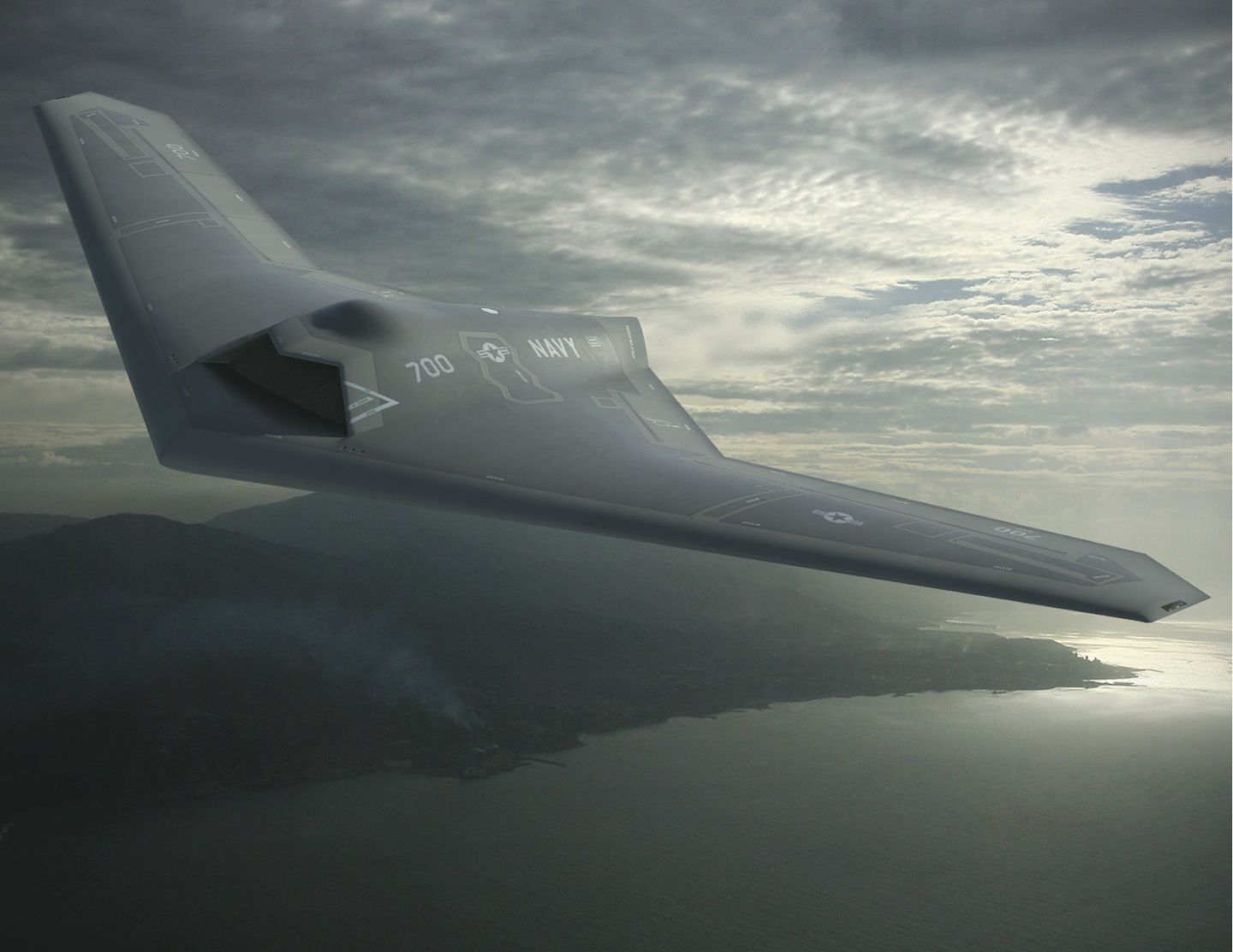
U.S. RQ-170 Stealth Drone Artwork
China first unveiled the concept design of its new stealth drone, the Star Shadow, at the February 2018 Singapore Airshow. Designed to minimise observability and maximise survivability, the drone will serve both a surveillance and a strike role. With a truncated diamond shaped airframe, sweptback outer wings and a 15m wingspan, the fighter's design uses a similar concept to the U.S. B-2 and RQ-170, the Chinese H-20 currently under development, and the original German Horten 229. The drone's maximum takeoff weight is expected to be 4,000 kg. The platform is set to make its first flight tests in 2019, and could prove a highly successful export platform with no analogous platforms existing on export markets. The announcement comes amid unprecedented Chinese successes in exporting combat UAVs, which are set to seriously threaten established producers such as the United States, France and Israel.
The Star Shadow's surfaces are built into the fuselage and wings' trailing edges and upper sections to minimise its radar cross section. Two TWS800 small turbofan engines developed will be dorsally mounted, with low observable intakes located on either side of the nose leading. To facilitate a strike role the drone will be installed with a large ventral payload bay measuring 2.5 m long, 0.76 m wide, and with a depth of 0.7 m. This will give it a payload capacity of 400 kg, comparable to that of a light fighter aircraft such as the J-10, allowing the Star Shadow to effectively fulfil a precision strike role.
The star shadow is in many ways analogous to the U.S. Military's RQ-170 Sentinel stealth drone, though the American platform was designed exclusively for a reconnaissance role. It is very possible that China acquired RQ-170's technologies through Iran, which downed the advanced U.S. stealth drone almost completely intact over its airspace in 2011 using electronic warfare systems. Considering the two countries' close and longstanding defence partnership, and Iran's attempts to reverse engineer the stealth drone in which China could well have provided invaluable technical assistance, it is highly likely that China gained access to the cutting edge U.S. stealth technology the drone fielded.
