
Can Venezuela’s Military Deter America?
Military Watch Magazine Editorial Staff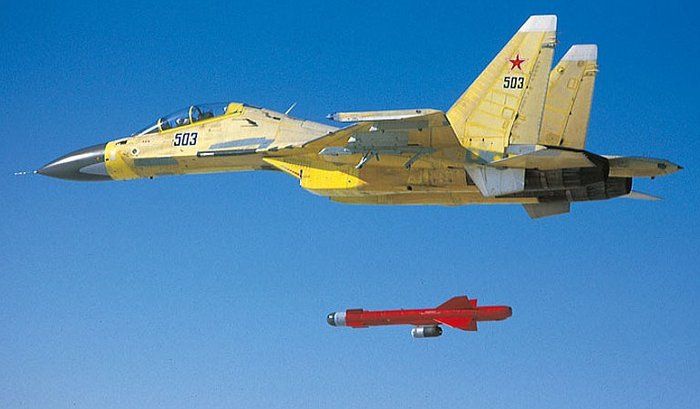
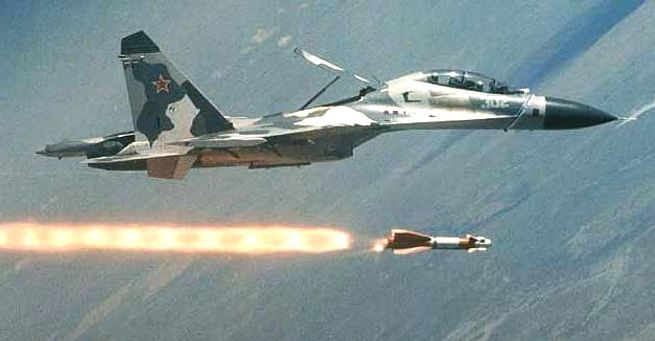
Su-30 Fighter Fires Kh-59 Cruise Missile
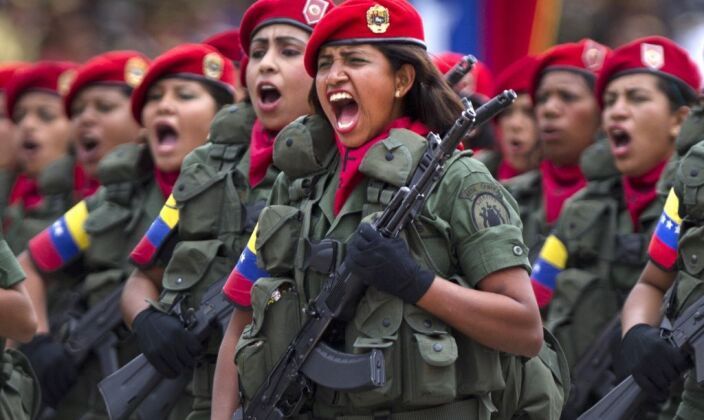
At a time of escalating tensions between the United States and Venezuela, as Washington continues to consider options for military action against its southern neighbour, he capabilities of Venezuela’s armed forces to prevent the state's forceful overthrow have been repeatedly called to question. Washington’s calling on its NATO allies to deny Russian aircraft access to their airspace if transiting supplies to Venezuela, and its direct calls for regime change shortly afterwards on April 30th, have further drawn attention to the fact that the capabilities of the Venezuelan Armed Forces. Not only have the country’s ground forces and people’s militias are numerous and considered well prepared for a guerrilla campaign, but an advanced multi-layered air defence network has been bout around the S-300VM, BuK-M2 and S-125 systems that cover long, medium and short ranges. These are complemented at the lower end by anti-aircraft artillery, handheld anti-aircraft systems, and a small fleet of modern fighter aircraft.
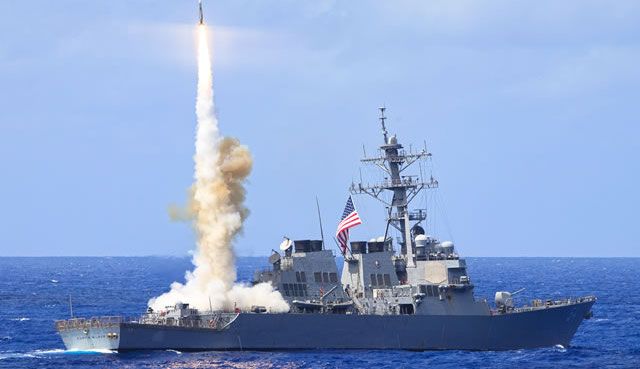
Although Venezuela’s air defence capabilities are outstanding within Latin America, the buildup of the country’s air defence arsenal and fighter fleet were abruptly cut short following the death of President Hugo Chavez in 2013. U.S. Air Force B-1B and B-52H heavy bombers and Arleigh Burke class destroyers can fire large quantities of cruise missiles from well beyond retaliation range to neutralise Venezuelan military facilities in the opening stages of an attack, and while Venezuelan systems such as the S-300VM will likely intercept a significant proportion of these, only a few missiles need to get through to neutralise key air defence radars. Venezuela’s arsenal of more advanced surface-to-air missiles is also estimated to be relatively small, raising questions regarding its ability to counter sustained missile barrages. Cruise missile attacks would likely be complemented by operations by advanced air defence suppression assets such as E/A-18G Growler and EC-130H electronic attack aircraft, although the very high mobility of assets like the S-300VM and the vastness of Venezuelan territory could make it challenging to locate them.
While Venezuela's armed forces field a number of assets which could make a U.S. air campaign far more challenging than any it has waged since the Korean War, the chances of a Venezuelan victory remain slim. Indeed, for a country under attack by standoff assets without retaliatory capability of its own, even defining what victory could mean within realistic parameters remains difficult. A significant factor in Venezuela’s favour is that the country retains an ability to inflict losses on U.S. forces and the reputations of its American military equipment. The S-300VM, for example, is around 40 years ahead of any long range air defence system the Western Bloc has ever faced in its sophistication, and while the U.S. Air Force will be able to strike Venezuelan targets from well beyond its engagement range, the likelihood of the system shooting down a large portion of American cruise missiles could send a signal regarding the limitations of American military power that is far from favourable.
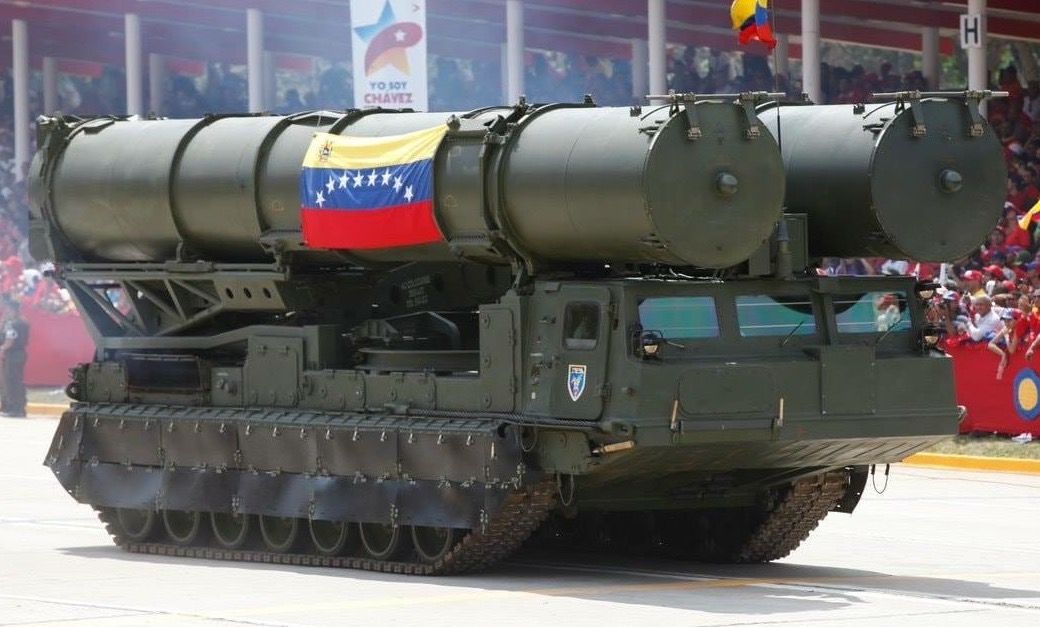
Not only is the S-300VM specialised in missile defence, but it is also considered the most mobile long range air defence system in the world, with missile batteries’ use of tracked launch vehicles being one result of this, providing off road capabilities which other systems such as the S-300PMU-2 and S-400 lack. Should the U.S. fail to neutralise Venezuelan airfields in the conflict’s early stages, either due to concealment, fortification or the success of the country’s air defences, Venezuelan Air Force Su-30MK2 fighters could post a serious threat. These heavily armed long range fighters represent the country’s only form of retaliatory capability, with the aircraft having much longer ranges and carrying larger radars than any fighters in the U.S. Air Force. This optimises them for operations both to defend local airspace, and to target American warships using their a number of air-launched missile types.
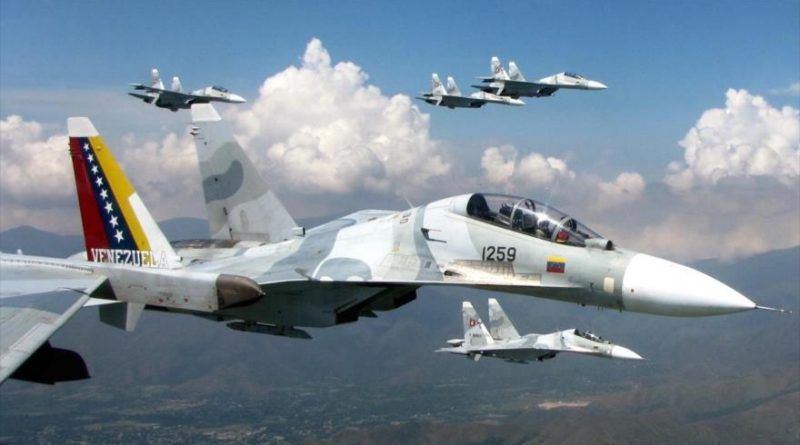
Venezuelan Air Force Su-30MK2 fighters are currently equipped with Kh-29L/T, Kh-31A and Kh-59M anti ship missiles, the ranges of which combined with the heavy high flying aircraft’s own considerable endurance allows them to pose a threat to hostile warships operating at longer ranges. The subsonic Kh-59M has a 115km range, carries a 320kg warhead and is highly precise. The lighter Kh-31A carries a 94kg warhead and has a 103km warhead, but is potentially more dangerous due to its very high impact speed of Mach 3.5, which is sufficient to tear most warships in half with a direct hit. The shorter ranged Kh-29T carries a far larger 320kg warhead, but is limited to a 12km range. While Venezuela’s Air Force lacks AEW&C support, providing American fighter squadrons with a considerable advantage in a potential engagement, a coordinated attack by all four Su-30MK2 squadrons could pose a serous threat to both American warships and military facilities.
Venezuela notably has not invested in an advanced deterrent capability, unlike other small states which have perceived similar threats such as North Korea, Syria or Iran, which leaves it far more vulnerable to a potential attacks. The lack of a longer ranged and more potent retaliatory strike capability has resulted in a much greater reliance on alliance building and other more less direct means of deterrence to prevent an American attack. Failing that, the sophistication of its most advanced aerial warfare assets may well serve as a relatively minor secondary deterring factor, although they are unlikely to be decisive particularly given their relatively small numbers, the questionable training of their operators, and the ability of the U.S. Armed Forces to rely on long range assets to avoid the risks of engaging at closer ranges. How the ongoing crisis will resolve itself, and whether American and allied efforts to oust the current Venezuelan government will lead to direct military action, remains to be seen.
