
Black Holes on Both Sides; Vietnam Completes Commissioning of Lethal Russian Built Submarine Fleet - Could be Used in Confrontation with China’s Own Kilo Class Vessels
Military Watch Magazine Editorial Staff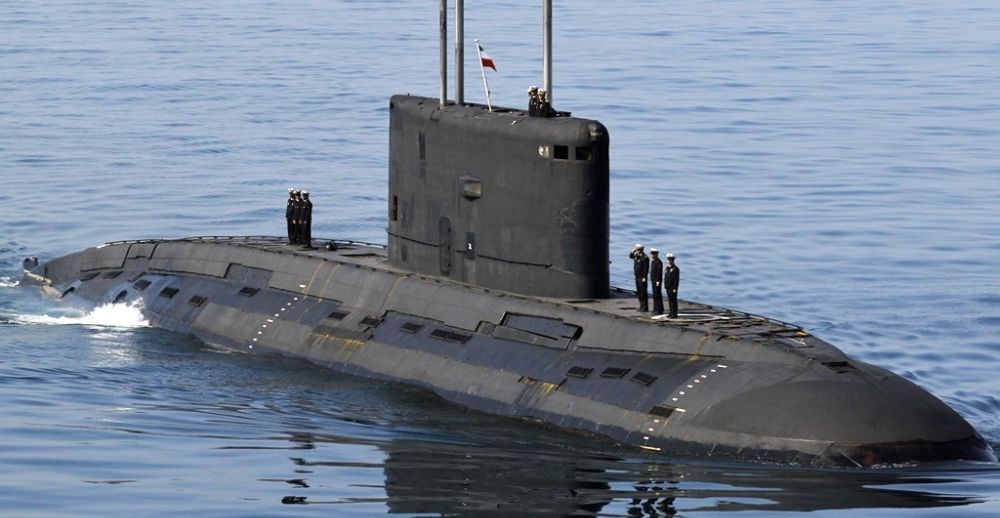
Kilo Class Black Hole Submarine
Vietnam’s armed forces have commissioned two new diesel electric attack submarines of the Improved Kilo Class, the last of six vessels ordered from Russia in 2009. The warships were ordered under a $2.1 billion contract with Admiralty Shipyards, the first two of which were commissioned in April 2014. The flag raising ceremony for the latest vessels was attended by head of state Prime Minister Nguyen Xuan Phuc. Indicating the purpose of the new vessels, the Prime Minister emphasised the importance of the country’s naval capabilities given the ongoing territorial disputes in the South China Sea - praising the navy’s willingness to defend the country’s territorial waters. He further noted that Vietnam sought to avoid a regional arms race, but nevertheless was adamant that the country would continue to defend its maritime claims.
With Russia serving as the primary arms supplier for the Vietnamese military, and its predecessor the North Vietnamese military during the Soviet era, Moscow’s fast growing defence cooperation with the People’s Republic of China has positioned it well to arm both sides of the territorial dispute. With no other country producing a submarine with comparable capabilities to the Advanced Kilo for export, the submarine represents one of the many weapons systems fielded by the armed forces of both countries. While the Vietnam People’s Navy now fields six Improved Kilo Class vessels, China’s People’s Liberation Army (PLA) Navy deploys ten of the advanced warships alongside two less sophisticated original Kilo Class boats. Other examples of high end weapons platforms fielded by both parties include Su-27 and Su-30 air superiority fighters and S-300 surface to air missile systems.
Kilo Class submarines produced for Vietnam’s Navy have been modified to fit the Southeast Asian state’s requirements, and includes GE2-01 radar and an improved MGK 400E sonar system. The warships have been designed with superior all weather capabilities to those of the basic Improved Kilo design. The Improved Kilo has been termed ‘Black Hole’ by NATO, and is quite possibly the quietest vessel of its kind in the world. With a considerable 45 day endurance at sea, the warships are armed with Kalibr cruise missiles capable of anti ship, anti submarine and ground attack roles. The missiles entered service in 2012, and China and Vietnam have been two of just five export clients for the elite weapons - allegedly capable of sinking even the largest of destroyers and most aircraft carriers with a single strike. The submarines are also capable of deploying mines and torpedoes to complement the capabilities of its cruise missiles.
With the Kilo Class vessels being extremely difficult to detect and packing a lethal payload, they remain by far the most formidable asset of the Vietnamese Navy against its larger neighbour to the north. While the country’s Soviet designed frigates and corvettes present a negligible threat to the PLA Navy’s advanced surface fleet, fielding among the most advanced warships in the world including the latest Type 052D and Type 055 Class destroyers, the PLA may well struggle to detect the Kilo Class - allowing Vietnamese forces to strike Chinese targets hard and fast where they are most vulnerable and potentially cause catastrophic damage to their surface warships. Ultimately relations between the two East Asian communist powers are highly unlikely to deteriorate to a state of open conflict, with relations between the two remaining highly positive with the exception of the issue of the territorial dispute. Nevertheless, it remains in Vietnam’s interests to be able to negotiate a resolution to the current dispute from a position of strength, something a relatively inexpensive contingent of six of the world’s most capable diesel electric attack submarines allows it to do. Hanoi for its part has hardly been alone in making such a calculus, with the Philippines also seeking to acquire the Advanced Kilo largely due to the threat posed by China's vast surface navy to territories Manilla views as its own.
