
Forty Years of the Fighting Falcon; A Look at the F-16's Four Decades in Service
Military Watch Magazine Editorial Staff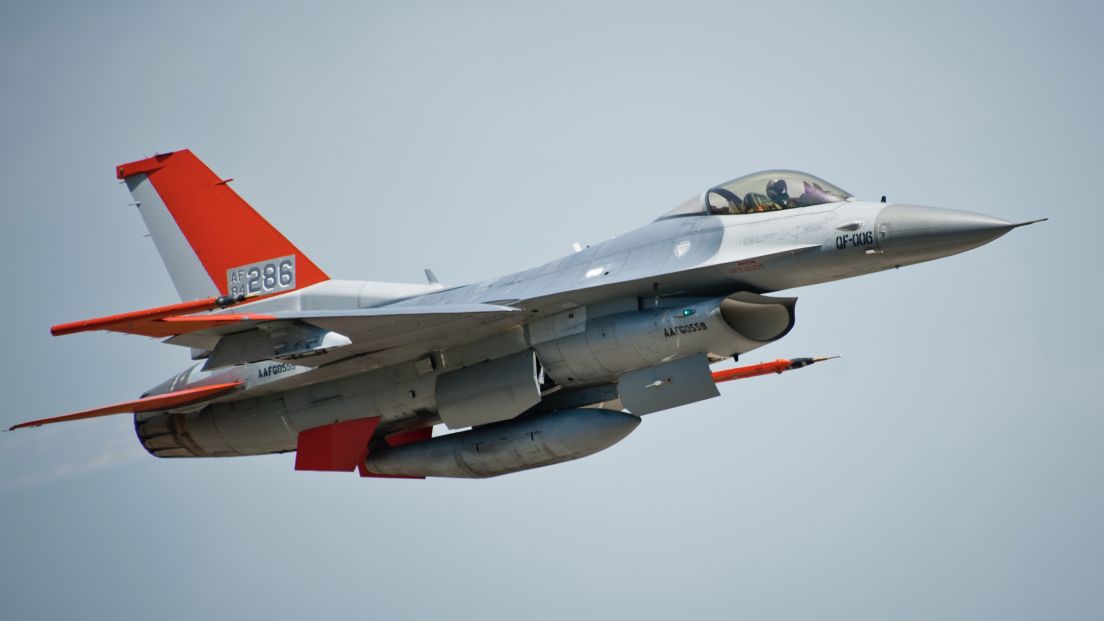
F-16 Fighting Falcon
Entering service in 1978 as the world’s third fourth generation fighter, following on from the F-15 Eagle and F-14 Tomcat two and four years prior respectively, the F-16 Fighting Falcon single engine light fighter would come to be by far the most numerous and widely fielded combat aircraft of its generation. While the Air Force’s F-15 was successor to the F-4E twin engine heavy air superiority fighter, the lighter and less costly complementary F-16 was developed as a successor to the F-5 Tiger. Though heavy fighters were reserved for the United States and its tier one allies, light fighters were designed to be produced in their thousands and sold to all manner of third world clients - hence why over 4,500 of the Fighting Falcons would be produced to serve in the fleets of 29 countries across the world. A contender with the F-17 design, a light twin engine fighter heavily based on the F-5 but with improved capabilities which would later go on to become the F-18A Hornet, the F-16 was chosen due to its lower maintenance needs, superior manoeuvrability and speed, and its use of a Pratt and Whitney F100 turbofan engine - the same engine as that of the twin engine F-15 Eagle - which made overall production costs to modernise the Air Force fleet considerably lower. The F-18 and F-117 would similarly enter service the following decade using the same engine to lower costs - and this engine commonality has since been widely adopted.
While the F-4 heavy fighter had made up the mainstay of the U.S. fleet during the Vietnam War, and the United States military had made scant use of the lighter, cheaper and less capable F-5, this changed with the fourth generation where the massive acquisition and operational costs of the F-15 meant that the Air Force would need to begin to rely more on light fighters where possible to support a considerably smaller air superiority fleet. The first F-16 fighters were not well equipped for beyond visual range combat or designed to dogfight, but they could in most cases more than hold their own. While the U.S. Air Force saw relatively few engagements in the aftermath of the Vietnam War, the F-16 was extensively deployed by and saw its first combat service in the Israeli Air Force. Israeli notably kept its Fighting Falcons from high end threats such as Syria's MiG-23 and MiG-25 jets, and used them and its older F-4 Phantoms in a supporting role while its F-15 Eagles spearheaded assaults on Syrian positions in the 1970s and 1980s. The F-16A was not on par with the Soviet Union’s high end third generation heavy fighters, facing considerable disadvantages in its armaments, altitude and speed and with a comparable radar, but then it was never designed to engage the elite of an enemy Air Force. By working with the strengths of each fighter the Israeli Air Force was able to operate with maximum efficiency. Conducting airstrikes against Syria and throughout the Lebanon War, the Fighting Falcons did much to take the burden off the heavier but scarcer Eagles. The fighting Falcons made up approximately 75% of the Israeli fighter fleet while Eagles made up the remaining 25%. The U.S. Air Force today fields the F-16 in a similar ratio to its F-15C and F-22 Raptor air superiority fighters, with 400 of the elite aircraft supported by approximately 1000 of the Fighting Falcons. With aerial warfare against a near peer adversary never having materialised for the U.S. since Vietnam, the F-16 has been more than adequate for the vast majority of missions - from enforcing a no fly zone over Iraq and bombing Panama and Yugoslavia in the early 1990s to airstrikes against the Taliban and Islamic State today.
Serving as widely as it does, the F-16 has seen number of air to air combat engagements over the past 40 years. While Iran was initially set to be the F-16’s first export customer, the country’s Islamic Revolution and break with the West led to the sale’s cancellation. The F-16 thus never served alongside the elite F-14 Tomcat during the Iran-Iraq War, and Israel and Pakistan went on to become the fighter’s first two export clients. Pakistani jets were deployed in a number of conflicts against India, and would remain the elite of the Pakistani fleet until the development of the JF-17 Block 2 in the 2010s. The aircraft notably struggled to contend with Indian MiG-29s during the Kargil War, twin engine Soviet medium weight fighters which significantly surpassed the fighting falcon in their capabilities, and Pakistani jets lacked beyond visual range capabilities with which to match their adversaries. The gap between the two countries’ prime fighters later widened further with the induction of the Indian Su-30MKI, a Soviet analogue to the F-15 Eagle with superior capabilities with capabilities well beyond those of the Fighting Falcon. Pakistani F-16 jets were also key to supporting the Western war effort against the Soviet Union and Afghanistan, with the fighters shooting down several Afghan and Soviet jets as Islamabad funnelled CIA arms and funds to the Mujahideen Islamist insurgent group.
The F-16 also saw action in the Turkish fleet against Greece’s French built Mirage F1 jets, which stood little change against the far more capable American made fighters and were forces to give the Falcons a wide berth. A Turkish F-16 would years later shoot down a Russian Su-24 strike fighter operating over Syria against Islamist insurgent forces backed by Ankara in 2015, causing a major incident and a massive deployment of modern air defences by the Russian military as a precaution in response. Months later, forces loyal to Turkish President Erdogan would use an F-16 to shoot down a helicopter carrying coup plotters in the military. Other than air to air engagements, F-16 fighters have taken part in almost all Western military interventions since the Cold War’s end, including bombing campaigns against Panama, Yugoslavia, Iraq, Afghanistan, Syria, Pakistan and Libya. Iraq was the only country of these to show any considerable resistance in the air, and the United States too took great care during Operation Desert Storm to hunt down Iraqi MiG-23, MiG-25 and MIG-29 jets with its F-15 Eagles - as despite the extremely poor training of the Iraqi pilots and abysmal tactics of its military command these jets all retained considerable advantages over the fighting Falcon which could have put American pilots at unnecessary risk.
F-16 jets would be modernised considerably over the aircraft’s lifetime, with the F-16C designed to field superior beyond visual range capabilities and the ability to deploy AIM-120B air to air missiles. More sophisticated variants including the F-16E designed for the United Arab Emirates Air Force and the Mitsubishi F-2, a Japanese fighter heavily based on the Fighting Falcon, have made use of superior munitions, AESA radars, composite materials and other cutting edge technologies. A number of operators are nevertheless seeking to retire their Falcons in favour of '4+ generation’ or fifth generation alternatives. The F-35A is set to replace the F-16 in the U.S. Air Force, although it may be up to two decades before the Fighting Falcon is completely phased out of service considering the large numbers fielded. Turkey, Egypt, Israel and South Korea, the four largest foreign operators of the Fighting Falcon, with 250, 240, 224 and 170 aircraft respectively, have all begun to invest in acquiring more capable light fighters for their fleets. Turkey and South Korea both plan to induct the F-35A alongside indigenous fifth generation light fighters, under the TF-X and KF-X programs respectively, while Israel will rely on a small number of the F-35A alone. With Egypt’s foreign policy having shifted somewhat away from the Western Bloc since 2013, the country is set to rely on the MiG-29M as its new prime light fighter - with reports of plans to acquire its '4++ generation’ successor the MiG-35 in future. Despite its age, and a number of prominent officials from Singaporean Defence Minister Ng Eng Hen to U.S. Air Combat Command Chief General Mike Hostage attesting to its rapidly approaching obsolescence, the fighter remains in production and has been exported to a number of third world clients in recent years including Bahrain and Iraq - and potentially even India in future. The F-16 is a contender for the most prolific Western fighter jet ever designed, and is set to see service past the mid century in a number of air forces across the world. With the replacement F-35 program increasingly stalling, the F-16 will be heavily relied on both by the United States and its allies for many years to come.
