
U.S. General Claims the Military Risks Losing a War with North Korea
Military Watch Magazine Editorial Staff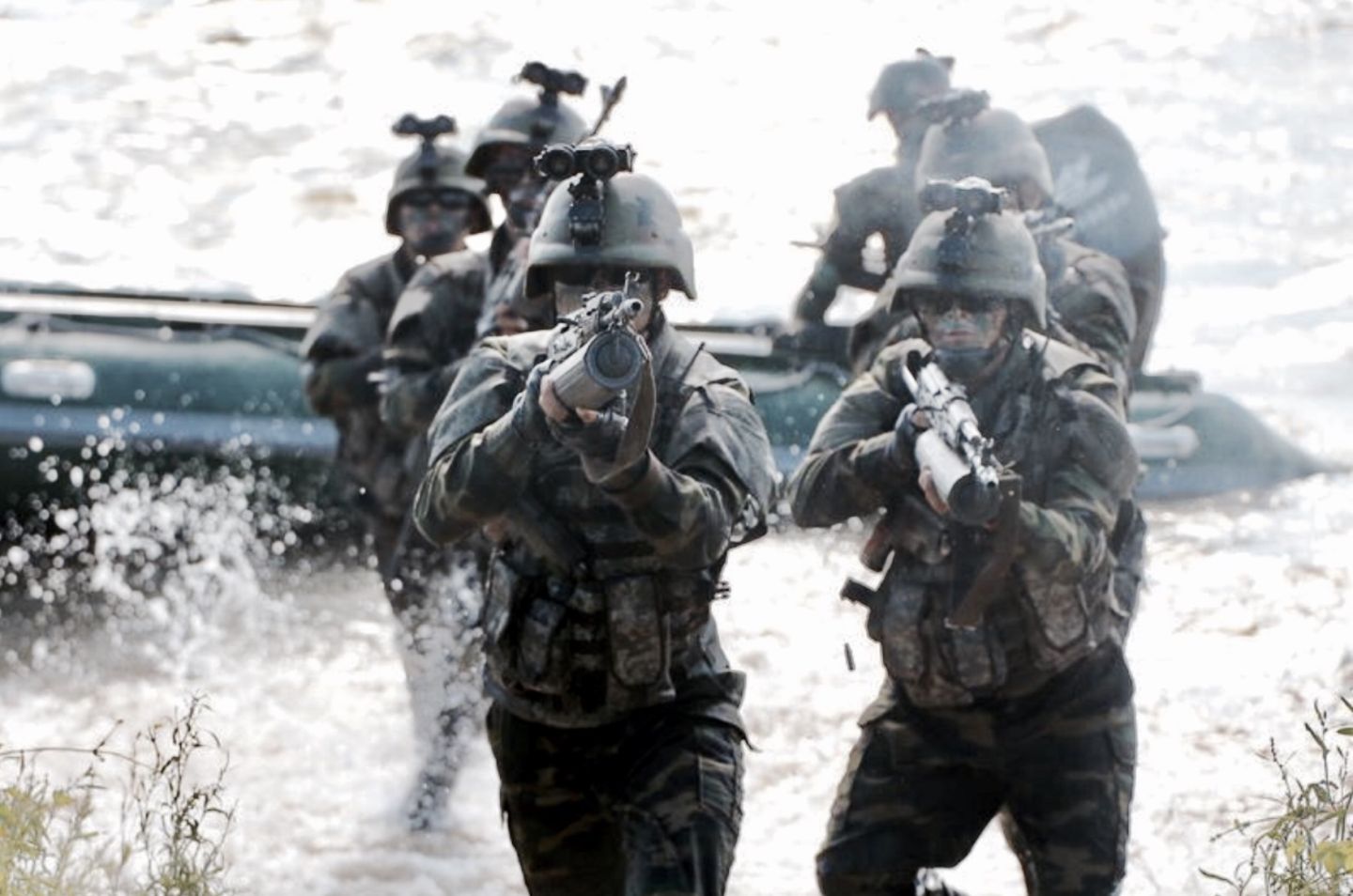
North Korean Special Forces
KCNA
A report submitted to the U.S, Congress by General Jan-Marc Jouas, former deputy commander of U.S. Forces Korea, claims that the United States military may well be pressed beyond its limits should it wage a war on the Korean Peninsula. Despite support from its allies, the General indicated that the U.S. could very well face defeat at the hands of the North Korean military. According to his report, several key factors in the North's favor could well seriously undermine the American war effort - namely North Korea's ability to isolate U.S. forces and wreak havoc on its trans-Pacific supply lines. With U.S. forces on the Korean Peninsula numbering around 30,000, they would find themselves overwhelmingly outnumbered and undersupplied. Reinforcing personnel and supplies would find it difficult to deploy to the Peninsula, as bases and military facilities across Korea would likely find themselves subject to missile and chemical weapons attacks - as well as attacks by North Korea's numerous and advanced special forces units. U.S. personnel deploying from abroad would similarly find themselves vulnerable, with ports and ships all being vulnerable to attack. In the General's words, they "may well find their bases subject to attack by conventional or chemical weapons, which will further delay their entry into the war."
The General stated that U.S. troops "are vastly outnumbered by North Korean forces, as well as (allied) forces that will conduct the overwhelming majority of the fighting." He also noted that the 100,000 non combatant Americans in South Korea would rely on their military to get them out of the country - stretching the limited military forces further. Should North Korea deploy nuclear or chemical weapons U.S. carriers and military facilities across the Pacific would be highly vulnerable. Such attacks could well further impede the military's logistics - leaving soldiers on the ground without air support, supplies or reinforcements. Should facilities on Guam, Hawaii and Okinawa - as well as the 7th fleet - find themselves neutralised the war would be effectively over for the isolated troops deployed on the Asian mainland. Successful and potentially devastating attacks on all of these facilities are highly possible - particularly considering recent successful tests and induction of the Hwasong-12 and Hwasong-14 missiles, putting all U.S. Pacific bases in range, and the advanced Kumsong-3 anti ship cruise missile which poses a lethal threat to enemy warships.
Though North Korea's military budget is orders of magnitude smaller than those of the United States and its allies - they have been able to effectively do more with less. One reason for this is their investment in asymmetric capabilities such as nuclear weapons, chemical weapons, missile systems, special forces and submarines - all of which leave enemy military faculties highly vulnerable. These are critical to extending Pyongyang's reach beyond its borders and across the Pacific and disputing's the United States' supply lines across the Ocean. Indeed, overextended and vulnerable supply lines have proven to be the undoing of many militaries throughout history, from Carthage's military in Rome to Nazi German forces in the USSR. The fact that the U.S. military will be forced to rely entirely on air and sea to reach South Korea makes supplying their forces on the peninsula far more difficult. This may well prove key to North Korea's victory, and so to deterring the U.S. from launching an attack lest it risk finding tens of thousands of its troops on the peninsula isolated and subsequently killed or captured.
