
Pakistan's Babur III Submarine Launched Nuclear Cruise Missile Enters Service
Military Watch Magazine Editorial Staff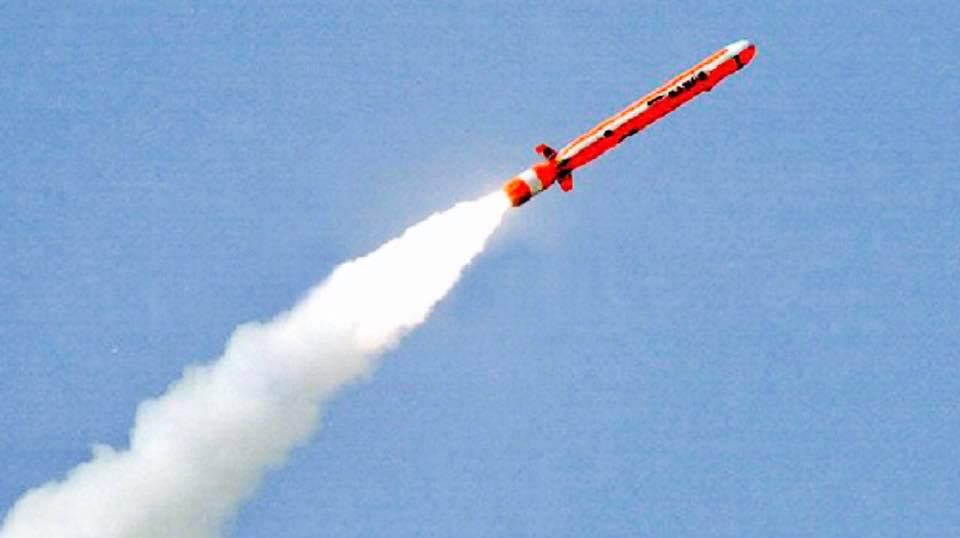
Babur III Test Launch
Named after the first emperor of the Mughal Empire, Zahir Ud Din Babur, Pakistan's nuclear capable cruise missiles first entered service in 2005 with the country's Army Strategic Forces. The Babur III, first successfully tested in 2017, has been inducted into the Pakistani Navy and represents a milestone in the country's nuclear program. Launched from the country's Agosta 90B Khalid Class submarines, it gives the country a critical second strike capability which increases the robustness of the Pakistan's strategic nuclear deterrent. Submarine launched missiles not only increase the potency of nuclear strikes, allowing them to be launched where an enemy's missile defence shield is at its weakest, but they also critically make any attempts at to destroy its nuclear weapons on the ground in a rapid first strike impossible - as retaliation from the country's submarine forces is guaranteed. This second strike capability, which all other nuclear powers have sought and currently possess, is an invaluable strategic asset which Pakistan is the latest to obtain - with North Korea preceding it having most recently successfully tested its Pukuksong 2 submarine launched ballistic missile in 2016.
Following the success of the Babur III missile test the Pakistani military announced: "The successful attainment of a second strike capability by Pakistan represents a major scientific milestone; it is manifestation of the strategy of measured response to nuclear strategies and postures being adopted in Pakistan's neighbourhood." The missile's high manoeuvrability and its ability to cruise at low altitudes make it particularly difficult to detect or intercept. The 450km range of the missile allows it to strike a number of India's densest population centres with nuclear weapons from any point along India's vast coastline. While all of Pakistan has long been in range of and vulnerable to strikes by India's nuclear forces, the range of the Babur III and the fact that it can be launched against India from the submarines in the south or east - not just the country's western border shared with Pakistan - makes the Pakistani nuclear threat far more potent and means that India's attempts to deny Pakistan nuclear parity by concentrating its missile defences on its Western border are no longer feasible. Whether India will respond by upgrading the missile defences along all of its coasts, an extremely costly measure given the vast area which would need to be covered, is yet to be seen but considering the military's current budgetary issues it is unlikely to occur in the near future. As a result of its ability to strike the Indian mainland from the South and East and the survivability it grants Pakistan's strategic nuclear forces, the Babur III's induction into the Pakistani Navy is a significant development which will have a profound impact on the balance of power in South Asia.
